What to do if you are struck by lightning while in your car
Διαβάζεται σε 5'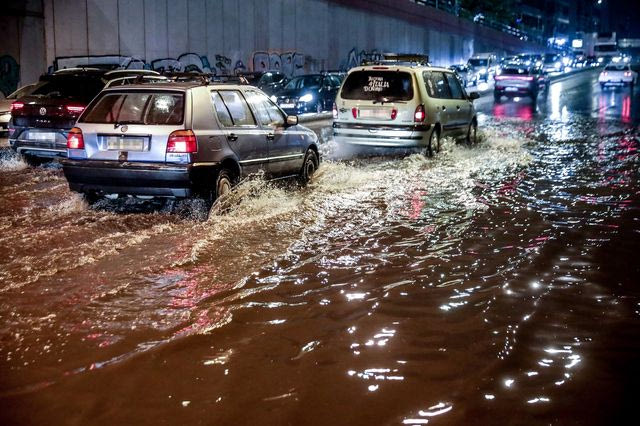
Every year, thousands of people are killed by lightning during storms. Here are some safety tips for protection in cars, homes, and open spaces.
- 05 Δεκεμβρίου 2025 16:18
Globally, about 24,000 people are killed by lightning each year, and around 240,000 are injured.
These numbers occur because many people ignore basic survival rules when there’s a storm with lightning. Usually, out of instinct, when we’re outdoors and hear thunder, we rush to seek shelter.
A common mistake is choosing to hide under a tall tree. This is the second leading cause of accidents. The first cause is staying in places like high hills, lone trees, power poles, wire fences, or water, which attract lightning due to their height and conductivity.
While trying to find shelter, not all shelters can protect us. Meteorologist Theodoros Kolyvas explained that “we should choose a building with reinforced concrete, a water or sewage system, or another feature that can ground the immense energy of lightning.” Therefore, we should avoid shelters, trees, and bus stops, which sometimes attract lightning.
It’s also a myth that rubber footwear and/or vehicle tires protect us from lightning due to insulation. The Ministry of Climate Crisis and Civil Protection has a dedicated link for storms and safety measures to protect ourselves.
The basic knowledge about lightning, which helps us understand if we’re in danger, is that lightning doesn’t always strike directly above us. It can strike 10 to 16 kilometers away.
What to do if the storm finds you at home
The first tip from Civil Protection is that to estimate the distance of the storm, you should count the seconds between the lightning and the thunder and divide by 3. The result is the distance to the storm in kilometers.
If the storm finds us at home, avoid using electrical devices or phones, as lightning can travel through the wires. Unplug devices like televisions from antennas and power sources, and avoid touching plumbing (kitchen, bathroom) as they conduct electricity. Secure doors and windows just in case.
What to do if the storm finds you in your car
If the storm catches you in the car, as it did for many people last night and this morning, remember that your protection from lightning comes from the vehicle’s metal frame, not the tires.
Turn on the hazard lights (emergency lights) and pull over to the side of the road, away from trees (which could fall on you), until the rain subsides.
Close the windows and avoid touching metal objects.
Civil Protection advises avoiding flooded roads—a lesson that, as photos from the streets show, isn’t obvious to everyone.
What to do if the storm finds you outdoors
Avoid unnecessary movements when it’s raining heavily, but if you must leave the house (e.g., walking the pet) and a storm catches you, seek shelter in a building or car. Otherwise, sit on the ground without lying down.
Never go under a tall tree in an open space, and avoid standing near power poles, power lines, phone lines, and fences. Also, don’t approach metal objects (e.g., cars, bicycles, camping gear, etc.).
If you’re in a forest, protect yourself under the dense branches of low trees. If you’re in a river, move away immediately, and if you’re at sea, leave without hesitation. “If you find yourself in an open field and feel your hair stand up (a sign that lightning is about to strike), squat down with your head between your knees (to minimize your body surface and contact with the ground), and throw away any metal objects you have on you.”
Myths and truths about lightning
Lightning and thunder are the subject of many myths. Believing in them can put you in danger. For example, the myth that lightning never strikes the same spot twice.
In reality, lightning can strike the same spot multiple times, especially if it’s a tall, pointed, or isolated object. For example, the Empire State Building is struck by lightning 100 times annually.
If we hear thunder but there’s no cloud overhead, we might feel safe, but we’re not. Lightning can strike 5-15 km away from the storm, even as “cloud-to-clear” lightning.
It’s also false that lightning doesn’t strike the same spot twice or that metals always attract lightning—they are good conductors, so we avoid contact. Vehicle tires or footwear do not provide protection, nor do trees, bus stops, or open boats