Athens FIR: Urgent prosecutorial investigation into the blackout
Διαβάζεται σε 4'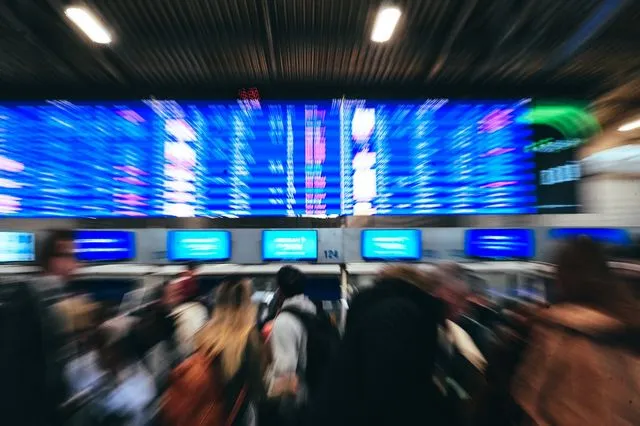
The purpose of the investigation is to determine whether the offence of dangerous interference with aircraft traffic was committed, as well as how interference occurred across almost all frequencies of the Athens FIR.
- 05 Ιανουαρίου 2026 10:45
The blackout in the Athens FIR prompted the intervention of the head of the Athens Misdemeanors Prosecutor’s Office.
In response to the chaos that erupted yesterday at airports, Aristidis Koreas ordered the launch of an urgent preliminary investigation, to be carried out by the Cyber Crime Division.
The investigation aims to examine whether the offence of dangerous interference with aircraft traffic was committed, and to determine how interference occurred on nearly all frequencies of the Athens FIR.
Chaos at Greek Airports
Severe disruption was experienced by many passengers from the morning until the afternoon of Sunday (04/01), both at Athens International Airport and at airports across Greece, due to a serious technical problem affecting radio communications at Area Control Centers.
The technical issue affected all flights to and from Greece, with airlines informing passengers of delays. Because of the “blockade,” all flights were diverted to neighboring airports.
Gradual restoration of the problem began around midday, with Infrastructure and Transport Minister Christos Dimas announcing shortly after 20:00 that the technical issue had been fully resolved. However, the causes that led to the blackout remain unclear, and the normalization of air traffic was far from complete, as the three-hour total suspension of flights created a large backlog that had to be handled.
What the Civil Aviation Authority Says
In a statement, the Hellenic Civil Aviation Authority (HCAA) attributed the flight disruptions to a massive and unprecedented interference affecting all frequencies of the Athens FIR.
An order was given for a specially equipped aircraft to take off in order to investigate, using specialized instruments and technicians, the source of the interference, which was reported to have originated from the air.
According to information, the National Intelligence Service (EYP) also examined the case in cooperation with the Hellenic Telecommunications and Post Commission (EETT) and concluded that there was no external interference and therefore no sabotage. Instead, it is considered likely that the incident was caused by a technical fault, possibly even in a single circuit board, which could have led to resonance—something that, according to officials, could cause widespread internal interference.
It is recalled that during a previous inspection, a problem was identified at an HCAA antenna installation in the Gerania Mountains. Technical checks to determine the exact nature of the potential fault are ongoing.
Air Traffic Controllers “Lash Out”
The Hellenic Air Traffic Controllers Association has presented its own account of the events affecting air traffic, calling for an immediate investigation.
The Association stresses that the incident is particularly serious and unprecedented for an Air Traffic Control system, noting that, up to the time the statement was issued, the Civil Aviation Authority had not announced the causes of the problem or a timeline for full restoration.
It emphasizes that such incidents are not isolated events but, as stated, are linked to the long-standing obsolescence and inadequate maintenance of communications and surveillance equipment—an issue repeatedly raised by controllers over the years.
“This is the direct result of chronic inaction, poor management, and wrong choices by the HCAA administration, which systematically ignores the warnings of air traffic controllers. For years, the HATCA has highlighted the outdated nature of surveillance and communications equipment and has demanded its replacement with modern systems that meet European regulatory requirements. Unfortunately, to date, our request has not been met,” the statement notes.
At the same time, reference is made to a similar incident in August 2025, when a loss of communications and radar image was recorded at the Merenta Hill site, without—according to the Association—any official assumption of responsibility.