A. Stoimenidis: “The tragedy in Trikala disproves the success story of the Ministry of Labor”
Διαβάζεται σε 3'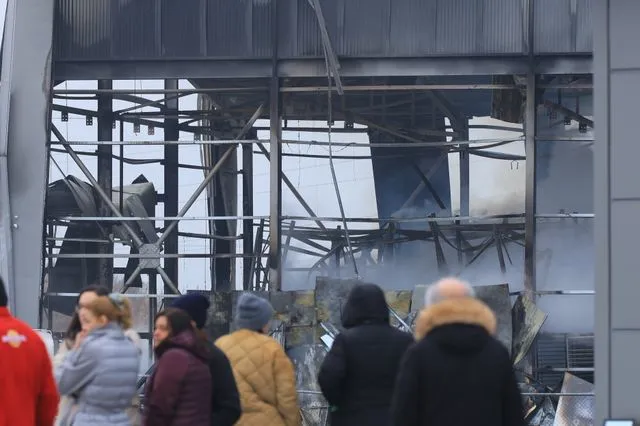
The president of OSETEE, Andreas Stoimenidis, spoke about the questions and characteristics of the labor tragedy in Trikala.
- 26 Ιανουαρίου 2026 20:56
In the first hours after the tragedy, questions emerged regarding the safety of the “Violanta” biscuit factory and the deadly explosion that resulted in the loss of five women’s lives. At the same time, this accident appears to have different characteristics compared to those previously accustomed to.
Speaking to NEWS 24/7, the president of OSETEE and vice president of the European Agency for Health and Safety at Work, Andreas Stoimenidis, emphasized the striking issue of why no firefighting or fire safety system was in place to give people time to evacuate.
In a study conducted by OSETEE on workplace fatalities since 2022, the situation was described as alarming but entirely expected, given the legislative framework around intensification and flexibilization of labor, alongside the complete dismantling of the safety and health system.
According to this, at least 201 people lost their lives at work, while 332 others were seriously injured in 2025.
As he stated, the ministry’s responses were not invitations for cooperation to resolve the issue but rather attempts to question the record and the scale of the problem. “The ministry believes we are doing very well compared to European standards. However, reality is painfully providing its answers to this communication effort for a success story,” he added.
Until now, most workplace accidents occurred in the agricultural and construction sectors (with 44 deaths in the first ten months of 2025), followed by drivers, and then industry (with six deaths in the same period), in a second group of hazardous activities. “Of course, when industry has casualties, they are significant,” he said, reminding of the 2021 explosion at the ELTEK explosives factory in Itea, Grevena, which claimed three lives after a major explosion.
Mr. Stoimenidis commented that it seems a new pattern is emerging. “We don’t have another such accident with so many female workers. We had women working through the night in a factory with ovens, and the shift might have been understaffed because the previous day was the cutting of the Vasilopita (New Year’s cake), so fewer people worked. This changes the roles, capabilities, and working conditions,” he said.
Those left behind
According to Mr. Stoimenidis, those left behind usually suffer for 5 to 7 years until responsibility is assigned in civil and criminal cases. “It’s a huge hardship for the family, both financially and emotionally. Companies have the financial means to hire small and large teams of lawyers to handle the issue, but the workers and their families are at a disadvantage,” he emphasized.
As he explained, “Justice is achieved in a smaller percentage of cases than it should be, with decisions that do not unequivocally and clearly assign responsibility to the employers, as the law stipulates. The employer is the only one who can change the conditions of a company and is exclusively responsible for health and safety in the workplace.”