Mitsotakis: We do not need mediators in the Greece-Turkey relations
Διαβάζεται σε 7'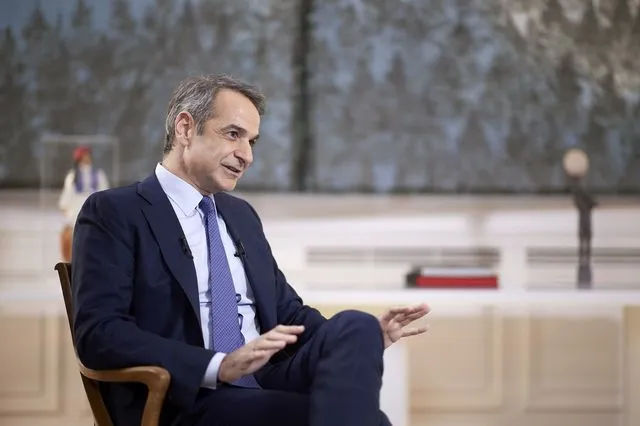
“I will meet with Erdogan before February 15,” said Mitsotakis. His response to the US mediation scenarios. “The dilemma is not Mitsotakis or chaos, but Mitsotakis or Androulakis or Konstantopoulou or Velopoulos,” the Prime Minister stated.
- 02 Φεβρουαρίου 2026 22:12
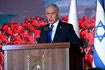
Messages in multiple directions ahead of his meeting with President Recep Tayyip Erdogan, which he mentioned would take place before February 15, were sent by Prime Minister Kyriakos Mitsotakis in an interview with SKAI. Specifically, he initially stated that he does not share the concerns about the intervention of US President Donald Trump due to his personal relationship with Erdogan.
He explained that he has known Trump since his first term, emphasized that Greek-US relations are at their best, and noted that “when we talk about strategic relations, we are not referring only to our relationship with the Trump administration, but to the long-standing relations with Congress and all power centers in the US.”
He also emphasized that relations with Turkey are independent. He announced that he would be in Ankara before February 15 for the Supreme Cooperation Council between Greece and Turkey and would meet with Erdogan. He pointed out meaningfully: “I do not believe that we need mediators or intermediaries to discuss.”
Response to Turkey’s indefinite NAVTEX
However, in response to Turkey’s recent indefinite NAVTEX, he also made it clear that Greece does not need permission from anyone for the interconnection works between Greek islands. He also stated that there was no pending issue in Kasos, nor was any fait accompli created.
He emphasized that the extension of Greece’s territorial waters to 12 nautical miles is a unilateral right of Greece, but the country remains in favor of referring the matter to the International Court of Justice in The Hague. However, he pointed out that as long as the theory of “gray zones” exists, as long as the sovereignty of our country is indirectly questioned and the threat of war hangs over, it is difficult for the Greece-Turkey dialogue to reach that point.
Mitsotakis clarified to Turkey that for Greece, there is only one open issue: the determination of the EEZ (Exclusive Economic Zone) and the continental shelf.
“As long as Turkey adds other issues to this menu, you understand that moving forward in this direction seems difficult to me,” he commented. He viewed the recent statements from Hakan Fidan as a “positive recognition that Turkey might be examining some of its longstanding issues and not highlighting them as it did in the past.” He also emphasized that as long as the casus belli remains, Turkey cannot benefit from European funding for defense programs, meaning it cannot join the SAFE initiative.
New hints at Karamanlis for ‘stagnation’ in foreign policy
Indirectly but clearly, Mr. Mitsotakis left new hints regarding the foreign policy of the governments under Kostas Karamanlis, who earlier today issued stern recommendations to the government ahead of the Prime Minister’s meeting with Erdogan.
The Prime Minister assessed that in the past, there were opportunities for a solution in Greece-Turkey relations during periods of lower tension but added, “The question is what is happening now.” He even sharply stated: “We never invested in stagnation as a foreign policy doctrine. Important steps were taken with marine parks and marine spatial planning, with the promotion of Greece as a geostrategic player in the energy sector.”
He also deemed President of the Republic, Kostas Tasoulas’ recent initiative to begin a series of contacts with former prime ministers, starting with Mr. Karamanlis, as correct. “He had informed me, obviously, he doesn’t need my permission,” said Mr. Mitsotakis. He characterized the conversation with people who know what it means to sit in the prime minister’s chair as important, and he supported that he himself sought to have contacts with his predecessors, commenting: “I am not someone who, by nature, would say things that would make it difficult for someone to return.”
“I don’t compare myself to chaos”
“The dilemma is Mitsotakis or Androulakis or Konstantopoulou or Velopoulos, not Mitsotakis or chaos. What will come from the ballot box should concern the citizens. But I don’t compare myself to chaos, I compare myself with my opponents,” the Prime Minister also stated, referring to the upcoming elections, which he reiterated will take place in 2027.
He repeated that he will not change the electoral law, emphasizing, “I don’t alter the rules of the electoral game to make it my own.” He further estimated that a New Democracy majority government is achievable and stressed the need for self-sufficient, stable governments.
“We are clear, we believe in self-sufficient governments. They serve the country’s interests,” Mr. Mitsotakis emphasized and stated that with this agenda, he will lead New Democracy into the next elections. However, he mentioned that if the citizens decide on a coalition government, the country will not remain ungoverned.
Of course, he avoided answering the question of whether he would enter into a discussion about a coalition government and with whom. He simply pointed out that the Constitution stipulates that if there is no majority, the first party must explore the possibility of forming a coalition government.
“I claim self-sufficiency and I will say that until the end,” said Mr. Mitsotakis. He added that the question of potential collaboration should be raised “with those who say they don’t want Mitsotakis, but don’t say what they want,” and even questioned whether PASOK ultimately wants a left-wing alliance. He addressed “citizens who vote for PASOK but agree with us and are surprised when PASOK becomes the tail of Konstantopoulou.”
“The Parliament should not be the judge”
He also repeated the need for constitutional revision, especially of Articles 16 (private universities), 86 (law on ministerial responsibility), and 103 (civil service permanence).
Regarding the law on ministerial responsibility, Mr. Mitsotakis specifically stated that the Parliament should not be the judge but that the task of prosecution should return where it belongs— to the judiciary. “Prosecution should not be carried out by Parliament, it should be done by prosecutors. There should be a safeguard, but Parliament cannot make the decision,” he said.
The Prime Minister admitted that the government delayed on the issue of OPEKEPE and confessed to mistakes in communication and strategy in managing the Tempi incident.
“Regarding OPEKEPE, we tried several times, but unfortunately, the threat of payment suspension was such that we genuinely feared making bold changes. We did them when we realized we could no longer do anything differently,” he stated.
“I regret allowing the theories of the ‘wooden beams’ to take root. We did not respond with courage and boldness much earlier,” Mr. Mitsotakis also said regarding Tempi. He admitted that perhaps the government should have gone to a parliamentary inquiry from the outset and added: “I say this with a self-critical mindset, many things we could have done differently”.