The dialogue for the National High School Diploma begins – Participants and timeline
Διαβάζεται σε 4'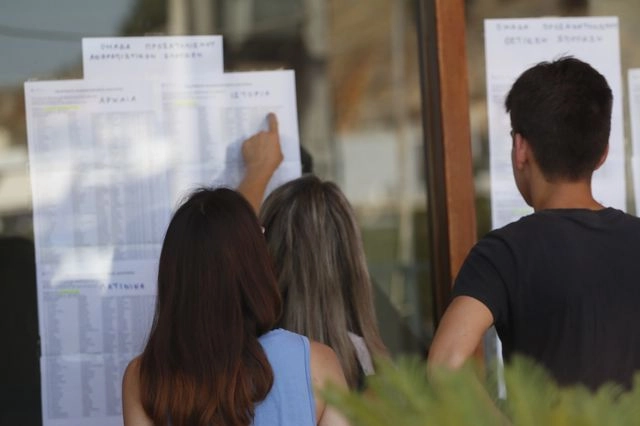
Who will participate in the dialogue for the National High School Diploma and what is the current situation regarding the Panhellenic Exams
- 03 Φεβρουαρίου 2026 20:44
The process for the National High School Diploma begins with the aim of reforming the high school system so that, as the Ministry of Education states, it can meet the great technological and professional challenges of the era and not become a “decorative paper.”
What is the National High School Diploma
It is a unified high school certificate that will be derived from continuous assessment throughout high school, with exams at the end of each grade and other tests.
The goal is to upgrade the role of high school as an educational level—not just to be used as preparation for the Panhellenic Exams.
The National High School Diploma is expected to play a significant role in university admissions, meaning that its grade will count or serve as a key criterion for access to higher education.
The Start of the National Dialogue
The Prime Minister, Kyriakos Mitsotakis, announced the beginning of the national dialogue for the new National High School Diploma, aiming to reform high school to respond to the major technological and professional challenges of the era, during a multi-ministerial meeting at the Maximos Mansion.
The main starting point of the dialogue is the need to break the “all-at-once” model, without compromising the reliability and quality of the Panhellenic Exams.
The goal of the National High School Diploma is to create a reliable, fair, and socially accepted system.
Reliability is the foundation of the design.
The dialogue has a clear institutional boundary: it focuses on high school and the National High School Diploma.
It starts from a common understanding of the educational reality, based on:
-
data,
-
international practices,
-
the experience of school practice,
-
and the challenges of the future.
It does not begin with ready-made solutions but with questions, principles, and assumptions.
The dialogue
This is not a technical closed-door discussion.
It is not a draft bill announcement.
Panhellenic Exams – What is the current situation
The Panhellenic Exams are not abolished and do not change at this stage.
The proposed changes do not concern:
-
students currently in high school,
-
or students in the 3rd year of middle school.
The dialogue concerns strengthening the value and reliability of high school and the National High School Diploma, not increasing examination pressure.
The first possible application horizon is the first year of high school in the 2027–2028 school year.
Core elements and goals of the reform
-
Reliability of the high school diploma.
-
Fairness and comparability of results.
-
Reducing exam-centered pressure without compromising reliability.
-
Social acceptance before implementation.
-
Strong safeguards against grade inflation.
Who participates in the national dialogue
The National Dialogue is conducted with the contribution of an independent committee of scientists, composed of highly respected university professors, with the role of:
-
scientific coordination,
-
documentation, and
-
synthesizing conclusions.
The dialogue involves, with distinct and institutionally clear roles:
-
the Institute of Educational Policy (IEP),
-
educators and education officials,
-
Higher Education Institutions,
-
parliamentary parties,
-
institutional and scientific bodies,
-
social partners,
-
students, and parents, within an open and participatory process.
How is the National Dialogue organized
The dialogue is structured into five pillars:
-
Educational Content
-
School Life
-
Teacher Training & Professional Development
-
Infrastructure
-
Governance
The process includes:
-
thematic working sub-groups,
-
regional forums,
-
digital consultation platform.
The participation of universities and political parties ensures academic continuity and political legitimacy, without role confusion.
Timeline
-
February 2026: Start – working groups – guiding questions.
-
March–April 2026: Thematic discussions & participatory dialogue.
-
May–June 2026: Synthesis & processing of specific issues.
-
July–September 2026: Public consultation on the Position Paper.
-
October 2026: Final Report & implementation roadmap with pilot phases.
The dialogue proceeds gradually, with milestones and independent evaluation.