The Coast Guard forgot to turn on the cameras in another incident with dead migrants
Διαβάζεται σε 6'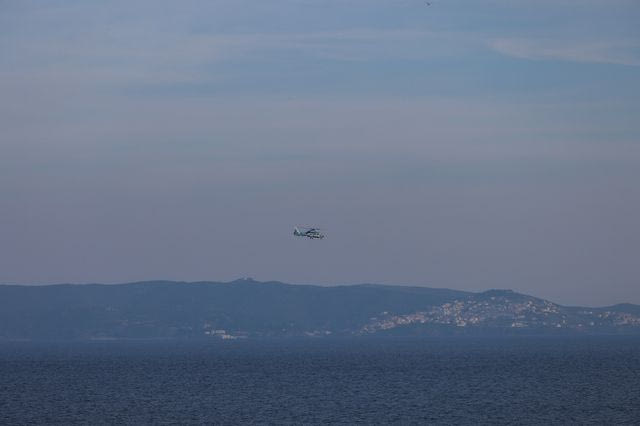
A recurring reality once again raises doubts about an incident involving the Greek Coast Guard, casting shadows over the descriptions it has provided to the public since yesterday about what happened on Chios.
- 04 Φεβρουαρίου 2026 15:36
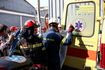
In yesterday’s incident on Chios, the Coast Guard once again failed to record anything from its operation, which ended with 15 dead migrants and 24 injured people who are hospitalized, while the search continues for the missing.
Despite reports circulating in the morning that videos would be made public about what happened at sea, by noon, as reported by the newspaper Kathimerini, the incident had not been recorded by cameras. Even though there was a camera on the Coast Guard vessel, the crew had failed to turn it on.
As of now, NEWS24/7 reports that unofficial testimonies from survivors to Coast Guard officers indicate that some survivors claim their boat collided with the Coast Guard’s vessel, while others do not understand how the collision occurred. The issue here is that the Coast Guard’s history includes the condemnation of Greece by the European Court of Human Rights (ECHR) in the case involving dead migrants at Farmakonisi, when the ECHR highlighted the identical testimonies that the Coast Guard had collected from survivors, which were very different from those given by the survivors to their lawyers later on.
In fact, with the initial testimonies from the survivors to the Coast Guard, the case had initially been closed. However, when the ECHR condemned Greece, it deemed the testimonies of the survivors to the Coast Guard as unreliable, much like in the case of Pylos.
Without Evidence, Just Like in Pylos
The Coast Guard, whose chief (Tryfonas Kontizas) along with 20 top officials has been criminally charged for the Pylos shipwreck on charges such as manslaughter due to negligence by omission in international waters within the Athens SAR area, and the exposure of individuals to danger from omission with a legal obligation to rescue helpless people, leading to death, has once again failed to record an operation that resulted in the deaths of migrants at sea.
Despite the much-publicized state-of-the-art systems and well-trained personnel, which Minister Thanasis Plevris praised earlier today, the cameras were not turned on in yesterday’s incident in Chios, meaning no video footage exists of what happened.
However, one thing is worth noting: this is not the first time. In 2023, during the shipwreck that sent hundreds of migrants to the bottom of the sea off Pylos, the Coast Guard’s vessels also failed to record what happened on the night of the deadliest shipwreck in the Mediterranean in decades.
The Ombudsman’s Damning Report on the Coast Guard in 2025
At that time, the Ombudsman conducted an investigation, noting problematic aspects in the Coast Guard’s internal investigation, and subsequently issued a report that described the Coast Guard’s refusal to provide evidence. The report was issued on 03.02.2025, exactly one year before yesterday’s incident:
“The Ombudsman requested specific elements, including electronic and audio records and the transcriptions of radio conversations that were recorded during the operation,” states the report.
“In relation to the electronic records and radio communications transcriptions, after it was informed that they did not exist, but there were wire-recorded conversations of the Emergency Response Coordination Center (E.K.S.E.D.), these were not forwarded.”
The Ombudsman further mentions the specific requested items:
“From the Coast Guard Headquarters, the following elements were requested:
i. Audiovisual and photographic material from all designated Coast Guard vessels and the Navy frigate that participated in the incident, along with the personnel manning them, as well as from the Coast Guard helicopter.
ii. All recorded communications from the E.K.S.E.D. with the maritime and aerial assets involved in the operation.
iii. Copies of the logbooks of all the vessels involved in the incident. (Initially, the logbooks of the vessels 080 and 090 were sent, and later those of 143, 606, 149, and 516).”
Eventually, the Ombudsman reports:
“Requested elements that were not sent and were not included in the investigation. These include:
i. Audiovisual or photographic material from the Coast Guard vessels 080, 090, 143, 516, 149, and 606. According to the response from the Coast Guard, such material did not exist.
ii. Material from the Navy frigate, referred to the Ministry of National Defense.
iii. Radio communications, for which it was informed that they were not recorded. However, wire-recorded communications from the E.K.S.E.D. were sent.
iv. Video footage recorded by the Captain of Coast Guard Vessel 920 during the operation, which was recorded on his mobile phone and handed over to the Naval Court of Piraeus, with the captain claiming not to have kept a copy.”
The Ombudsman continues:
“The VDR system on Coast Guard Vessel 920 malfunctioned, and as a result, despite the operation of thermal and other cameras, no part of the operation was recorded. It should be noted that the captain had raised the issue of the malfunction of the VDR system in 2021, yet no evidence shows that the relevant faults were addressed until the date of the shipwreck. The issue was finally resolved on 29.8.2023.”
vi. Copies of all data recorded by the Automatic Identification System (AIS), the GPS device, and the radar of Coast Guard Vessel 920. The Coast Guard responded that these data were unavailable, as the data from these peripheral systems are recorded via the VDR system, which, as previously mentioned, was nonfunctional.”
In yet another sea tragedy that led to the deaths of migrants, it seems the investigation will proceed in the dark.