Tempi: The big trial will take place in Larissa – Requests from relatives denied
Διαβάζεται σε 3'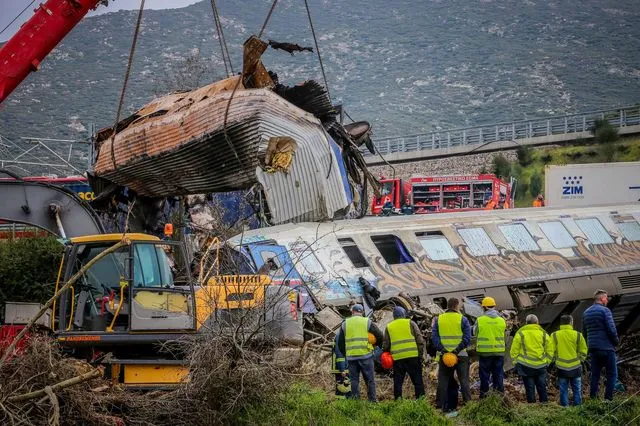
The Supreme Court has rejected the requests made by eight relatives of the victims, who had asked for the high-profile trial regarding the Tempi railway tragedy to be held in Larissa. The trial will proceed in Larissa as initially decided.
- 05 Φεβρουαρίου 2026 11:39
Despite objections and requests to move the trial to Athens or Thessaloniki for convenience, the highest court upheld the original decision, citing the local jurisdiction. Therefore, the trial is scheduled to begin on March 23 at the “Gaipolis” conference venue at the University campus in Larissa, as previously planned.
The relatives had argued that travel to Thessaloniki and Athens would be easier for them and the parties involved due to more transportation options, such as road and air travel. They also pointed out that the facilities in Larissa, where the trial will be held, are inadequate.
They referred to a previous trial conducted in Larissa regarding video footage from the tragedy, highlighting the difficulties encountered due to the large number of people attending the sessions.
The trial for the Tempi tragedy is expected to see more than 250 lawyers present in the courtroom, with the number growing as 36 defendants, the victims’ relatives, and the media will also be in attendance.
Wagons – Fire Starter, Unknown How Many Trains with the Same Specifications Are in Operation
Meanwhile, clarifications were provided regarding the recent report by the EODASAM concerning fire safety in the trains. The technical consultants from EDAPO (Independent Experts’ Committee of Families) highlighted gaps in the investigative process and the need for checks on other trains still in operation.
According to Kostas Lakafosis, an expert from EDAPO, “We are certain that at least two people (possibly between 5 and 7) had their senses, were speaking, and communicating. Had there been no fire, they would have survived.”
As stated in the EODASAM report, the three samples taken from the IC-62 train did not meet the fire resistance standards required by EN 45545-2.
The investigation reveals that there were three types of seats in the IC-62 train. In wagon B2, where the fire broke out (not due to the flame burst, but an independent fire), the seats were relatively new but highly flammable.
The tests from the German laboratory show that the older seats in B4 were much more fire-resistant. This was due to the intermediate layer (aramid) in the seats, which slows down the fire.
What’s also concerning is that it’s not yet clear how many trains still in operation have the same specifications as those found on the IC-62.
In response to a question from NEWS 24/7, Mr. Lakafosis stated, “From what we saw in the tests, at least the older seats have an underlying material that has been in use for the last 25 years. The issue probably concerns luxury cars, first-class, and compartments, but this is just my estimation. Someone needs to check and provide us with the answers. The RAS and the Ministry of Transport, which are responsible bodies, must answer this question.”