Chios, the 15 dead, and the question of the “missing cameras”
Διαβάζεται σε 5'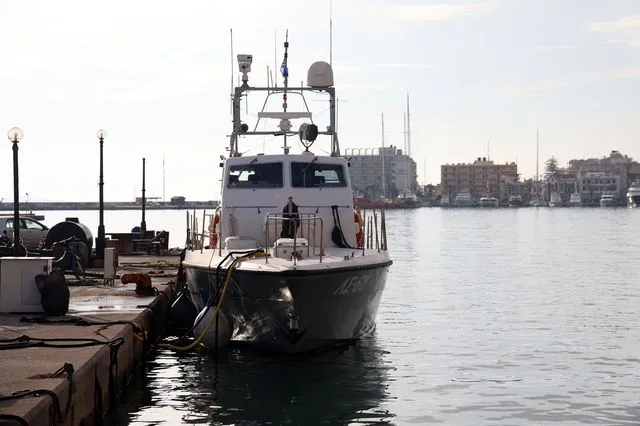
Τhe mass-casualty tragedy in Chios, with the death of 15 people after a collision between a refugee boat and a Coast Guard vessel, is not simply another maritime accident in the Aegean.
- 11 Φεβρουαρίου 2026 14:16
It is an event with serious legal and institutional implications that directly concerns the state’s duty to protect life, to rescue people in danger, and to be held accountable when state action—or omission—results in loss of life. The images from Chios, with citizens releasing lanterns into the sea and holding banners reading “15 dead is murder” and “Our ‘security’ is their grave,” express not only mourning but also a deep distrust toward the institutional management of truth.
The critical questions remain unanswered. How did a collision occur in calm sea conditions? What was the exact operational sequence of actions? Why has the refugees’ boat not been presented so far, even though it is a primary piece of evidence? And, above all, why is there no available recorded data from the mandatory cameras on the Coast Guard vessel?
The forensic findings add significant legal weight to the incident. The reports note that the deaths were not due to drowning, but to violent mechanical impact, with severe injuries and multiple traumas. These findings rule out the scenario of a “random shipwreck” and raise issues of proportionality, dangerous handling, and possible violation of the duty to rescue. Under international maritime law (UNCLOS, SOLAS, SAR Convention), as well as European and Greek law, every state authority has an enhanced obligation to prevent risk and rescue people in distress at sea.
Beyond maritime law, the incident raises serious issues under the European Convention on Human Rights. Article 2 of the ECHR (right to life) imposes not only a negative obligation to refrain from arbitrary deprivation of life, but also a positive obligation of prevention, as well as an obligation to conduct an effective, independent, and transparent investigation when loss of life is connected to state action. Article 3 (prohibition of inhuman or degrading treatment) and Article 13 (right to an effective remedy) reinforce the requirement for full documentation and accountability.
In this context, the absence or unavailability of audiovisual material from cameras that are mandated, funded, and installed precisely for transparency purposes is not a simple technical failure. It constitutes an evidentiary gap with potential consequences for state responsibility. When critical data are not collected, preserved, or made available, the possibility of an effective investigation is undermined and suspicion of cover-up grows.
The incident in Chios is not isolated. It fits into a recurring pattern seen in the Pylos shipwreck and—on a different front—in the Tempi train disaster. The common denominator is the loss or non-use of crucial evidence: cameras that were not functioning or footage that “does not exist,” delays in collecting evidence, alteration of scenes, and public-relations management before full investigation. In Pylos, questions about the authorities’ conduct and the absence of complete recording remain open. In Tempi, the destruction and failure to preserve critical evidence undermined trust in the administration of justice. The repetition of this pattern cannot be viewed as coincidence.
In public discourse, the invocation of “border security” often serves as an alibi for shifting the discussion away from the duty to protect human life. The choice of language such as “preventing invasions” in the description of operations managing migration flows is not neutral. It shifts a phenomenon of humanitarian need and international protection into the vocabulary of national defense and hostile threat, implying that people in fragile boats constitute a collective danger rather than bearers of rights. This rhetoric not only distorts the framework of public discussion but tends to legitimize high‑risk practices with reduced accountability, presented as supposedly necessary for “security.” But the rule of law does not stop at the borders, nor in times of crisis. Security based on opacity and suppression of evidence is not security; it is institutional degradation.
Neither international nor European law recognizes the concept of “invasion” for unarmed civilian populations seeking protection. On the contrary, the duty to rescue, the principle of non‑refoulement, and the obligation to respect human life take precedence over any deterrence logic. When state action is guided by a linguistically charged and legally improper notion like “preventing invasions,” the result is not merely political; it is profoundly legal, since the risk of violating fundamental rights and eroding the guarantees of the rule of law increases. The result, however, also has a moral dimension: instead of offering shelter to the stranger (Matthew 25:35–40), he is labeled an invader—therefore an enemy—who must be repelled.
Border protection is a legitimate state responsibility. However, exercising it requires strict compliance with international, European, and constitutional frameworks. Mandatory and continuous use of recording devices, preservation and immediate availability of the material to independent authorities, and genuinely independent investigations are not administrative details—they are fundamental guarantees of democratic governance.
The real dilemma is not “security or rights.” It is whether we will accept a notion of security detached from law and accountability, or whether we will insist on a form of security that respects human life and democratic legitimacy. If the tragedies of Chios, Pylos, and Tempi become normalized as unavoidable “side effects,” then we will have lost not only lives. We will have accepted a dangerous erosion of the rule of law itself.