Ten new drilling sites in Greek waters by 2033
Διαβάζεται σε 3'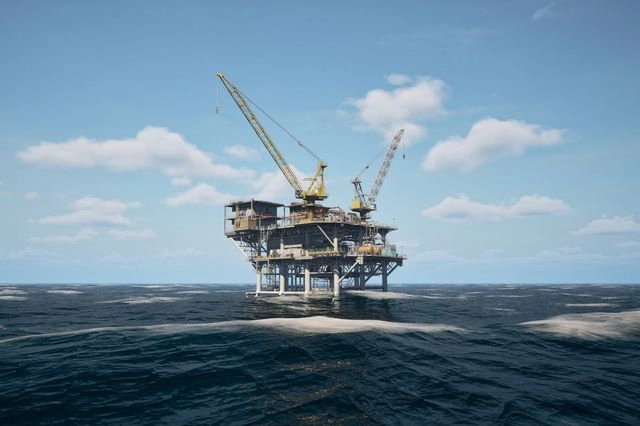
According to data presented by EDEYEP, exploratory drilling in nine areas will begin in the first quarter of 2027.
- 17 Φεβρουαρίου 2026 11:27
An investment wave of over 1 billion euros in seismic surveys and exploratory drilling is being set in motion for the next decade in Greece’s nine maritime blocks, according to the 10-year outlook presented by the Hellenic Hydrocarbon Resources Management (EDEYEP).
The cycle is set to begin in the first quarter of 2027 with the first drill at “Block 2” in the northwest Ionian. The last plot in the design, “South Crete 2”, is now scheduled for the end of 2032 or early 2033.
During the presentation of the Exploration Program: 10-Year Outlook, EDEYEP’s CEO, Aris Stefatos, shared the concessionaires’ estimates, indicating that the first hydrocarbon production in Greece could start between 2032 and 2035. However, these forecasts depend on the speed of the state mechanism, geopolitical developments, and most importantly, the results of the drilling operations.
The program anticipates a dense barrage of research over eight consecutive years, from this year through early 2033. In certain years, such as 2028, up to three drillings are expected to take place in different blocks within a few months, highlighting the intensity of the investment plans.
Specifically, in “Block 2” (Energean – ExxonMobil – Helleniq Energy), the first drill is scheduled for the first quarter of 2027, with the next one in the first quarter of 2029. In “Ionian” and “Block 10” in the Kyparissia Gulf (Helleniq Energy), the first drills are postponed to 2028, as the company is still evaluating data from 2D and 3D seismic surveys. In “Southwest of Crete” and “West of Crete” (ExxonMobil – Helleniq Energy), exploratory operations are planned from 2028 to 2030.
Similarly, for the newer blocks in the Chevron – Helleniq Energy consortium, “A2” is planned for 2031, “South Peloponnese” also for the end of 2031, and “South Crete 1” and “South Crete 2” are postponed to 2032-2033.
The decade’s investments include 41.47 million euros from new lease agreements, approximately 80 million euros for drilling in “Block 2,” and an additional 790 million euros for future drillings. This sum is bolstered by the significant expansion of concessions, which, after the latest agreements, now cover 94,094 square kilometers, up from 47,905 square kilometers previously—approximately 71% of Greece’s territory.
“Block 2” is considered a barometer for the entire program, as it is estimated to potentially host a reservoir of 200 billion cubic feet. On a larger scale, the potential reserves in Crete and the Ionian could reach 24 trillion cubic feet (680 billion cubic meters), a level multiple times higher than Greece’s domestic needs.
If the program proceeds without significant delays, between 2027 and 2033, about ten new drills will be added to the national archive, raising the total number above 180. This marks a new chapter for the Greek energy map, with the horizon—if everything progresses according to plan—being the first productions in the early next decade.