New Setback in the Studies for the Greece-Cyprus Cable
Διαβάζεται σε 3'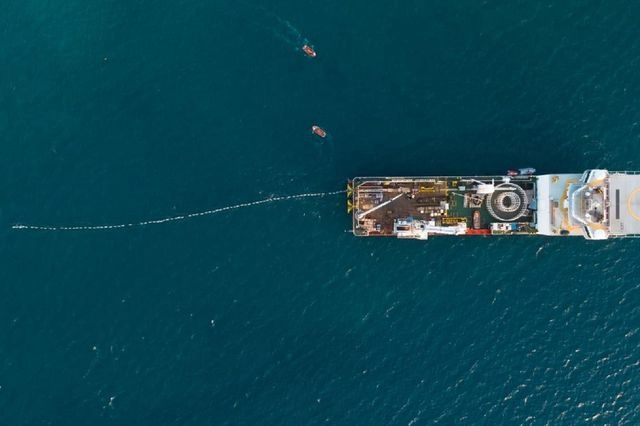
The Cypriot government is facing both internal and European criticism for the delays in implementing the electrical interconnection with Greece.
- 18 Φεβρουαρίου 2026 07:28
New developments are shaping up around the Greece-Cyprus electrical interconnection project, with public statements escalating tensions and the Cypriot government coming under fire, both internally and from the European Commission and Greece.
Regarding internal matters, a notable example is the interview with the former Minister of Energy of Cyprus, Giorgos Papathanasiou, in the newspaper Politis, where he criticizes the management of the issue. According to him, Cyprus “stayed with feasibility studies and does not see the bigger picture,” warning that the delays pose serious risks to electricity adequacy and cost.
He also refers to the structure of the domestic market, noting that every new electricity source outside local control is treated as a threat. In a small and isolated market, he points out, the lack of interconnections leaves the country exposed to high production costs, limited competition, and increased supply insecurity.
He places special emphasis on the distortion of the electricity market, highlighting that commercial renewable energy parks produce low-cost energy, but are compensated based on the cost of conventional electricity production by the Electricity Authority of Cyprus. According to Papathanasiou, this model maintains high profitability in the supply chain without passing on substantial benefits to consumers, while the structural weaknesses lead the state to continuous subsidies and tax breaks instead of meaningful reforms.
At the same time, from Brussels, the need to lift Cyprus’ energy isolation is reiterated. In an interview with Phileleftheros, the Commissioner for Climate, Zero Emissions, and Clean Development, Wopke Hoekstra, emphasizes that Cyprus remains the only EU member state without a connection to the European electricity grid, limiting its participation in the internal energy market and hindering the integration of renewable energy sources (RES).
Hoekstra acknowledges that the progress of the project has been impacted by a complex geopolitical environment, affecting both cost and timelines. However, he emphasizes that the interconnection has strategic importance. He also reminds that the European Commission has consistently supported the project, both financially through the “Connecting Europe” mechanism and politically, by including it among the eight priority energy corridors.
Meanwhile, Athens seems to be moving away from the low profile it had adopted after the decision to update the technical-economic parameters of the project. Deputy Foreign Minister Haris Theoharis, speaking to a television station, stated that the laying of the cable is not connected to Turkish reactions, but to the stance of the Cypriot side.
“The reactions at this moment are not coming from Turkey, but from Cyprus,” he said, adding that they should be resolved so the project can move forward. This statement reignites the discussion on the will of Nicosia, and it remains to be seen whether these remarks reflect a personal opinion or a broader shift in Greece’s stance.
With the procedures for selecting a company to update the technical-economic studies underway, the Great Sea Interconnector is once again at the forefront as a critical energy and geopolitical bet, with the discussion now clearly taking on political dimensions.