Kaisariani: Experts in Belgium over the photographs – The three stages
Διαβάζεται σε 4'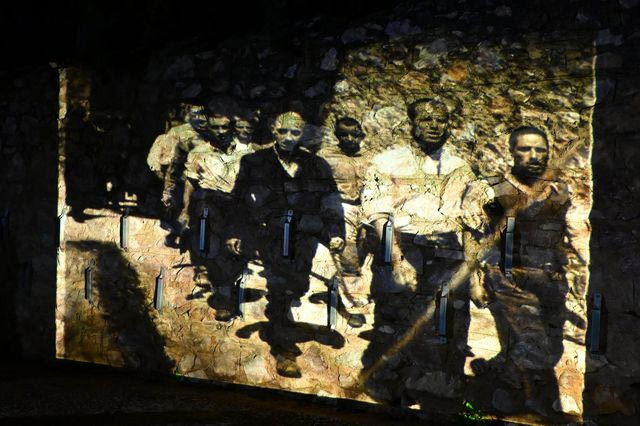
The Greek delegation, consisting of experienced civil servants and specialised photographers, is meeting the Belgian collector to authenticate and claim the frames.
- 20 Φεβρουαρίου 2026 08:35
Today, Friday (20/2), a team of experts from the Ministry of Culture is expected to arrive in Evergem, Belgium, to meet Belgian collector Tim de Craene. The team will examine in person the 12 photographic documents depicting the final moments of the 200 executed communist resistance fighters at the Kaisariani Shooting Range on May 1, 1944, with the aim of initiating the process for acquiring the rare collection.
According to the information presented, the photographs form part of the personal collection of Hermann Hoyer, a Wehrmacht lieutenant during the Occupation. Hoyer, who was serving at the Malakasa camp, is said to have received explicit orders to oversee the transfer of the 200 prisoners from Haidari and to participate in the execution process at the Kaisariani Shooting Range, recording the tragic moments with his camera for propaganda purposes.
The headquarters of the company owned by the holder of the disputed photographs was located in an area 30 kilometres outside the centre of Ghent. It is a private premises where the owner operates his online store.
In a statement to ERT, the collector confirmed possession of the archive but chose to keep a low profile, stating that he would make public comments only after the completion of the process. It was also disclosed that the meeting with officials from the Ministry of Culture has been scheduled at a “neutral location” rather than at the premises of his company, Crain’s Militaria.
Moreover, by unanimous decision of the Central Council of Modern Monuments on February 18, the collection was declared a movable monument, paving the way for its claim by the state. The Greek government has made it clear that this move, together with the authentication and claim of the photographs, aims to safeguard historical memory.
The Ministry of Culture described the photographs as invaluable. “The competent Directorate of Modern Cultural Heritage immediately contacted the collector, and experts are travelling on Friday to his headquarters in Evergem, Belgium, in order to examine the collection up close and speak with him. With today’s designation of the collection as a monument, the Ministry of Culture obtains the legal basis to claim and acquire it on behalf of the Greek state,” said Minister of Culture Lina Mendoni.
The experts will follow three stages:
- Verification of the authenticity of the original photographs.
- Investigation into the legality of their origin and possession.
- Negotiation for their acquisition by the Greek state.
The Association of Imprisoned and Exiled Resistance Fighters (SFEEA) also called for the acquisition of the documents by the Greek state in an announcement. “The ‘200’ were not a number. They were workers, teachers, students. […] Their sacrifice remains a living reminder that freedom is not granted but won,” it stressed.
The case gained prominence when the photographs appeared on eBay on Saturday, February 14. The Belgian collector withdrew the auction after the matter became public and stated his willingness to cooperate with the Greek authorities.
On Wednesday, a large gathering was held in Kaisariani following a call by the Attica Regional Organisation of KNE (Communist Youth of Greece). The photographs from the day of the execution were projected onto a wall, bringing the faces back to the very place where they stood.
The Communist Party of Greece (KKE) identified two of those depicted in the photographs among the 200 executed at the shooting range. Based on the archives held by the KKE Central Committee, research so far indicates that one of the photographs most likely shows 30-year-old Thrasyvoulos Kalafatakis, the man wearing the white shirt, and Dimitris Papadopoulos of Pontic origin, depicted to his left.
Finally, following the publication of these documents, the Municipality of Haidari has renewed its call for Block 15 of the camp to be returned to the local community.
This is the site where the 200 were detained before being transferred to the Kaisariani Shooting Range. The aim is to convert it into a Museum of National Resistance, as a minimal tribute to their sacrifice and as a place for preserving historical memory for future generations.