Fuel pass and diesel subsidy at the pump – Payments and the “fine print”
Διαβάζεται σε 4'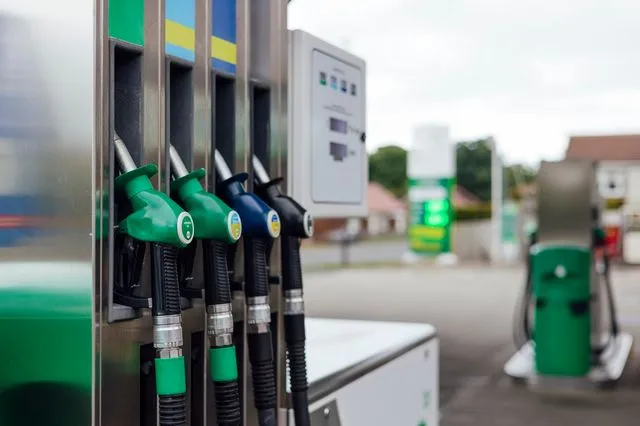
The economic team insists on the logic of targeted interventions, rejecting reductions in excise duty (EFK) or VAT proposed by market stakeholders and opposition parties.
- 24 Μαρτίου 2026 10:07
With the aim of ensuring that the subsidy on diesel for transport is reflected immediately at the pump and that the new fuel pass is paid before Easter, the government is accelerating procedures for the implementation of fuel support measures.
The Legislative Act is expected to be issued within the day, paving the way for the activation of the package and the launch of the platform within the next week.
At the same time, the economic team insists on the logic of targeted interventions, rejecting reductions in excise duty (EFK) or VAT proposed by market stakeholders and opposition parties. It argues that this approach limits the fiscal cost and ensures that support is directed more effectively to those who need it.
The subsidy on diesel for transport is set at 16 cents per litre before VAT, corresponding to a benefit of approximately 20 cents at the pump. Its impact is expected to be felt within 4 to 5 days from the implementation of the measure.
At the same time, the new fuel pass is being activated, which will be paid as a one-off and covers a two-month period. For private cars, the support amounts to €50 in mainland areas and €60 in island regions, provided a digital card is selected. In the case of a direct bank deposit, the amounts are set at €40 and €50 respectively.
For motorcycles, the subsidy amounts to €30 in mainland Greece and €35 in island regions, while without the use of a digital card it is reduced by €5. The choice of a digital card provides greater support, as it allows immediate use of the funds via POS.
How will the support be granted?
The subsidy will be granted through a dedicated platform on gov.gr. Beneficiaries will declare the vehicle for which they are applying for support, provided that it is in circulation, insured and without outstanding road tax debts. Each individual may declare only one vehicle, while each vehicle corresponds to one beneficiary.
Use of the digital card
The digital card is not limited exclusively to fuel purchases, as it can also be used for payments on public transport and taxis. The amount must be used within three to four months.
Who are the beneficiaries?
Beneficiaries are individuals, including self-employed professionals, with tax residence in Greece and specific income criteria.
Annual income is set at up to €25,000 for single individuals and up to €35,000 for married couples, with an increase of €5,000 for each dependent child. For single-parent families, the limit amounts to €39,000, with a corresponding increase for each additional child.
The timetable
According to the plan, the platform will open within the next week, while the first payments are expected to be made by the end of the month, so that beneficiaries can make use of the support before Easter.
The choice of combining targeted subsidy for petrol and a horizontal intervention on diesel is not accidental. The economic team estimates that the cost of diesel directly affects transport and, consequently, product prices, maintaining the risk of new inflationary pressures.
Why is a tax reduction rejected?
At the same time, the government is not currently considering reducing the Special Consumption Tax or VAT on fuel, despite the fact that other European countries have proceeded with similar measures.
As government spokesperson Pavlos Marinakis stated, such an intervention would have a high fiscal cost, given that excise duty generates approximately €4bn annually. Moreover, it does not ensure that the benefit would be directed exclusively to the most vulnerable, as higher-income consumers or even visitors to the country would also benefit.
In this context, the government favours measures of limited duration and targeted nature, leaving open the possibility of revisiting its policy depending on the course of international prices and inflation.