Stournaras: 2026 Growth forecast at 1.9% amid middle east uncertainty
Διαβάζεται σε 4'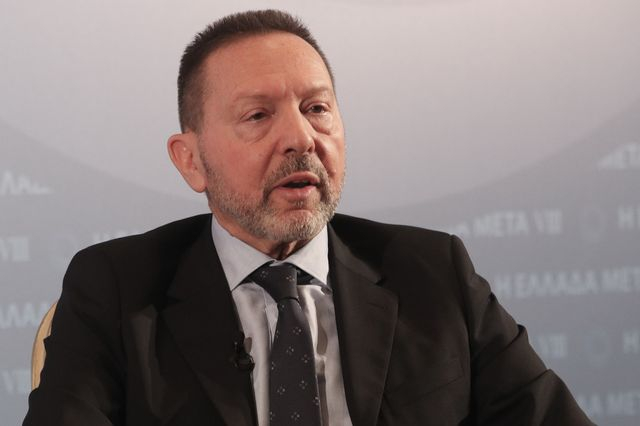
Bank of Greece warning bell on inflation and external deficit. Notes slowdown but also strong resilience of the economy. Stournaras’ message on reforms and stability.
- 06 Απριλίου 2026 14:52
The Greek economy is entering a phase of slowdown in 2026, with the Governor of the Bank of Greece, Yannis Stournaras, outlining a more restrained outlook for growth amid the burden of the geopolitical crisis in the Middle East. As he stated at the 93rd annual general meeting of the Bank of Greece shareholders, the growth rate of the Greek economy is projected at 1.9% for 2026, down from a previous estimate of 2.1%, yet still higher than the Eurozone average, which is expected to be limited to 0.9%.
Despite this relative resilience, the risk of stagflation is now becoming visible, as the slowdown in economic activity is combined with a resurgence of inflationary pressures. The disinflation process is expected to stall, with inflation projected at 3.1% in 2026, a level higher than the Eurozone average, while core inflation is forecast at 3%, indicating that pressures remain widespread across the economy.
On the fiscal front, the picture remains clearly positive, with the Greek economy maintaining strong performance. The primary surplus for 2025 is estimated at 4.4% of GDP, exceeding targets once again, while the overall general government balance also remains in surplus. For 2026, a strong primary surplus close to 3.2% of GDP is projected, along with a marginally surplus budget, developments that further strengthen the credibility of economic policy and confirm the importance of prudent fiscal management.
A similarly positive picture emerges for public debt, which declined to 146% of GDP in 2025, marking a significant reduction compared to 2024 and reaching its lowest level since 2010. This development is attributed to a combination of active debt management, early repayments, and high cash reserves—factors that enhance sustainability and limit the country’s exposure to short-term market fluctuations.
However, the major weakness of the Greek economy continues to lie in the external balance, as the current account deficit is not expected to improve further in 2026. Despite support from goods exports, tourism revenues, inflows of European funds, and foreign direct investment, rising international energy prices, increased imports of investment goods, and the re-emergence of inflationary pressures are weighing on the trade balance. As Mr Stournaras noted, this persistent deficit remains the main source of vulnerability for the economy and depends largely on the duration and intensity of the crisis in the Middle East, as well as its impact on tourism, global demand, and energy prices.
The banking system
Despite the challenges, the Greek economy and the banking system are entering this new period of uncertainty on a strong footing, supported by sound fiscal figures, high liquidity, strengthened capital adequacy, and access to Recovery Fund resources. These factors act as critical buffers of resilience against external shocks.
Within this framework, the Governor of the Bank of Greece placed particular emphasis on the need to continue reforms, improve competitiveness, and maintain political stability, stressing that a predictable institutional environment is a key prerequisite for sustainable growth and prosperity.
Finally, referring to the monetary policy of the European Central Bank (ECB), Mr Stournaras left open the possibility of adjustments, noting that decisions will be made based on the data of each period, with the ECB remaining ready to act flexibly—even towards interest rate cuts—should conditions require it.