Cyprus: The “ghost” shelters and Akrotiri
Διαβάζεται σε 5'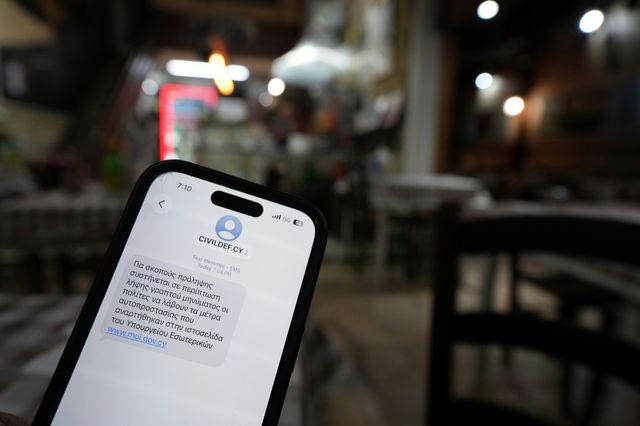
NEWS 24/7 searched for several civil defense shelters in the center of Limassol. Are they actually ready to be used when needed?
- 06 Μαρτίου 2026 14:59
In recent days, Cyprus seems to be living under a kind of war-like situation without an actual war.
Rising tensions in the region, increased military presence, and constant warnings about possible threats have brought an old but crucial issue back into focus: civil defense shelters.
In theory, a network of shelters exists across the island and is considered a key pillar for protecting the civilian population in the event of an attack. However, its actual readiness and adequacy are now being questioned.
NEWS 24/7 attempted to locate some of these shelters in central Limassol.
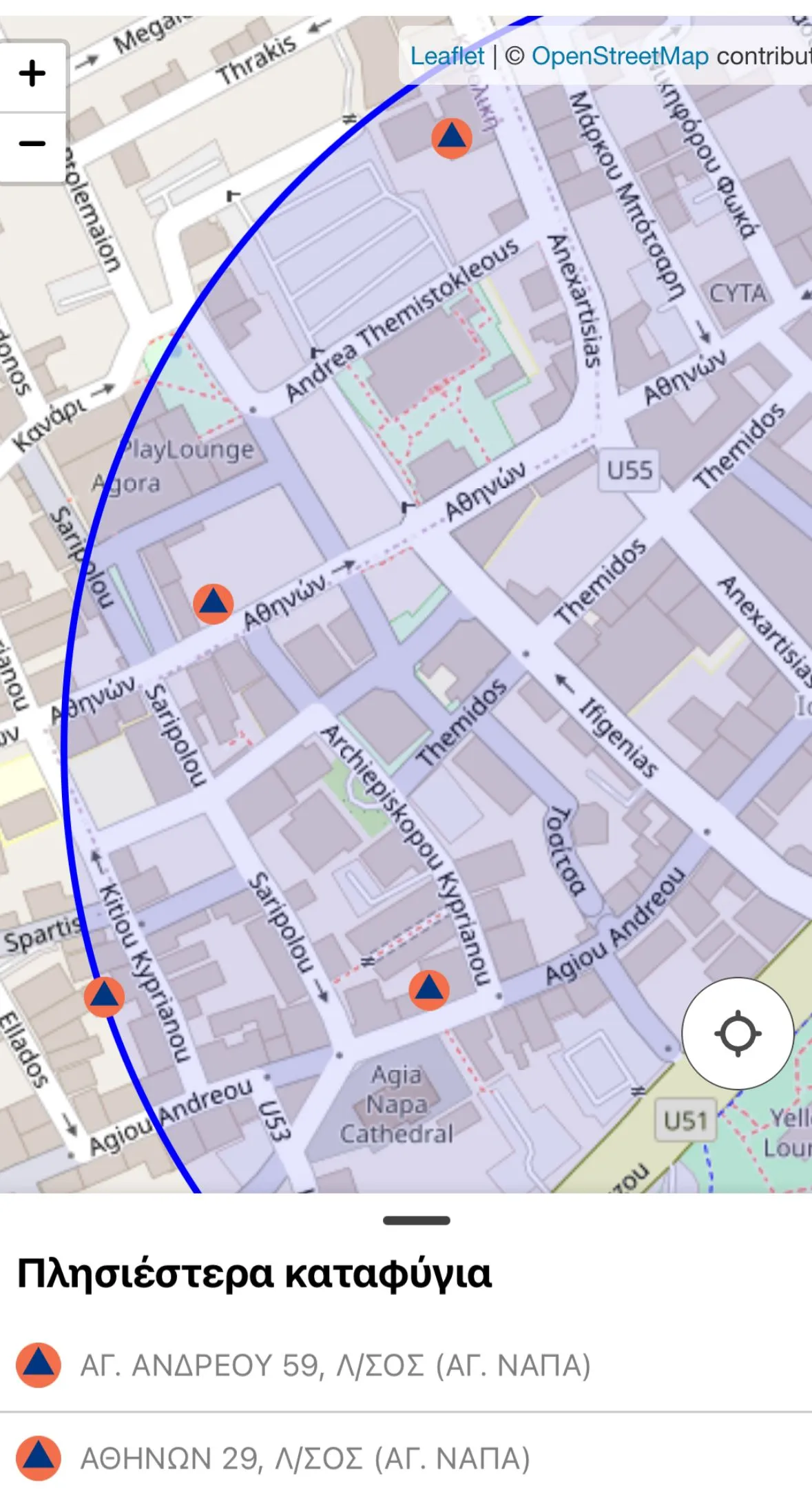
Using the SafeCY app, which directs citizens to the nearest shelter, reporters moved within a one-kilometer radius. Of the four locations shown on the map, three turned out to be inaccessible: there were no signs, no visible entrances, and in some cases they were behind closed doors or inside private spaces.
This situation reflects a growing concern among residents of the island: the shelters exist—but are they really ready to be used when needed?
Capacity, readiness and “ghost shelters”
Responsibility for the shelter system lies with the Cyprus Civil Defence (similar to Civil Protection), which manages a network of about 2,200 to 2,300 shelters across the Republic of Cyprus.
Most of them are not standalone military bunkers, but underground spaces designated as shelters within apartment buildings, public buildings, schools, or municipal facilities.
The theoretical capacity of the system is estimated to cover about 30% to 35% of Cyprus’s population, roughly 300,000 to 350,000 people. This means that in a major crisis, not all residents could be accommodated, mainly only those located near specific facilities.
Shelters fall into three main categories:
Private shelters in apartment building basements
Public shelters belonging to municipalities or state organizations
Shelters in school complexes, which are activated during periods of crisis
In practice, these are spaces required by urban planning regulations so they can be used in case of war or air raids.
NEWS 24/7 used the SafeCY app to search within a one-kilometer radius of Independence Street, the main road in Limassol. Four shelters were identified.
One was located inside an apartment building, another in a shop basement, and another in a parking area. In all cases there were no signs indicating the existence of a shelter, meaning that in an emergency citizens would have to navigate on their own.
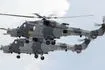
![]() A Fighter Jet takes off from the U.K.'s RAF Akrotiri air base after it was hit by a drone strike early morning near Limassol, Cyprus, Monday, March, 2, 2026. (AP Photo/Petros Karadjias)
A Fighter Jet takes off from the U.K.'s RAF Akrotiri air base after it was hit by a drone strike early morning near Limassol, Cyprus, Monday, March, 2, 2026. (AP Photo/Petros Karadjias)
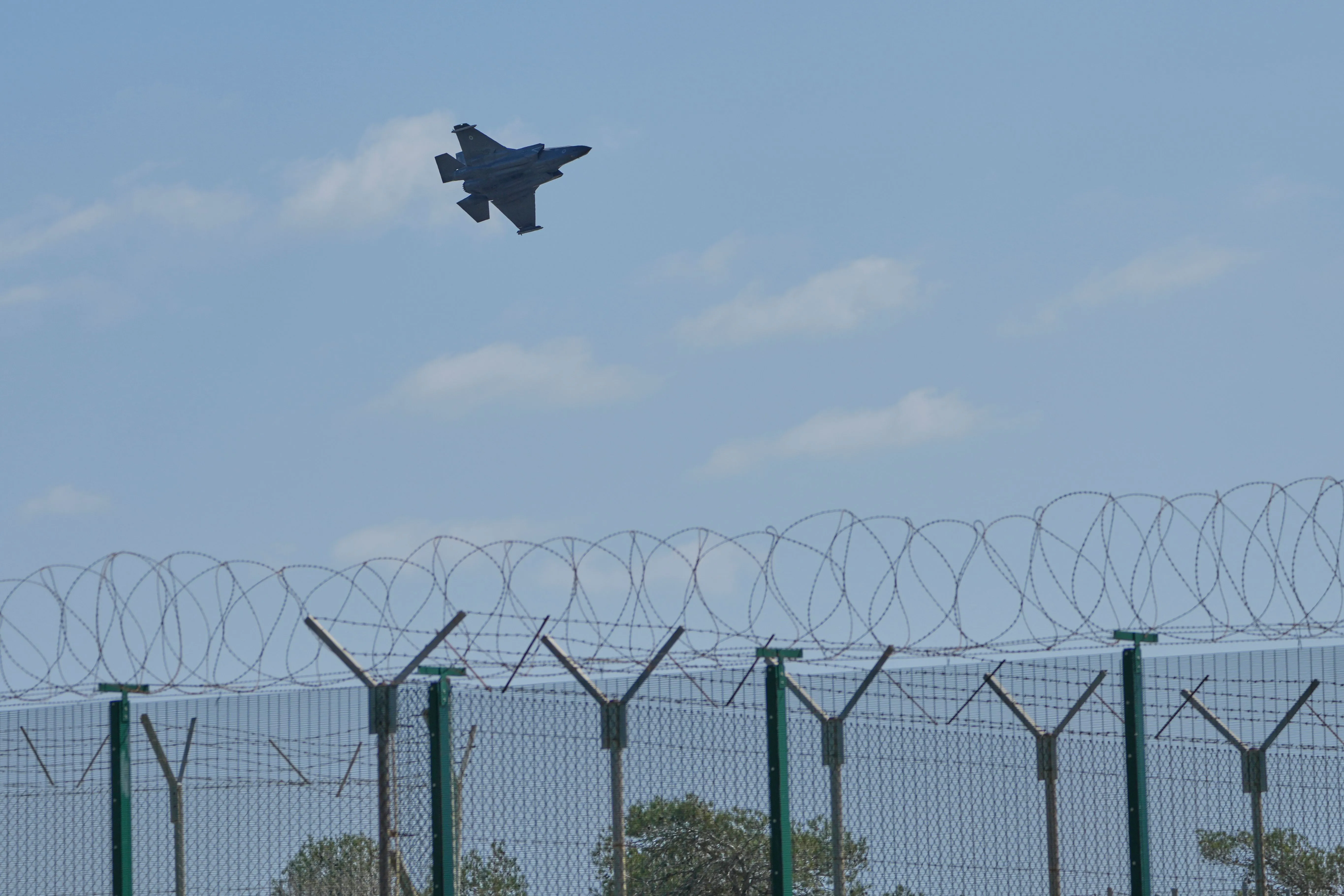
A Fighter Jet takes off from the U.K.’s RAF Akrotiri air base after it was hit by a drone strike early morning near Limassol, Cyprus, Monday, March, 2, 2026. (AP Photo/Petros Karadjias)
No shelters in Akrotiri
The British base located in the village of Akrotiri, west of Limassol, has reportedly been receiving daily threats from drones.
Authorities had begun evacuating the settlement, but in recent days more and more residents have been returning.
The most worrying point is that there are no shelters in the area at all.
When residents were asked about their absence, they replied:
“Go ask the British.”
The wider area is British territory, part of the Akrotiri and Dhekelia Sovereign Base Areas, and it is policed by British authorities who are the sovereign power in Akrotiri.
Need for modernization
Cyprus’s shelter system dates mainly from the period after the Turkish invasion of Cyprus (1974), when the experience of the invasion led to the creation of protection spaces for civilians.
However, several experts point out that many shelters were designed based on the threat of aerial bombardment at that time, not modern precision missile attacks, raising questions about whether the infrastructure meets today’s conditions.
In many cases these spaces are used in everyday life as storage rooms, and they do not always have basic infrastructure such as:
- ventilation systems
- air filters
- generators
- sanitary facilities
At the same time, many residents do not even know that their building contains a shelter, highlighting the gap between institutional planning and actual operational readiness.
Cypriot authorities have recently begun inspections and updates of shelter records. So far, however, no general activation of the shelter system has been announced, nor have instructions been issued for mass preparation of the population, volunteers, or facilities.