Decision time for farmers – The scenarios under consideration
Διαβάζεται σε 9'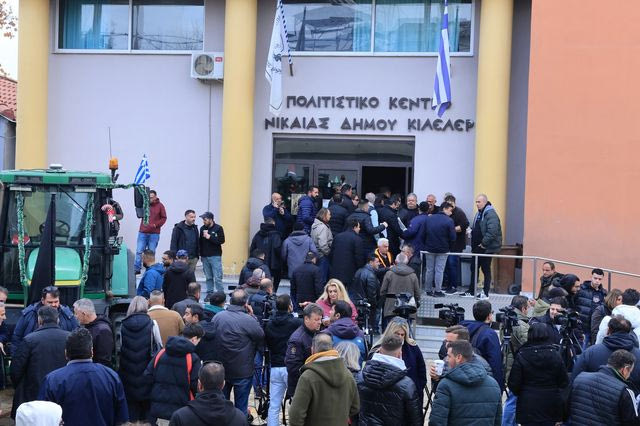
What farmers are demanding in order to enter into dialogue with Mitsotakis. A meeting only with solutions on the table, they say at most roadblocks. The prime minister’s “pleas” to New Democracy MPs.
- 13 Δεκεμβρίου 2025 13:21
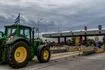
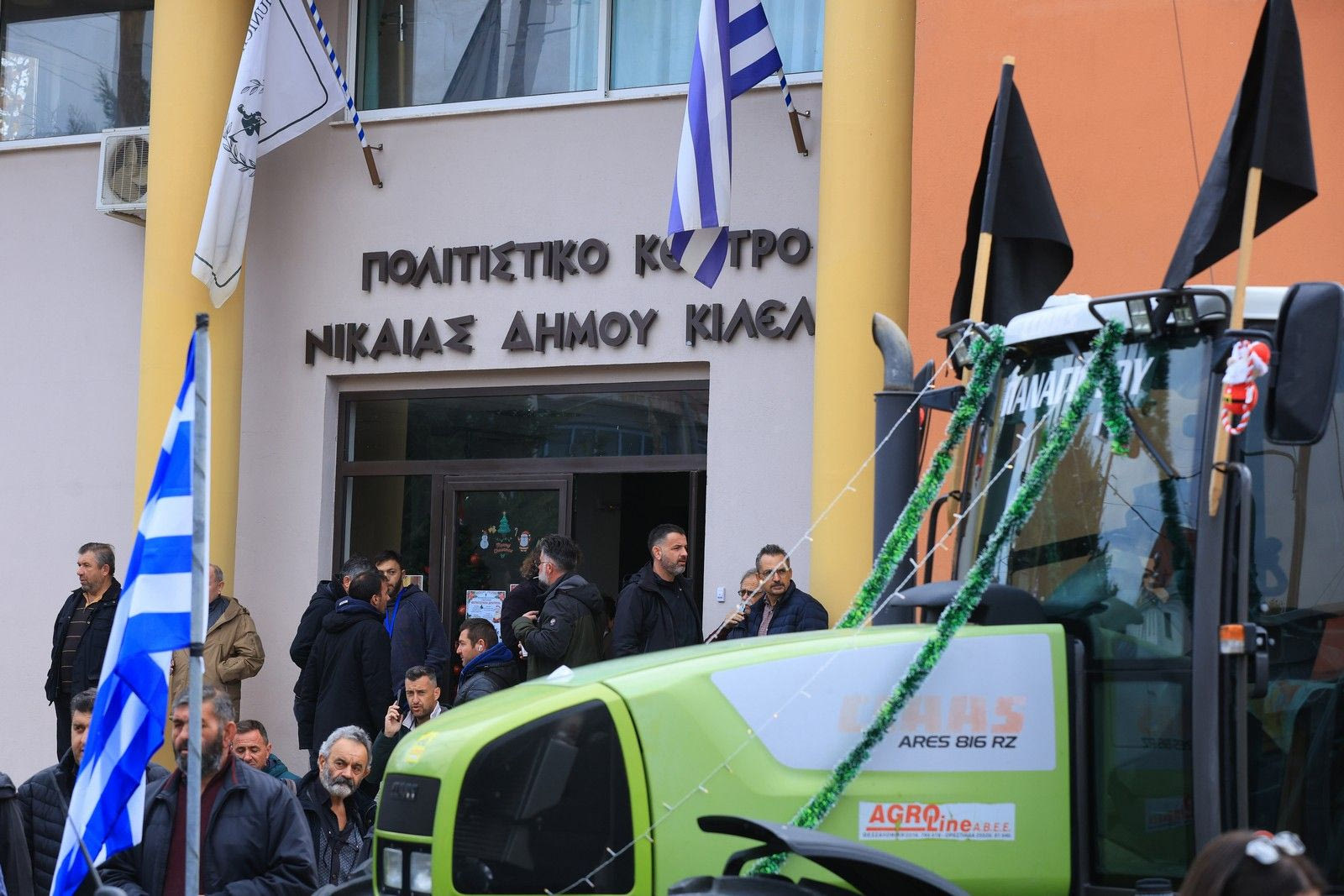
All eyes are in Larissa, where farmers from across the country have gathered to take part in a nationwide meeting at which it will be decided how the protests will continue.
The meeting began with a delay, as hundreds of farmers and livestock breeders were present at the site and had to be registered in order to participate.
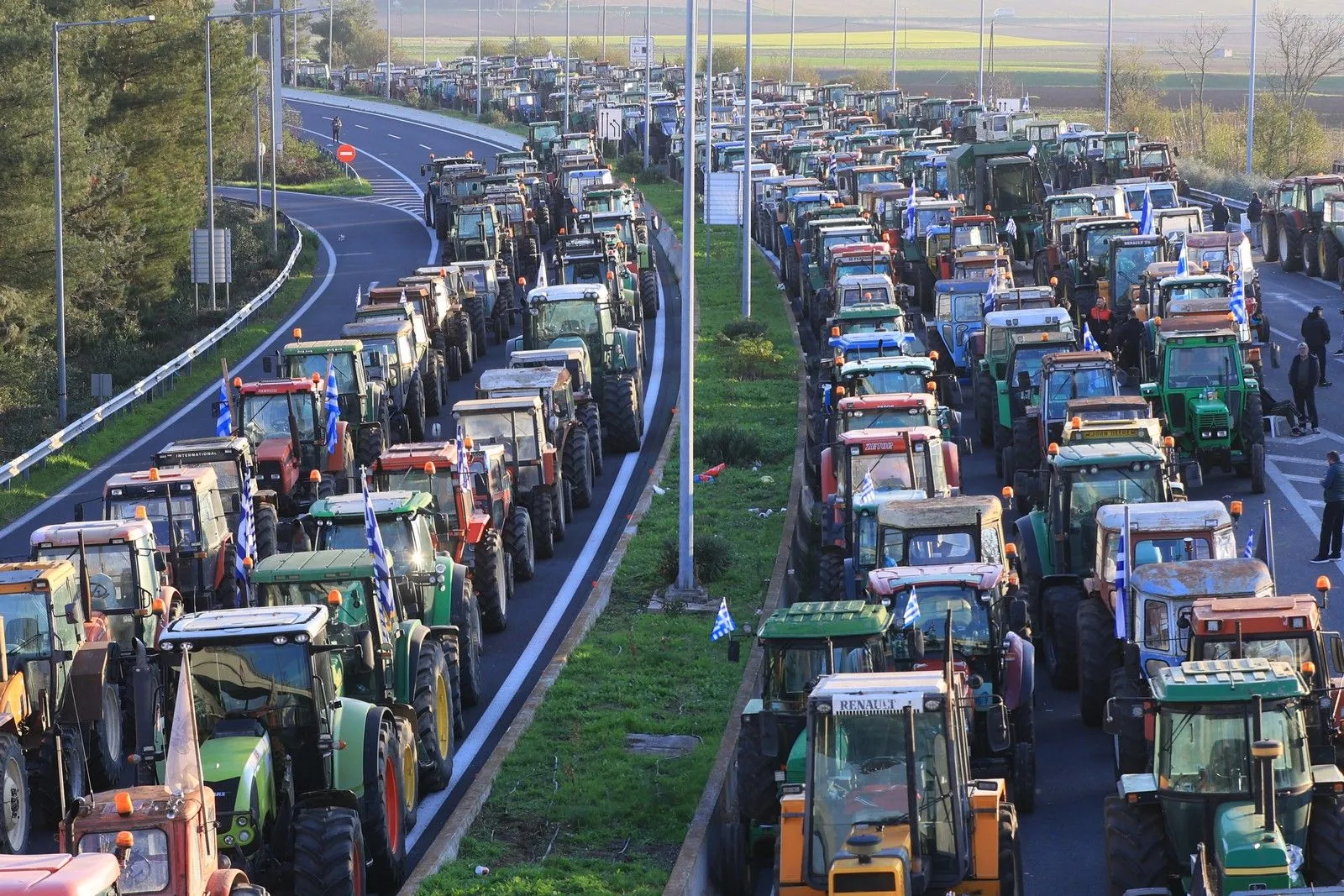
The farming community says it is determined to remain at the roadblocks until its core demands are met, concerning production costs, delays in subsidies and other problems facing the primary sector. In fact, the statement by Kyriakos Mitsotakis that he will be waiting in his office on Monday at 5pm for whatever delegation the farmers appoint appears to have angered farmers and livestock breeders.
This is because they interpreted the prime minister’s invitation, made during yesterday’s meeting of the New Democracy parliamentary group, as a disingenuous move and a mockery, coming just one day before the nationwide conference of the farmers’ roadblocks.
They argue that Mr Mitsotakis rushed to present himself as taking the initiative for dialogue by setting the day and time of the meeting himself (not coincidentally on the eve of the budget vote), without, however, committing to meeting their demands — and only after the government’s strategy of tension and “social automation” had fallen flat.
Farmers’ suspicions were further fuelled by the explanations of the prime minister’s proposal given by government spokesperson Pavlos Marinakis.
The government talks about dialogue, but sticks to its positions
“We have no illusions; we do not expect that after a single meeting, people who have their demands — most of which are justifiably calling for more, as is the case for all workers — will leave the meeting fully satisfied and that the claims will stop,” Mr Marinakis said yesterday afternoon on SKAI.
He explained that the prime minister wants the meeting with farmers “to listen to their demands and see what best he can do.” However, he repeated that “we should not expect a return to the logic of ‘give everything,’ ‘there is money,’ ‘all the kilos, all the money,’” pre-emptively characterising the farmers’ demands as maximalist.
He also announced that Mr Mitsotakis will point out to farmers “that the closure of roads and the inconvenience caused to citizens helps no one and is not something that can be accepted. That is, we cannot talk about satisfying demands when roads are closed. This must be made clear.”
The government spokesperson also stated that “we do not believe in bargaining” and attempted to link the roadblocks to those who illegally received subsidies from OPEKEPE. “Among those who are rightly protesting, those whose party has been cut short have also infiltrated. Perhaps they are the ones shouting the loudest. The party will not start again,” he said characteristically.
What farmers are expected to decide today in Nikaia, Larissa
According to information, it is likely that the nationwide conference of the roadblocks in Nikaia, Larissa — which is currently under way — will decide that representatives of farmers and livestock breeders will not go to the Maximos Mansion on Monday. Instead, they will send their joint demands to the government and first ask for a response.
“A meeting only with solutions on the table,” they say characteristically. After all, when the farmers’ roadblocks were lifted in 2024 following a meeting with Mr Mitsotakis himself, farmers went to the Maximos Mansion already holding the outline of an agreement.
Another proposal that has been put forward is to send a delegation, but made up of young farmers who would not have the authority to negotiate, only to convey any commitments made by the prime minister back to the roadblocks.
In any case, if farmers do not first receive guarantees that their problems will be resolved, they do not intend to go to the Maximos Mansion for “tea and sympathy.”
The Cretans and everyone else
The ongoing revelations surrounding the OPEKEPE case, with Crete at its centre, are fuelling even greater anger, particularly among farmers in Thessaly and northern Greece. The fact that, before any meeting with a unified delegation of farmers took place, Deputy Prime Minister Kostis Hatzidakis and the Minister of Rural Development met with Cretan farmers and livestock breeders also caused irritation. Even more so did the rumours that the government is promising Cretan producers subsidies as compensation for the abolition of the technical solution.
The Cretans, of course, are acting relatively autonomously from the roadblocks in the rest of Greece, which themselves are again divided over strategy and the ultimate objectives of the protests.
After all, each region and sector faces its own particular problems, although there are two core demands shared by all: reducing production costs through the extension and improvement of measures related to electricity prices and agricultural diesel. Livestock breeders, however, are in an especially dire position because of sheep and goat pox.
There, a programme to rebuild livestock herds will be required, similar to the one announced after Daniel. Provided, of course, that this too does not take two years to materialise. It should be noted, however, that for the reconstruction of livestock herds to begin, the pox must first be brought under control and at least six months must have passed since the last recorded case.
Internal party “roadblock” in New Democracy as well
While farmers and livestock breeders are meeting in Nikaia, Larissa, in Athens Mr Mitsotakis will be speaking at a meeting of the presidents of New Democracy’s local party organisations (DEEP and DIMTO), ahead of the party’s “blue” congress, which will now take place from 15 to 17 May 2026.
He is expected to once again send a message to farmers, but above all to attempt to inject optimism about the ruling party’s ability to rally around the forthcoming congress. The government’s handling of the farmers’ roadblocks, however, has heightened fears among ND MPs elected in rural constituencies about the electoral consequences.
It is no coincidence that, during yesterday’s speech to the parliamentary group, the prime minister sent messages not only to farmers but also to ND MPs. He described the tension at last Wednesday’s meeting between MPs and Mr Tsiaras as a “lively discussion,” said that “we are a democratic party, we give our MPs the floor,” but immediately afterwards urged MPs to defend government policy, particularly on agricultural issues but also more broadly.
He also sought to rein in ND MPs who hope that engaging in internal party opposition will secure their re-election. “Only when the party prevails can its MP move forward as well. And no one stands to gain personally if the party does not first prevail politically,” Mr Mitsotakis said pointedly.
Naturally, he did not fail to repeat the narrative of political stability. He argued in particular that the stake in the next elections is “whether the country will remain stable and secure or become an ‘ungovernable polity’, hostage to a highly fragmented political landscape at a turbulent time.”
Disagreements swept under the carpet this time
The prime minister even discouraged MPs from voicing disagreements on agricultural issues, saying that yesterday’s meeting was focused on the budget.
In any case, the very fact that the parliamentary group meeting — which MPs had been persistently requesting for some time — was scheduled for the day the budget debate was due to begin acted as a deterrent to the expression of dissent. So too did the election of the finance minister, Kyriakos Pierrakakis, to the presidency of the Eurogroup, with which Mr Mitsotakis opened his speech.
Against the backdrop of speculation about Pierrakakis’s leadership ambitions, the prime minister was careful to describe this as a success achieved through the efforts of many, and then gave the floor to former finance ministers Kostis Hatzidakis and Christos Staikouras as well.
As a result, MPs were reluctant to be accused of breaking ranks on the eve of the budget debate and amid government euphoria over Pierrakakis’s election to the Eurogroup presidency. Moreover, members of the ND parliamentary group elected in agricultural regions had already “let off steam” in their meeting with Mr Tsiaras. Yesterday’s session therefore proceeded calmly.
In any case, the meeting, which began at noon, had to be completed by 3pm, when the budget debate in the plenary of parliament was due to begin. For this reason, a time limit of two minutes was imposed on MPs’ interventions. In the end, only 19 MPs took the floor, none of whom voiced criticism.