“Digital Noise” Behind the Blackout at Athens FIR – The Committee’s Report
Διαβάζεται σε 4'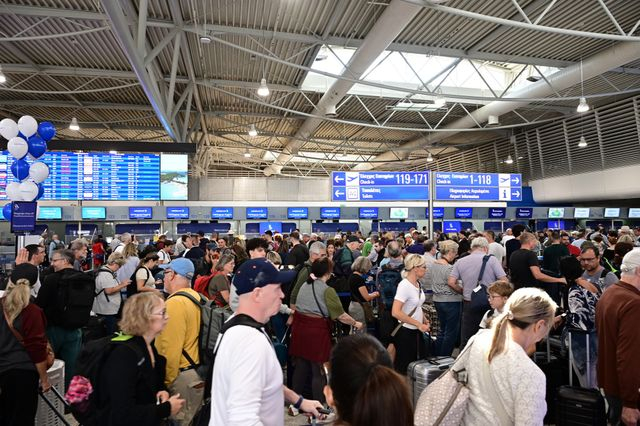
What caused the blackout at Athens FIR, according to the report of the relevant committee.
- 13 Ιανουαρίου 2026 21:32
The blackout in communications at Greek airports on January 4 was caused by “digital noise,” according to the report of the relevant committee.
This noise, as highlighted, was caused by desynchronization of multiple heterogeneous devices/interfaces that feed into the KEPATHM facilities, resulting in the unintentional activation/continuous broadcasting of a critical number of transmitters and the degradation/interruption of critical telecommunications links.
In its report, the Committee notes that the current Voice Communication System (VCS) of the Hellenic Civil Aviation Authority (HCAA) and the critical telecommunications infrastructure used to support it rely on outdated technology (SDH – Synchronous Digital Hierarchy), which is no longer supported by the manufacturer, with no guarantees of proper functionality.
The Announcement
“The report of the Committee investigating the incident of the suspension of Athens FIR operations on Sunday, January 4, 2026, was submitted today to the Minister of Infrastructure and Transport, Christos Dimas. The committee was formed by the Minister to clarify the exact causes of the problem that occurred on Athens FIR frequencies.
The Committee, led by the Director of the Civil Aviation Authority, Christos Tsitouras, included members: the Director of the National Cybersecurity Authority, Michalis Bletsa, Colonel Dimitrios Zampakolas, Communications Engineer Officer at the Hellenic National Defence General Staff, the Deputy Director of Spectrum Supervision at the National Telecommunications and Post Commission (EETT), Nikos Igoumenidis, a representative from EUROCONTROL (European Organization for the Safety of Air Navigation), and an observer from EASA (European Union Aviation Safety Agency).
The Committee identified the Hellenic Civil Aviation Authority (HCAA) and OTE (Hellenic Telecommunications Organization) as the involved entities, requesting and receiving official reports on their actions. The committee also evaluated information from interviews with staff from both organizations.
According to the experts’ report, the incident was caused by “digital noise,” which was triggered by desynchronization of multiple heterogeneous devices/interfaces leading to the KEPATHM facilities, resulting in the unintentional activation/continuous broadcasting of a critical number of transmitters and the degradation/interruption of critical telecommunications connections. Full restoration was achieved after resynchronization/reboots followed by traffic rerouting on the core network.
It is noted, among other things, that for flight safety reasons, a full capacity restriction (zero rate) was imposed, and emergency procedures were applied. The restoration of services was gradual, and full recovery was completed at 16:53 local time, following voluntary actions by the telecommunications provider.
Based on the reports on the ECCAIRS platform and the HCAA’s evaluation, the incident was categorized as low-risk (Green Area), with no reported violations of minimum separation requirements. Additionally, there were no indications of a cyberattack or external malicious interference.
Regarding aviation safety issues, the report states that no aviation safety concerns were found in terms of exposing aircraft to direct or indirect danger.
The Committee’s report highlights that the current Voice Communication System (VCS) of the HCAA and critical telecommunications infrastructure used to support it rely on outdated technology (SDH – Synchronous Digital Hierarchy), which is no longer supported by the manufacturer, with no capability to provide substantial operational guarantees.
Recommendations in the Report
The Special Committee concludes with the following recommendations:
- Accelerating the transition to VoIP (Voice over IP) technology, completing procurement, installation, and operational deployment of the new VCS/RCS (Voice Communication System / Radio Communication System) and 495 new transceivers.
- Establishing a permanent, unified HCAA-OTE immediate response mechanism and standardized crisis procedures with tests/training under the supervision of the HCAA.
- Enhancing telemetry/remote control and the ability to perform end-to-end diagnostic checks at critical points.
- Enhancing spectrum supervision by EETT for the early detection of interference/anomalies.
- Relocating KEPATHM facilities to a more suitable environment to reduce systemic operational risks and dependencies, ensuring continuous and safe provision of air navigation services.
The Blackout That Grounded Flights at Greek Airports
Many passengers experienced significant delays from the morning until the afternoon of Sunday, January 4, both at Athens International Airport and all other airports in Greece, due to a serious technical problem that affected the radio communications of the Area Control Centers.
The technical issue impacted all flights to and from Greece, and airlines informed passengers about delays. Due to the “blockage,” all flights were diverted to neighboring airports.