Farmers: Preparing for a meeting with Mitsotakis – What is happening with the roadblocks
Διαβάζεται σε 5'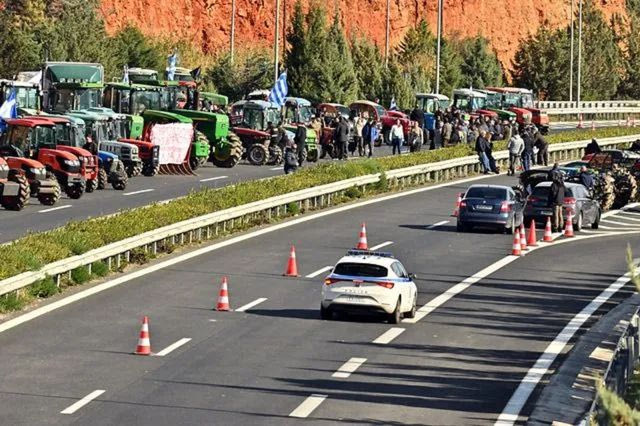
The Panhellenic Committee of the roadblocks will meet at midday to decide on the delegation of representatives for the meeting with the prime minister – What is happening with the roadblocks
- 10 Ιανουαρίου 2026 16:27
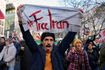
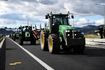
Farmers are moving into preparation mode for their meeting with Prime Minister Kyriakos Mitsotakis next Tuesday, as they have begun to scale back their actions since yesterday (9 January). They stress, however, that tractors will remain on the roads until their demands are met.
Today, representatives of the farming and livestock sector will travel to Nikaia, near Larissa, where the Panhellenic Committee of the roadblocks will meet at 1:00 p.m. to decide on the delegation of representatives for the meeting with the prime minister. Discussions will also focus on assessing the course of the mobilisations so far and planning the next steps. The delegation will include representatives from all sectors, both farmers and livestock breeders.
Farmers from the “Green Traffic Lights” block and from Crete, who have adopted a different stance, will not take part in the meeting with Kyriakos Mitsotakis.
Following yesterday’s general assembly, farmers at the Nikaia roadblock proposed holding a rally in Athens on Tuesday (13 January), at the same time the farmers’ delegation is scheduled to meet the prime minister. They suggest travelling to Athens by bus, without tractors.
Farmers say they are approaching the meeting with limited expectations, but hope that even so there will be some progress, allowing them to return to the roadblocks and take further decisions. Regardless of the outcome, they have already announced that after the meeting with the prime minister they will regroup at the roadblocks.
It was also made clear that if there is no satisfactory outcome, the next phase will involve escalation with much more dynamic and tougher mobilisations.
Since yesterday, tractors have been withdrawn from several points of the road network, as the Tempi tunnels, Malgara tolls and the old Thebes–Livadia national road were reopened. However, roadblocks remain in place at Nikaia, the Thebes junction and Kastro in Boeotia.
“Mercosur is a death blow for the sector”
At Malgara, farmers, as a gesture of goodwill, reopened both directions at the toll station after 6:00 p.m. on Friday (9 January). Traffic is now moving through two lanes towards Athens and three lanes towards Thessaloniki.
At the same time, according to ERT, farmers stress that dialogue will take place with roads open. Tractors remain at the site and farmers say they are on full alert.
On Saturday, farmers from the Malgara roadblock will travel to Nikaia, Larissa, for the nationwide meeting and will also appoint their representative for the meeting with the prime minister.
Farmers at Malgara point out that the EU–Mercosur agreement is disastrous for them. As they say, it is a “death blow”, given that most of them are rice producers.
Farmers leave the Tempi tunnels
Farmers from Thessaly left the Tempi tunnels yesterday afternoon, heading back to the Nikaia roadblock after more than 24 hours of presence and blockade at the site. In Pyrgetos, Larissa, the old Athens–Thessaloniki national road was also reopened.
Following the withdrawal from Tempi, the focus of the mobilisations is once again shifting to the Nikaia roadblock, which remains active.
Traffic diverted on the E-65
The roadblock on the E-65 remains in place, with traffic diverted via alternative routes. Although one lane in each direction is technically open, traffic is considered unsafe. Vehicles are therefore diverted via Sofades for Trikala and Lamia, and through the city of Larissa for Thessaloniki.
At the country’s largest roadblock, with around 2,500 tractors, a meeting concluded on Friday night. Kostas Tzelas and other members of the roadblock committee briefed farmers on their experiences both from cooperation with farmers at Bralos—where 120 tractors were moved—and from discussions held so far. They explained the decision to reopen roads after 24 hours instead of 48 as a gesture of goodwill towards the prime minister and the government, ahead of the scheduled meeting.
They said this was the first time they believed Tuesday’s dialogue could be constructive, stressing that this was achieved thanks to more than 40 days of sustained pressure through their continued presence at the roadblocks. They concluded that the mobilisation had been worth the effort.
Farmers from Karditsa say they will attend the meeting with low expectations. They want solutions to practical issues, such as what will happen to those who have payment arrangements but still cannot access cheaper electricity for irrigation, how the fuel excise tax issue can be addressed, the matter of vaccines for livestock breeders, and, more broadly, what the next day will look like—how they can continue to survive in this profession.
On Saturday, it will be decided who will represent the roadblock at Tuesday’s meeting, as a 15-member delegation is expected to be formed from all roadblocks, from Evros to the Peloponnese, which will meet the prime minister at the Maximos Mansion on Tuesday.