Greece asks the Commission for funding for deportations to third countries
Διαβάζεται σε 4'
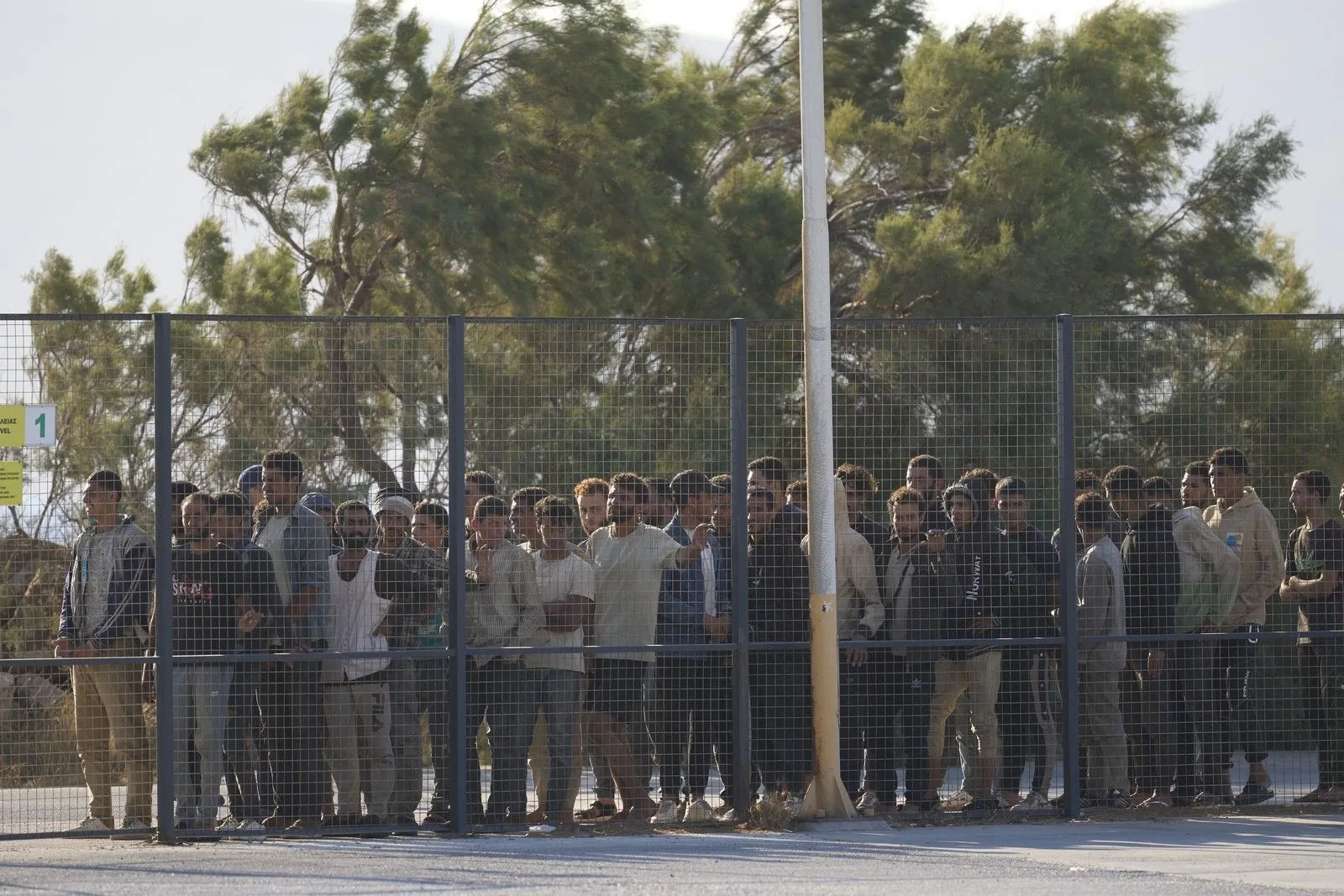
Nineteen European countries, including Greece, have co-signed a letter requesting the European Commission to implement so-called “innovative solutions” and facilities outside the EU for the deportation of migrants.
- 17 Δεκεμβρίου 2025 13:50
A group of 19 EU countries, including Greece, is pressuring the European Commission to adopt a stricter stance on migration issues beyond the Union’s borders.
Specifically, in a joint letter signed by the Ministers of Migration and Foreign Affairs of the 19 countries and sent to the Commission, they want the Commission to strengthen its cooperation with non-EU countries in order to address the high rates of irregular migration.
“The completion of negotiations on the recent legislative proposals submitted by the Commission in the area of asylum and returns is an important step towards addressing the internal challenges of the EU’s asylum and migration system,” the ministers note, adding that “alongside the reform of the EU asylum and migration system, the further development of a coherent EU strategy for the external dimension of migration, including new and innovative solutions, is of utmost importance. At the internal level, significant steps are being taken to strengthen EU asylum and migration legislation, which includes innovative solutions such as safe third-country arrangements and return hubs. The EU is also strengthening legal pathways.”
In their letter, the ministers call for the expansion of “new and innovative solutions” to address irregular migration, as well as the strengthening of cooperation between EU institutions, international organizations, and member states.
They also add that “it is essential for the EU to work closely with countries along the migration routes, within the framework of a ‘whole route’ approach, in order to address the root causes of irregular migration, improve protection and sustainable solutions for displacement, manage migration flows, combat human trafficking and migrant smuggling, and facilitate returns.”
In the letter, addressed to the Commissioner for Migration, Magnus Brunner, the Head of European Diplomacy, Kaya Kalas, the Commissioner for the Mediterranean, Dubravka Šuica, the Commissioner for International Cooperation, Josef Sikela, and the Commissioner for Enlargement, Marta Kos, the 19 governments ask for the necessary conditions and resources to ensure the implementation of innovative solutions. “This includes adequate available funding, providing expertise and capacity for development and implementation, as well as establishing a coherent diplomatic approach. We, the undersigned ministers, declare our readiness to actively support this goal,” they said.
As Politico reports, although the letter avoids naming specific models, it refers to tools already incorporated into EU law, such as “safe third country arrangements and return hubs,” and calls for their operational implementation through partnerships along migration routes.
The “return hubs” model, where individuals whose asylum requests have been rejected can be sent, has been strongly promoted by Italy. The country has built and is operating—under a different legal framework—two such facilities in Albania, which are expected to become the first specific implementation of this model by mid-2026. Funding is a central issue.
The signatories argue that innovative solutions will remain theoretical without clearer pathways for funding. “Efficient use of financial resources is essential for creating and operating innovative forms of cooperation,” the letter states, calling on the Commission to issue guidelines on how existing and future EU funds can be mobilized.
The ministers also seek greater involvement of EU institutions, including the possible expansion of Frontex’s role. They urge the Commission and institutions to explore “necessary legislative and policy changes,” including, “where appropriate, the revision of Frontex’s mandate and competencies, to ensure effective support and adequate capacity” in cooperation with third countries.