How much will the minimum wage increase
Διαβάζεται σε 4'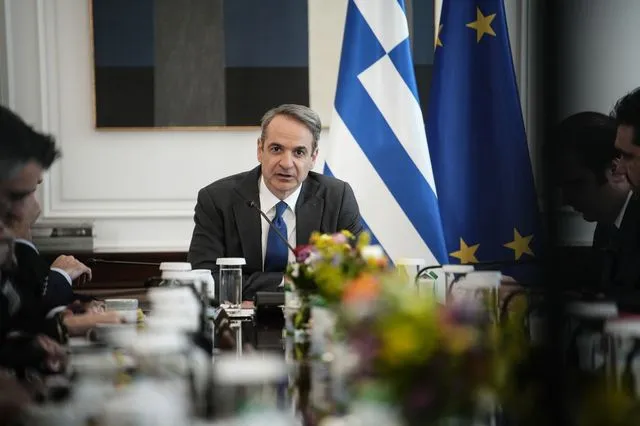
The minimum wage at the center of the cabinet meeting, amid concerns over an unprecedented wave of high prices due to the war in Iran. Mitsotakis’ narrative of stability.
- 26 Μαρτίου 2026 08:22
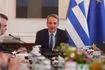
The new increase in the minimum wage, effective from April 1, will be proposed today at the cabinet meeting by the Minister of Labour and Social Security, Niki Kerameus, and the Minister of National Economy and Finance, Kyriakos Pierrakakis.
According to information, the most likely scenario is that the minimum wage will be set at €920 to €930, up from €880. That is, an increase of 4.5% to 5.5%, or €40 to €50 gross.
Government officials stress that this is the sixth increase in the minimum wage since 2022, and point to Prime Minister Kyriakos Mitsotakis’s commitment for the minimum wage to reach €950 by 2027.
However, just as previous increases in the minimum wage were “lost” in the vortex of inflation, this one also risks being “absorbed” by the wave of rising prices due to the war in Iran. On the other hand, a larger increase at this time would have faced strong reactions from employers, precisely because of the looming crisis.
Government officials nevertheless underline that the new increase in the minimum wage “was shaped taking into account the capabilities of the Greek economy and businesses of all sizes.” They recall that the minimum wage has gradually increased from €650 in 2019 to €880, that is, by 35.4%.
They argue that this corresponds to €3,220 gross on an annual basis, concluding that “those who are paid the minimum wage today, before taking into account the upcoming new increase, are putting in their pockets the equivalent of five additional minimum wages of 2019.”
The same sources note that the cumulative increase in the minimum wage to date “clearly exceeds the corresponding inflation, which means that the real income of low-paid workers has been strengthened.”
They also move to respond to any potential reactions from employers, pointing out that successive increases in the minimum wage have not affected the downward trend in unemployment, which stood at 7.7% in January, according to ELSTAT.
The government’s narrative of stability
The new increase in the minimum wage gives Mr Mitsotakis the opportunity to reiterate the narrative of stability, and to argue that the government can, even amid a global economic crisis, continue its policy of strengthening incomes, alongside taking extraordinary support measures to address the energy consequences of the war in Iran.
It is also recalled that the increase in the minimum wage pushes up unemployment benefits, maternity benefits, the now “unfrozen” seniority allowances for older workers, and parental leave benefits. It also indirectly affects overtime pay increases.
It is further noted that the measure does not concern only the private sector, as public sector salaries are now adjusted proportionally to the increase in the minimum wage. Therefore, from the April payroll, public employees will also see an improvement in their earnings.
Cabinet discussion also on the war in Iran
At the Maximos Mansion, however, there is concern about an escalation of the consequences for the global—and therefore the Greek—economy, if, as all indications suggest, the war in Iran “drags on” or expands across the entire Middle East. The cabinet will therefore be briefed on international developments by the Minister of Foreign Affairs, Giorgos Gerapetritis.
Meanwhile, the Minister of Migration, Thanos Plevris, will present the bill for the implementation of the new Pact on Migration and Asylum, at a time when concerns are growing about a new migration wave from the Middle East to Europe, particularly due to Israel’s attacks in Lebanon.
It is also noted that the Deputy Minister of Economy, Nikos Papathanasis, will propose to the cabinet the schedule for completing and certifying milestones of the Recovery and Resilience Facility by August 31. The prime minister is also expected to reprimand ministers who are behind schedule in their planning.