National Organization for the Provision of Health Services – Beware of new scam via SMS
Διαβάζεται σε 3'
EOPYY (National Organization for the Provision of Health Services) is warning its insured members about misleading SMS messages being sent to mobile phones.
- 19 Μαρτίου 2026 19:23
Specifically, the Organization’s Administration notes that these messages appear as notifications seemingly coming from National Organization for the Provision of Health Services, promising reimbursement of money to the recipients.
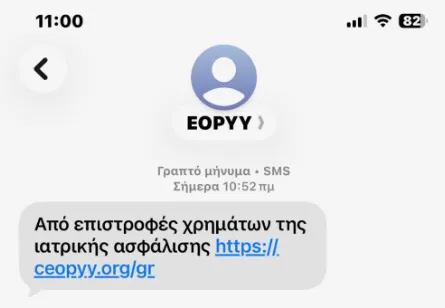
The National Organization for the Provision of Health Servicesannouncement further explains: Following previous announcements, we inform and once again caution our insured members regarding potential misleading SMS messages sent to mobile phones with the EOPYY logo, which contain deceptive content, as shown in the images below:
These messages appear as notifications seemingly originating from the National Organization for the Provision of Health Services (EOPYY) and promise a refund to the recipients. Their aim is to encourage you to click on a link to proceed with the process, which, in reality, leads to malicious websites aimed at stealing your banking credentials or other personal data.
EOPYY: How to Recognize Scam Messages
1.Sender: The email address of the sender is not official from National Organization for the Provision of Health Services.
Real National Organization for the Provision of Health Services email addresses end with “@eopyy.gov.gr”.
Examples of fraudulent addresses are: @client.com, @outlook.com, @gmail.com, @yahoo.com, @yahoo.gr, etc.
2.General Salutation: A general salutation (“Dear Insured”) is used instead of your full name.
3.Request for Information: Requests confirmation of banking or personal details through a link in the message.
4.Urgency: The message creates a sense of urgency to pressure you into acting immediately.
What to Do If You Receive Such a Message:
- Do not click any links within the message.
- Do not respond to the message.
- Even if you click the link or respond, do not provide any personal or banking information.
- Immediately delete the fraudulent message.
If you have already clicked the link and entered details:
- Contact your bank IMMEDIATELY.
- Change all passwords that you may have used (e-banking, email, other services).
5.Closely monitor your bank account activity.
Please be extra cautious and skeptical of any such messages, using the signs for identifying these types of messages mentioned above.