The risks for Greece after the Israel–US attack on Iran
Διαβάζεται σε 6'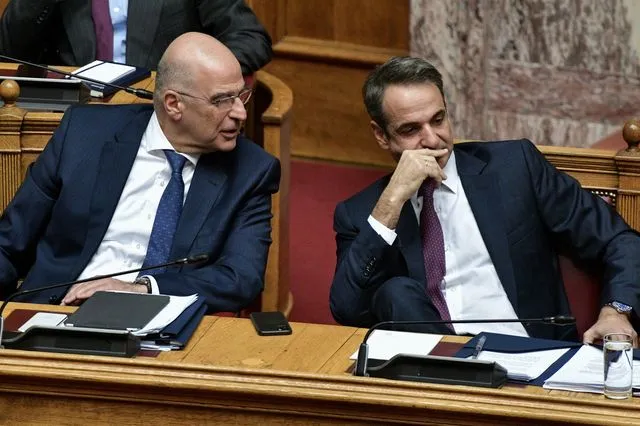
Concern is growing over possible economic consequences, as well as impacts on shipping and tourism, if the situation in the Middle East spirals out of control. Security remains a burning issue, alongside scenarios concerning migration flows. Greece’s role in the new geopolitical landscape is also under scrutiny.
- 02 Μαρτίου 2026 09:53
The Israel–US attack on Iran has caused unease in Europe and in Greece, as the “next day” carries geopolitical and economic risks.
In practical terms, Greece is closely aligned with its “strategic alliance” with Israel and, of course, its cooperation with the United States. As a result, Prime Minister Kyriakos Mitsotakis, in yesterday’s post, issued a general call for avoiding further escalation. He also referred to the need to protect civilians and respect international law — which, once again, Israel and the US are accused of ignoring.
Foreign Minister Giorgos Gerapetritis also spoke of the need for de-escalation and the primacy of diplomacy at the extraordinary meeting of the EU Foreign Affairs Council. Europe, however, once again appears divided.
Germany — partly due to historical guilt — supports Israel unconditionally. Meanwhile, France and Spain expressed concern about the consequences of the Israel–US attack on Iran for regional and international security. France, Germany and the United Kingdom issued a joint statement condemning Iranian strikes against US and Israeli targets and Gulf countries, without referencing the initial Israel–US attack on Iran.
On alert for the return of Greeks from the Gulf
Athens initially focused on the safety of Greek citizens in the Middle East, particularly in Persian Gulf countries that were targeted in Tehran’s retaliation because they host US bases. Attention also turned to safeguarding maritime navigation, especially vessels flying the Greek flag sailing in the Persian Gulf.
Mr. Mitsotakis spoke with the Emir of Qatar, Sheikh Tamim bin Hamad Al Thani; the President of the United Arab Emirates, Sheikh Mohamed bin Zayed Al Nahyan; and the President of Cyprus, Nikos Christodoulides. He also held a phone call with the Crown Prince of Saudi Arabia, Mohammed bin Salman. In these contacts, the Prime Minister stressed the need to avoid further escalation and focused on protecting Greek citizens in Gulf countries.
Meanwhile, Mr. Gerapetritis held a teleconference with Greek ambassadors and consuls in Iran and across the Middle East to prepare for the safe return of Greek citizens once air traffic is restored.
From Souda to Riyadh and the Red Sea
Earlier, a meeting was held at the Ministry of Defence under Nikos Dendias to implement security protocols and take necessary protective measures — primarily at the Souda Bay base in Crete, which has been placed on heightened alert. According to ministry sources, these are described as “standard security measures,” and the airport continues to operate normally.
Although Souda is theoretically within range of Iranian missiles, it is considered highly unlikely that Tehran would target such a distant location when it had closer targets in the Persian Gulf.
Greek armed forces also have a presence in the region. A Patriot missile battery of the Hellenic Air Force (the Greek Force in Saudi Arabia) has been providing air defense coverage for Saudi Aramco facilities in Riyadh since 2021. In addition, the Greek frigate “Hydra” is participating in the European “Aspides” operation in the Red Sea against the Houthis.
At the same time, enhanced security measures are being implemented at potential US and Israeli-linked targets across Greece, amid concerns that Iran could revert to terrorist tactics if the situation deteriorates.
Fears of rising prices and security threats
Greece may first feel the economic impact. There are already complaints of profiteering at fuel stations, despite the fact that current fuel stocks were purchased before the Israel–US attack.
Real increases in fuel prices are also expected, given that 20% of global oil consumption passes through the Strait of Hormuz, which Iran has reportedly closed. Higher fuel prices would trigger a chain reaction across the market, raising the risk of a new wave of inflation.
As Greece has the world’s largest merchant fleet, shipping insurance premiums are also rising due to heightened risk, with further knock-on effects. Hundreds of tankers — including vessels with Greek crews — are reportedly trapped in the Strait of Hormuz.
Security concerns could also affect tourism, potentially increasing operating costs in tourist areas and even reducing tourist flows to Greece, including from the United States. For many Americans, Greece appears geographically close to Iran. The fact that Israeli businesspeople have invested in hotels and Airbnb properties in Greece increases perceived risk factors.
Anxiety over what comes next
The key issue is preventing further escalation and avoiding a wider regional crisis. A rapid clarification of the political situation in Tehran — possibly involving a transitional authority — would be critical. However, Iran has multiple power centers: the clerical establishment, the regular army, the Islamic Revolutionary Guard Corps, and the Basij militia. Establishing control and forming a transitional government capable of re-engaging with the West would not be easy.
Iran’s forces have not yet struck Saudi Arabia, which has warned it would retaliate if targeted.
Some Greek government officials argue that geopolitically Greece could be upgraded in importance during this crisis, potentially serving as a buffer zone to the west of diplomatically unpredictable Turkey.
Migration scenarios
In the (not unlikely) event of civil unrest in Iran or persecution of dissidents, new refugee or migration flows toward Europe via Greece could emerge.
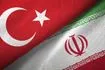
For this to happen, however, Turkey would need to open its border with Iran. Of the 750 km Turkey–Iran border, 180 km are patrolled and the remainder is largely sealed with concrete barriers. Although Recep Tayyip Erdoğan has developed relations with Tehran in recent years, it is considered unlikely that he would accept significant refugee flows from Iran, particularly due to concerns about Kurdish migration.
Nevertheless, broader instability in the Middle East typically increases migration flows toward Europe through Greece. The main anticipated source of new refugee and migration pressures, however, is expected to be the Afghanistan–Pakistan conflict.