46-year-old woman accused of the Marfin arson arrested in the UK
Διαβάζεται σε 7'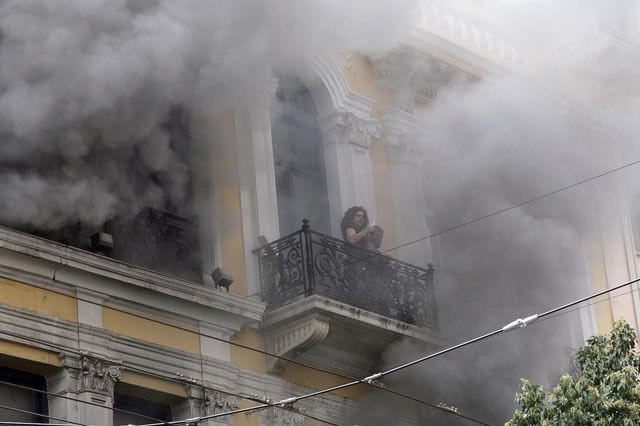
British authorities have arrested the 46-year-old woman in connection with the 2010 Marfin arson attack.
- 13 Ιουλίου 2026 10:01
Developments in the high-profile Marfin case, which resulted in the deaths of three bank employees in 2010, have been rapid since Friday (10/7).
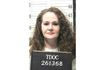
Following the arrests and serious charges brought against two 42-year-old men, who were granted an extension to testify before an investigating magistrate on Tuesday (14/7), the 46-year-old woman accused in connection with the arson attack was arrested in the United Kingdom, where she has been living in recent years.
The arrest was made by British authorities on Monday morning (13/7). According to reports, proceedings for her extradition to Greece have already begun.
It should be noted that several days ago, the 46-year-old voluntarily contacted the Greek authorities, stating that she was innocent and wished to return immediately to Greece to appear before the judicial authorities.
According to her lawyer, who also represents the two 42-year-old men who were arrested, the woman was informed of the developments and declared that she was “present” and willing to participate in the proceedings.
However, the Greek authorities initiated an international search for her through an Interpol Red Notice, which led to her arrest by the British authorities.
How the arrests in the Marfin case came about
Sixteen years after the arson attack on the bank branch on Stadiou Street, during a major demonstration against Greece’s first bailout agreement, and with the initial criminal proceedings having ended in the acquittal of those accused at the time, police authorities launched a new round of investigations into the perpetrators of the attack as part of a coordinated effort.
According to reports, everything began with an anonymous email sent to the Greek FBI, in which the three individuals were named as the perpetrators of the attack. On the basis of this new information, the authorities decided to investigate the claims further and subsequently gathered additional evidence concerning the individuals in question.
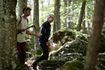
A key link that led to the arrests was the appearance of their names in another case file unrelated to Marfin. More specifically, according to police sources, digital files were among the items seized during an operation in Koukaki in 2020. These files were linked to a case concerning offences involving explosive materials. The files also contained three photographs apparently taken during a summer holiday and depicting the individuals who are now accused in the Marfin case.
Following an analysis of the photographs and a comparison with footage from the 2010 demonstration, which had been collected and re-examined using new technological methods, the authorities concluded that in all the photographs the suspects, who were later arrested, were wearing the same clothes as those worn by the perpetrators during the arson attack.
A laboratory report followed, concluding that the people shown in the seized holiday photographs were the same individuals as the Marfin arsonists.
Marfin: The timeline of the tragedy that claimed three lives
It was 5 May 2010 when, during a major demonstration in central Athens against the austerity measures linked to the loan agreement, a group of unidentified individuals attacked the Marfin-Egnatia bank branch at 23 Stadiou Street with Molotov cocktails.
As the main body of demonstrators moved up Stadiou Street towards Syntagma Square, a group of masked individuals attacked the Marfin building. They threw Molotov cocktails and a bottle of petrol inside. Thick smoke soon engulfed the entire branch.
Most of the employees crowded into a narrow lightwell connected by a grille to the roof, which one of them managed to break. They then climbed through the lightwell onto the roof, from where they jumped onto a neighbouring building after smashing its glass frontage with a wooden beam, while others had reached the first-floor balcony.
Epameinondas Tsakalis, Paraskevi Zoulia and the pregnant Angeliki Papathanassopoulou were trapped by the flames on the third floor of the building and died from asphyxiation. According to forensic pathologist Filippos Koutsaftis, “the smoke and toxic gases from the burning plastic and paper killed them almost immediately. They lost consciousness and died shortly afterwards.” When they were found, their mouths were open and their faces were blackened by smoke. It appears that they had tried to leave the interior of the building through the rooftop door, but it would not open.
Some groups with their faces covered, moving alongside the demonstration, had also attempted to carry out an arson attack on an Ianos chain bookstore directly opposite the bank and on a mini-market, but were prevented from doing so following protests and opposition from others.
The sentences
One person, identified as Th.S., was arrested as a suspect in the bank arson and was sent to trial on charges of “intentional homicide committed in a calm state of mind, jointly and on multiple counts, both completed and attempted; causing an explosion resulting in death and danger to people and property; manufacturing and possessing an explosive device; and unprovoked damage to property by means of an explosion by a person whose facial features were concealed”.
The judicial ruling stated that there were two other perpetrators of the arson whose identities remained unknown. At the same time, another person was sent to trial for the arson attack on the Ianos bookstore.
After numerous adjournments, the trial concluded in October 2016 without any of the perpetrators of the arson being convicted. The defendant, who describes himself as an anarchist, was unanimously acquitted by the Athens Mixed Jury Court due to “insufficient evidence of guilt”.
Eyewitnesses testified during the trial that the arson was carried out by an organised and structured group. Firefighters testified that some demonstrators had obstructed their approach, while others tried to move those people away. Overall, however, the large crowd of demonstrators helped the firefighters reach the bank branch.
In a separate trial completed in July 2013, Marfin’s chief executive officer, the building’s security officer and the branch manager were found guilty of the negligent homicide of three employees, of causing bodily harm to another 21 employees, and of multiple failures relating to fire safety measures and staff training.
More specifically, a report prepared by a technical inspector from the Ministry of Labour stated that the emergency exit was locked and could only be opened using a remote control held by the branch manager. One employee testified that there had been a single demonstration on how to use the fire extinguishers, while another said that fire-safety information leaflets had been distributed to staff. All employees testified that no evacuation drill had ever been held in the building.
The branch also lacked the fire-safety certificate required by law. In addition, according to the indictment, not only had employees not been instructed to leave their posts before the arson attack, despite existing fears of serious violence during the demonstration on Stadiou Street, but they had instead been instructed to continue working as normal.
The three bank executives were sentenced to prison terms: 22 years for the first two and five years and one month for the branch manager. It later emerged that the employees had been inside the bank that day despite a general strike because they feared they would lose their jobs.
Victims and their relatives also filed lawsuits against the bank. Compensation of approximately €1.1 million was awarded to the relatives of one victim, while €720,000 was awarded to employees who had been trapped inside the building.
The events at Marfin shaped Greece’s political life, public discourse and society’s response to the country’s experiences during the years of the financial crisis for many years afterwards.