Covid Vaccine: Cause of deaths and serious side effects identified
Διαβάζεται σε 5'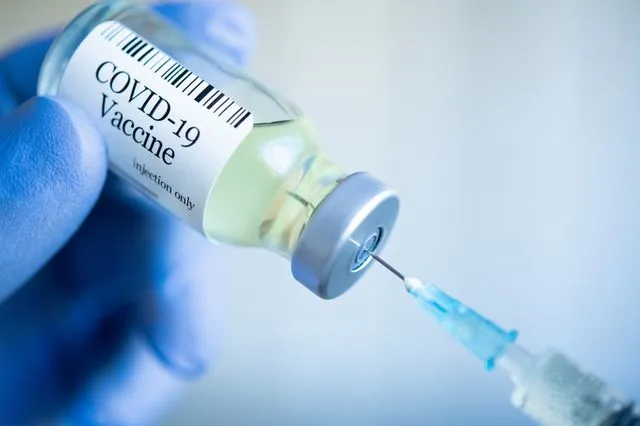
A groundbreaking study explains why certain COVID-19 vaccines caused dangerous blood clots, hemorrhages and VITT syndrome, resulting in the deaths of around 200 people in Europe.
- 25 Φεβρουαρίου 2026 12:50
A new, groundbreaking study sheds light on the mechanism behind an extremely rare but dangerous syndrome that was linked to COVID-19 vaccines based on adenoviral vectors.
The syndrome, known as vaccine-induced immune thrombotic thrombocytopenia (VITT), caused in a very small number of vaccinated individuals severe blood clots combined with low platelet levels and bleeding.
The issue came to the forefront in February 2021, shortly after the vaccination campaign began in Europe. Hematologist Sabine Eichinger from the Medical University of Vienna encountered a dramatic case: a 49-year-old nurse developed unusual blood clots and uncontrolled bleeding after receiving the AstraZeneca vaccine and ultimately died. No other apparent cause explained the clinical picture.
Deeply concerned, Eichinger even attended the autopsy and, at the same time, contacted hematologist Andreas Greinacher from the University of Greifswald, an expert in a rare heparin complication in which the immune system produces antibodies against the protein PF4 (Platelet Factor 4), which is involved in clotting.
Within a few days, his laboratory confirmed that the patient had antibodies against PF4, similar to those observed in the heparin-related complication.
Soon, additional VITT cases were recorded in individuals who had received the AstraZeneca vaccine in Europe and the Johnson & Johnson (J&J) vaccine in the United States. In both cases, patients had antibodies against PF4.
Although the frequency was estimated at approximately 1 case per 200,000 vaccinations, several European countries restricted the vaccine’s use to older age groups or withdrew it. In the United States, the AstraZeneca vaccine was never approved, and the J&J vaccine was eventually discontinued.
The mechanism of the Covid vaccine that caused the serious side effects
After years of research, Greinacher’s team and other researchers were able to clarify the mechanism.
These vaccines used an adenovirus as a vector to deliver the gene encoding the SARS-CoV-2 spike protein into human cells.
According to a study published in the New England Journal of Medicine, an adenoviral protein triggers, in individuals with a specific genetic background, the production of “misdirected” antibodies.
Instead of targeting viral proteins, these antibodies bind to PF4, setting off a chain reaction.
Crucial evidence had already emerged in 2022, when researchers at Flinders University found that all patients with VITT had almost identical antibodies against PF4.
At the same time, Theodore Warkentin from McMaster University described rare cases in which natural adenovirus infection caused a similar syndrome, with the same characteristic antibodies. This suggested that the adenovirus played a central role.
Using mass spectrometry, scientists analyzed antibodies from 21 patients. All showed a critical alteration: at position 31 of the antibody’s light chain there was a negatively charged amino acid (glutamic acid or aspartic acid), whereas normally lysine, which carries a positive charge, occupies that position. This change was found only in the B lymphocytes producing these specific antibodies.
In addition, patients carried genetic variants that already included a negatively charged amino acid at position 50 of the same chain. This combination created antibodies with a strong negative charge, which bound tightly to positively charged PF4.
The antibody–PF4 complex activates platelets, leading to massive release of more PF4 and amplification of the clotting process. As a result, dangerous clots form while platelets are simultaneously depleted, causing bleeding.
The causal relationship was confirmed in experimental models: laboratory-produced antibodies from patients induced VITT symptoms in mice. When researchers replaced the negatively charged amino acid at position 31 with lysine, binding to PF4 weakened significantly and clot formation decreased.
The mechanism initiating the immune response was also identified. VITT antibodies bound to an adenoviral protein, pVII. Specifically, they recognized a 15–amino acid segment forming an alpha-helix structure similar to a structure in PF4. This similarity appears to lead to cross-reactivity.
Researchers estimate that individuals who developed VITT had previously been exposed to an adenovirus, meaning their B cells were “primed” to recognize pVII.
Vaccination activated these cells and, through a mutation process that enhances antibody response, in very rare cases an “unfortunate” variant emerged that targeted PF4.
In Europe, approximately 900 VITT cases have been reported following vaccination with AstraZeneca or J&J, around 200 of which were fatal.
Globally, more than 3 billion doses of the AstraZeneca vaccine were administered, which are estimated to have saved millions of lives.
Two cases were recorded in Argentina after vaccination with Sputnik V, also an adenoviral vaccine, while no cases have been linked to the corresponding CanSino vaccine.
Genetic predisposition appears to play a role: in many parts of the world, 40%–60% of the population carries relevant genetic variants, while in East Asia the percentage is lower.
The findings are also significant for other adenoviral vector vaccines, such as one of the approved Ebola vaccines, as well as candidate vaccines for influenza, malaria, tuberculosis and emerging viruses such as Nipah. Adenoviral vectors are cost-effective and do not require ultra-low storage temperatures.
Although the pVII protein cannot easily be removed, modified versions may be designed that do not mimic PF4 so closely, paving the way for safer vaccines in the future.