Government seeks new measures to curb inflation amid rising cost-of-living concerns
Διαβάζεται σε 4'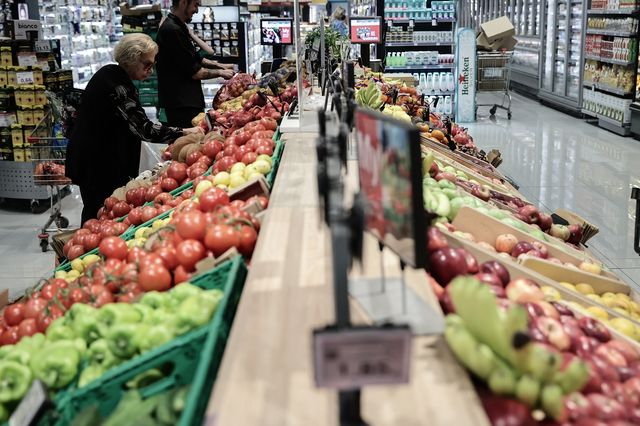
Prime Minister to meet business leaders as Greece considers replacing profit margin caps with a voluntary price reduction agreement on essential goods.
- 29 Ιουνίου 2026 10:21
The Greek government is stepping up efforts to tackle the rising cost of living, with inflation remaining one of the biggest concerns for households and a key political challenge ahead of the country’s next general election.
Prime Minister Kyriakos Mitsotakis is set to chair a high-level meeting at the Maximos Mansion on Monday with senior representatives from industry and the retail sector in an effort to identify measures that could ease inflationary pressures and lower the prices of essential consumer goods.
The meeting comes just hours before the current cap on business gross profit margins is due to expire, with attention focused on whether the measure will be extended or replaced by a new framework of cooperation between the government, manufacturers and supermarket chains.
Government pushes for voluntary price cuts
According to government sources, if the gradual withdrawal of the profit margin cap is approved, authorities hope to reach a voluntary agreement with businesses to reduce prices on hundreds of essential consumer products.
The proposed initiative would involve a list of basic household goods whose prices would be reduced from September 1 through the end of the year, including the Christmas shopping period, when consumer spending traditionally increases.
In recent weeks, Development Minister Takis Theodorikakos has held discussions with representatives of the food industry and major supermarket chains. Officials describe the talks as constructive, while Monday’s meeting is expected to elevate negotiations to the political level, with the prime minister seeking a direct update on progress.
Uncertainty over the future of the profit cap
Although the government has repeatedly stated that it does not intend to make the profit margin cap permanent, no final decision has yet been announced.
Theodorikakos has indicated that the cap on fuel profit margins is likely to be lifted as fuel prices have recently eased. However, the situation for supermarket products remains more complicated.
The existing measure applies to around 60 categories of food and everyday consumer goods, preventing businesses from selling products with a gross profit margin higher than the average recorded in 2025.
According to the minister, around 2,000 product lines have seen price reductions since the measure was introduced, with average prices falling by approximately 5%.
The government maintains that businesses should play a more active role in containing inflation by accepting lower profit margins during a period in which many households continue to face significant financial pressure.
More price reductions expected from September
Sources familiar with the negotiations believe that reaching a comprehensive agreement will require additional time. If a compromise is achieved between the government, manufacturers and retailers, the first price reductions are expected to appear on supermarket shelves from September.
Until then, the current profit margin cap could remain in force as a negotiating tool. Government officials are reportedly considering extending the measure at least until the end of August, while a further extension through the end of the year has not been ruled out if substantial price reductions fail to materialize.
The government’s objective is to achieve price reductions exceeding 5%—roughly in line with the current inflation rate—in an effort to deliver meaningful relief to household budgets.
Retail sector calls for tax cuts instead
Business representatives continue to oppose extending the profit margin cap, arguing that more effective measures would include reducing indirect taxes on essential goods and energy, lowering administrative costs for businesses and strengthening market competition.
They also cite recent data from the Institute of Retail Consumer Goods Research (IELKA), which indicates that the cost of a standard supermarket basket in Greece remains lower than in many European Union countries.
According to industry representatives, one of the main factors keeping retail prices elevated is Greece’s relatively high value-added tax (VAT) on several supermarket products.
Participants in Monday’s meeting include representatives from the Hellenic Federation of Enterprises (SEV), the Hellenic Food Industries Association (SEVT), the Greek Supermarket Association, Deputy Prime Minister Kostis Hatzidakis and Development Minister Takis Theodorikakos. The outcome is expected to shape both the future of the profit margin cap and the government’s broader strategy for tackling inflation.