Ceuta: The heartbreaking image of the 12-year-old pleading not to be deported
Διαβάζεται σε 5'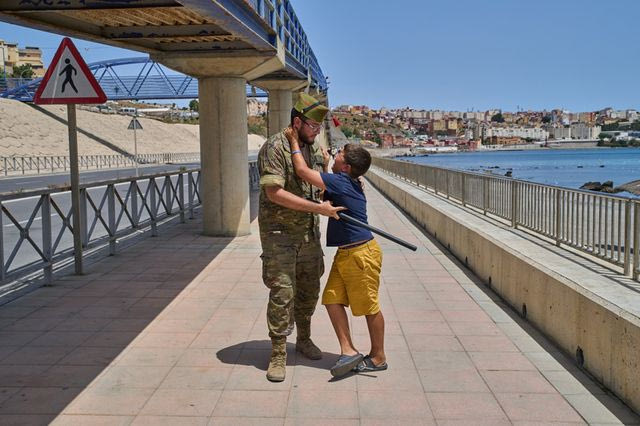
The forced return of a 12-year-old from Spain to Morocco was halted just metres from the border. The heartbreaking photograph that shocked the world.
- 03 Αυγούστου 2026 22:54
Hundreds of migrants set up camp today on a beach in Spain’s North African enclave of Ceuta, as local authorities struggle to deal with the situation created by the thousands of people who remain in the small city following a mass influx across the border last week.
Spain estimates that around 69,500 migrants have returned to Morocco over the past four days, following initial estimates of approximately 50,000 arrivals in Ceuta on Thursday, July 30. The official death toll on the Spanish side of the border stands at 72, while 11 deaths have been recorded on the Moroccan side.
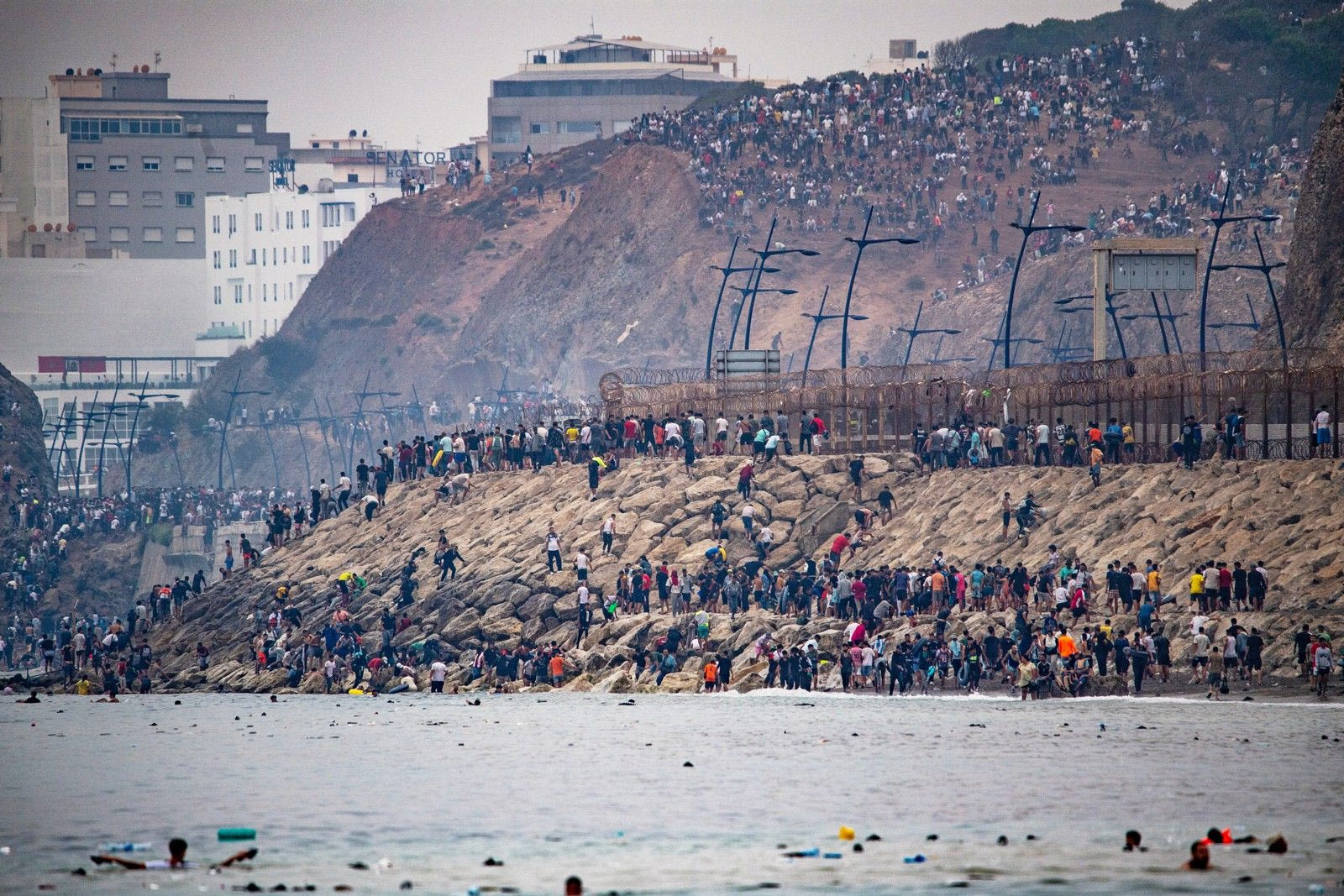
Some said they had decided to leave because shop closures had left them without food, because they had faced hostility from local residents and because they were unable to travel on to mainland Spain.
Ceuta and Spain’s other enclave in North Africa, Melilla, are located on Morocco’s Mediterranean coast and periodically face attempts by migrants seeking to enter Europe.
Reuters footage shows dozens of migrants, most of them from sub-Saharan African countries, lying on the sand at El Trampolín beach. Many are wrapped in towels to protect themselves from the wind, while army and police vehicles patrol the road behind them.
Ceuta’s leader, Juan Jesús Vivas, told the Telecinco television network that between 3,000 and 5,000 migrants remained in the enclave, adding that the city’s two migrant reception centres — one for adults and the other for minors — had “collapsed”.
Local official Alberto Gaitán said the city was processing the cases of 862 migrant minors, who are afforded special legal protection against deportation.
The 12-year-old who begged not to be returned to Morocco
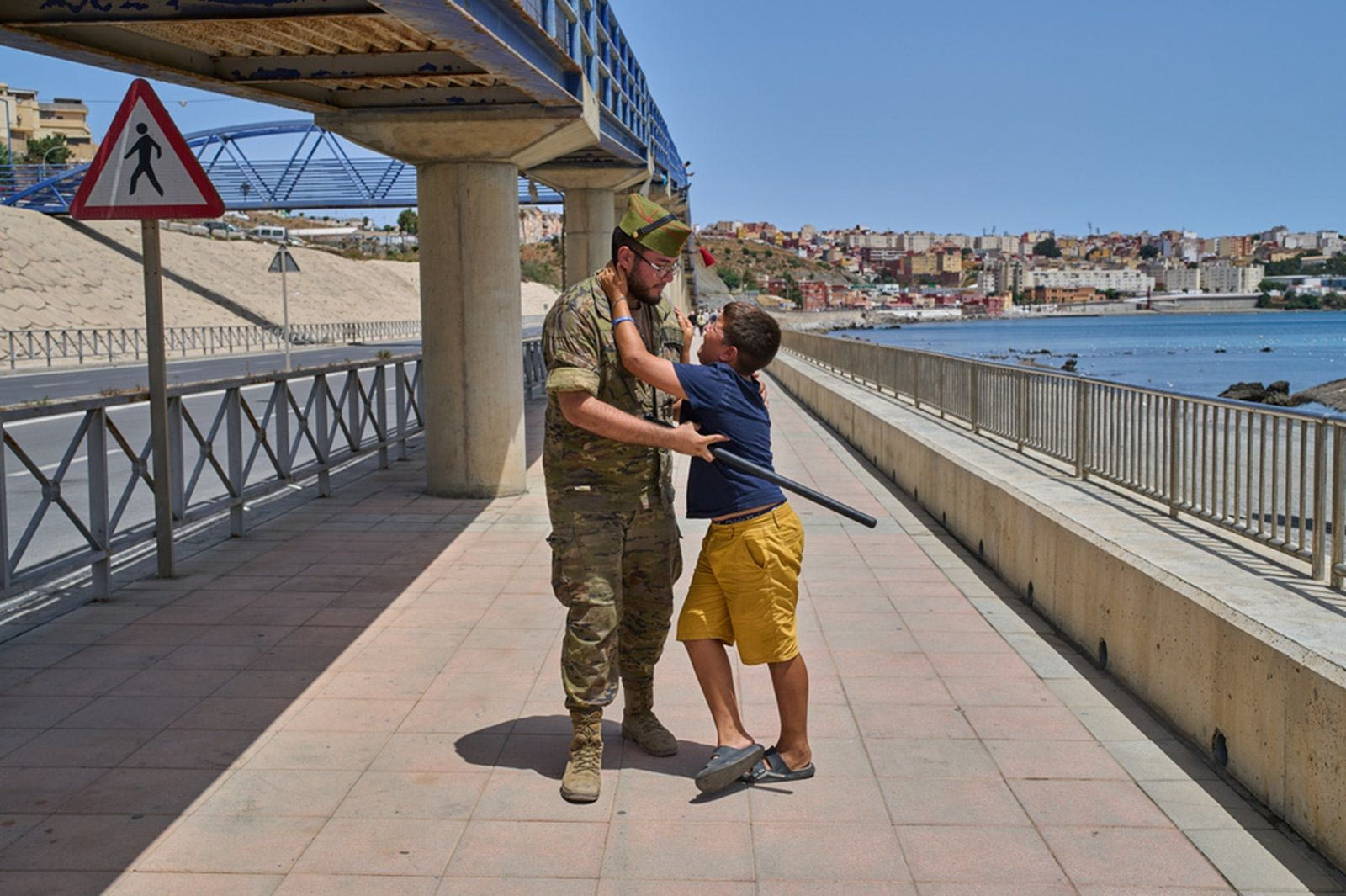
The human tragedy behind the crisis in Ceuta is encapsulated in a shocking photograph. A 12-year-old unaccompanied minor is seen being led by a Spanish soldier towards the Spain-Morocco border, crying and pleading not to be sent back to Morocco.
The harrowing image, captured by Bernat Armangue, shows the child alone and terrified, resisting and begging not to be deported. It lays bare the suffering of the thousands of migrants who found themselves stranded in the Spanish enclave.
According to the AP, the 12-year-old’s forced return was prevented literally at the last moment. A senior official intervened just metres before the child reached the border, after residents and journalists shouted that he was a minor.
Diplomatic fallout
The crisis has fuelled anti-immigration rhetoric across Europe and triggered diplomatic tensions within the European Union over border policy, with Spain accusing some partners of offering an unhelpful and polarising response.
Foreign Minister José Manuel Albares said today that Spain had supported other EU countries during previous migration crises and now expected the same support in return.
The bloc has called an emergency video conference of interior ministers to discuss the crisis tomorrow, Tuesday.
Albares strongly criticised the Italian government, accusing it of contributing to the spread of disinformation.
He said Morocco had immediately offered police support and had not attached conditions to its cooperation, allowing most of the migrants who crossed the border to be returned quickly.
Vivas, however, criticised Rabat, saying there was a widespread perception in Ceuta that it had allowed the crisis to happen, if not orchestrated it.
“Morocco has shown us that it cannot be trusted. There is no alternative but to put in place whatever measures are necessary to ensure that it cannot do this again,” Vivas told El País.
Morocco’s Interior Ministry blamed the surge in disinformation on social media, human-smuggling networks and a misunderstanding of a Spanish court ruling banning the immediate return of migrants intercepted at sea. This position is consistent with Madrid’s official view.
Intelligence services under scrutiny
According to reports by El País and radio station Cadena SER, citing officials familiar with the matter, Spain’s intelligence services have concluded that Morocco did not plan the mass crossing but allowed it to happen.
Moroccan border controls were gradually relaxed in July and reportedly ceased altogether as crowds rushed towards the Tarajal crossing during Morocco’s Throne Day holiday, according to the reports.
Morocco’s Interior Ministry did not immediately respond to a request for comment.
In a statement issued yesterday, it said Morocco was “committed to strengthening international cooperation and coordination in the fight against irregular migration and human trafficking”.
Spanish Interior Minister Fernando Grande-Marlaska told reporters on Saturday that the CNI intelligence service, which falls under the Defence Ministry, had not warned him of an imminent increase in migration flows. El País reported today that tensions had emerged between the two ministries.
An Interior Ministry spokesperson played down reports of tensions.
Defence Minister Margarita Robles declined to say whether the CNI had any information about the mass crossings, adding that its work was classified and praising the “excellent” work of Spain’s security service personnel.