Holy Spirit Day: How shops, supermarkets, banks and Public Services operate today
Διαβάζεται σε 4'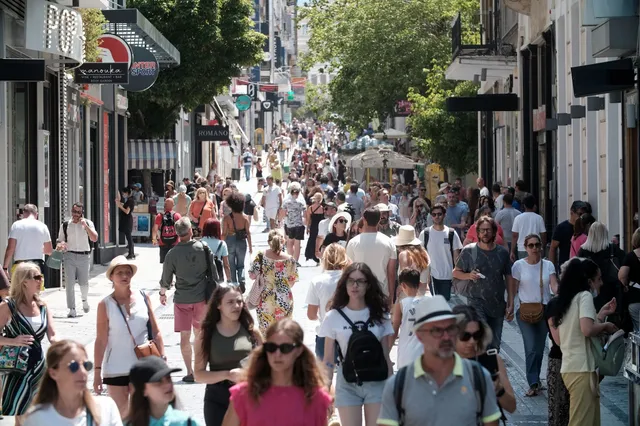
Holy Spirit Day is being observed under different arrangements for the public and private sectors. Here’s how shops, supermarkets, banks and public services will operate throughout the day.
- 01 Ιουνίου 2026 10:46
Monday, June 1, Holy Spirit Day, is being observed under different rules for the public and private sectors in Greece. Although it is not a mandatory public holiday for the entire private sector, thousands of employees will not be working due to collective labor agreements, company regulations, or long-established business practices.
At the same time, banks and public services will remain closed, as will schools and tutoring centers, while supermarkets and most retail stores are expected to operate normally across much of the country.
Shops and Supermarkets Open – Some Regional Exceptions
Holy Spirit Day is not a nationwide mandatory holiday for the private sector and therefore does not generally affect retail businesses.
Supermarkets are expected to operate under their normal schedules, serving customers as usual.
However, in certain parts of Greece, local decisions and long-standing customs create exceptions.
In Thessaly, the Federation of Commerce and Entrepreneurship, in consultation with local trade associations, has recommended maintaining the holiday, as is traditionally the case each year.
In addition, a local mandatory holiday applies in parts of Eastern Macedonia and Thrace, while in Central Macedonia it affects commercial stores.
Consumers are advised to check with local trade associations for specific information regarding their area.
Banks and Public Services Closed
Unlike the retail sector, public services and banks will not operate on Monday, June 1.
Holy Spirit Day is an established holiday for the public sector and the banking industry, meaning that bank branches will remain closed and no in-person transactions will be conducted.
Schools and private tutoring centers will also remain closed.
Sectors Where the Holiday Applies
Although the holiday is not universally observed in the private sector, several industries recognize Holy Spirit Day as a day off through collective labor agreements or special regulations.
These include:
- Bookstore employees
- Secondary, higher education and foreign language tutoring centers
- Diagnostic centers
- Private clinics and nursing homes
- Newspapers, magazines and online media outlets
- Shipping agencies
- Petroleum companies
- Timber merchants
- Tobacco industries
- Building caretakers
- Radio and television technicians
- Electrical technicians and industrial workers
- Quarry and construction workers
- Employee Compensation
The General Confederation of Greek Workers (GSEE), through its Information Center for Employees and the Unemployed (KEPEA/GSEE), has issued guidance regarding compensation for private-sector employees working on Holy Spirit Day.
According to the announcement, Holy Spirit Day is not included among the official public holidays established by law for private-sector employees.
However, businesses may remain closed if the day has been designated a holiday by a regional authority, a collective labor agreement, a company work regulation, or a long-standing business custom.
Employees who do not work due to such provisions are entitled to receive their regular salary. Daily wage earners are entitled to receive their normal daily wage.
Where Holy Spirit Day is recognized as an additional holiday for a business but the company operates exceptionally, employees who work are entitled to a 75% wage premium, calculated on their daily wage or on one twenty-fifth of their monthly salary.
What Is Celebrated on Holy Spirit Day?
Holy Spirit Day is a movable feast celebrated every year on the Monday following Pentecost, seven weeks after Easter.
According to Christian tradition, the feast commemorates the descent of the Holy Spirit upon the Apostles. It is one of the most important celebrations of the Orthodox Church and is closely associated with the doctrine of the Holy Trinity.