Marfin: Two arrested men remanded in custody – They deny the charges
Διαβάζεται σε 3'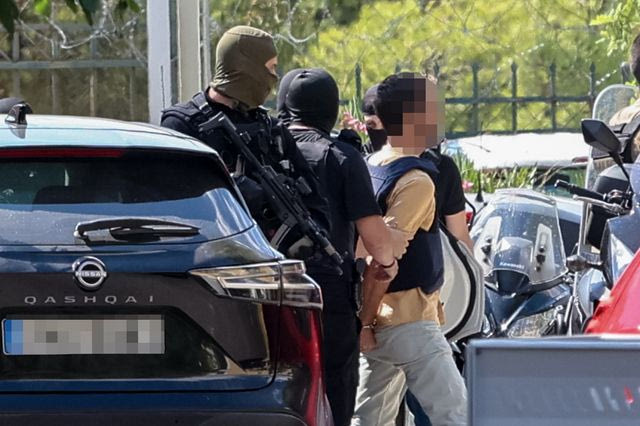
The two men arrested in connection with the Marfin arson case were remanded in custody following the joint decision of the investigating judge and prosecutor.
- 14 Ιουλίου 2026 21:59
The two suspects arrested over the Marfin arson case were ordered to remain in pre-trial detention after giving their statements.
According to reports, the investigating judge and prosecutor’s decision to remand them in custody referred to the particular nature of the offences attributed to the defendants, while they were also deemed likely to commit further offences.
Both defendants denied all charges, maintaining that they were not outside the Marfin branch in 2010. The defendant accused of smashing the glass frontage reportedly claimed that he had taken part in the May 5, 2010 march, but left when the clashes began.
Similarly, the second defendant reportedly admitted that he had attended the same march, but said he was at a location entirely different from the one identified by the authorities.
According to the Hellenic Police, the 42-year-old suspect K.S., whose family home was in Chalandri, allegedly smashed the Marfin shopfront with a sledgehammer, while a friend of his, who has not yet been formally identified, threw the Molotov cocktail.
E.A., the other 42-year-old suspect, who lived in the Plateia Amerikis area, appears, according to police, to have been giving instructions. Meanwhile, 46-year-old E.A., who was living in Great Britain, appears to have been standing next to the first suspect and carrying the backpack containing the Molotov cocktails, from which the others allegedly took the devices before throwing them.
It is worth noting that the defendants’ lawyers said at a press conference on Monday afternoon that none of the suspects had been identified.
Anny Paparousou, lawyer for two of those arrested, pointed out that the key evidence in the case file consists of an anonymous email and an investigation by the Directorate of Criminal Investigations, which concluded that the alleged perpetrators could not be identified.
“So we end up examining only moving objects, and the report says that although we cannot reach an absolute identification, we must rely on them. The case is being used for other purposes rather than to uncover the truth. Under criminal procedure, the case should be archived. The authorities have not even attempted to identify the person who sent the email so that they can contribute to the case file through their testimony. It has all the characteristics of a frame-up,” Ms Paparousou said.