Mystery solved over the gas odor in Attica
Διαβάζεται σε 4'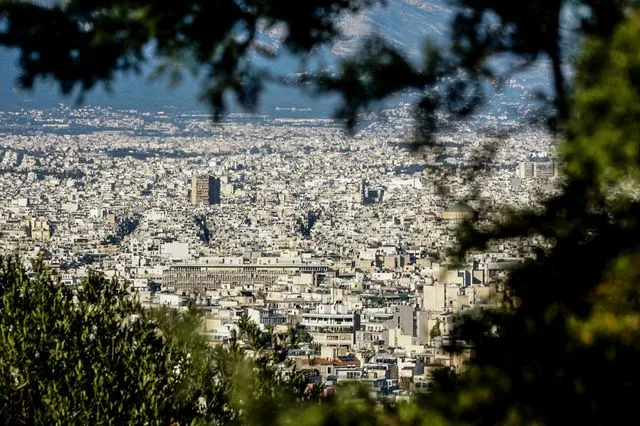
The scientific team AtmoHUB of the National Observatory of Athens has provided answers regarding the intense odor that disrupted Athens on May 19. Here is the most likely source of the foul smell.
- 09 Ιουνίου 2026 13:04
The final findings of the AtmoHUB team of the National Observatory of Athens point to the maritime area southeast of Salamis as the most likely source of the mysterious odor that covered parts of Attica on May 19.
According to the newspaper TA NEA, researchers used citizen testimonies, high-precision meteorological data, and specialized simulations to map the gas dispersion. The odor moved from coastal areas toward the east, west, and north, peaking between 12:00 and 15:00 that day. The findings suggest the most likely scenario is that the smell was linked to a ship located in that specific area, and the substance that caused panic in parts of the capital was propane or butane.
For its study -which is currently the most comprehensive effort to investigate the odor’s origin- AtmoHUB took into account 164 citizen reports provided by Civil Protection, mostly from the Southern Suburbs, the coastal front, and downtown Athens. They combined this data with info from the European Meteorological Center, running high-resolution simulations and tracing the phenomenon “backward” in near-real-time – both chronologically and geographically.
“We took the testimonies and used 3D models to perform a ‘rewind’ on the air masses, going backward to pinpoint the source of the foul smell,” Vasilis Amiridis, Director of Research at the National Observatory of Athens and head of AtmoHUB, told TA NEA.
“The final finding is that it likely originated from the sea area southeast of Salamis and is therefore linked to a ship that was there. It is highly probable that it was a liquefied petroleum gas (LPG) carrier,” he added.
To recap, during the morning hours of May 19, chaos ensued in the Southern Suburbs and central Athens due to an intense odor that residents reported smelled like cooking gas, even leading to building evacuations. So far, there has been no official confirmation of what exactly happened.
According to Amiridis, the substance that caused the smell and the subsequent commotion in the capital was likely propane or butane. “These are odorless substances; however, when companies want to detect a potential leak, they add mercaptans, which have a distinctive smell,” he explained to TA NEA. He added that this is the most dominant scenario since the available monitoring stations—which measure regulated pollutants—did not detect any other substance, while natural gas and natural origins were ruled out. “In any case, propane and butane are non-toxic and not dangerous to humans,” the head of AtmoHUB clarified, though he noted, “it is something that caused widespread public anxiety and requires attention.”
AtmoHUB is Greece’s information hub for Atmospheric Composition. It is coordinated by the NOA-ReACT team of the National Observatory of Athens and supported by the European Copernicus Atmosphere Monitoring Service (CAMS) Cooperation Program.
The Alternative Scenario
As Amiridis points out, there is a second -though less likely- scenario that emerged from their research. “We also investigated whether the odor came from Psyttalia, since there was a westerly wind that day that could have carried it to Athens, but analyzing the available testimonies shows this is less probable,” he said.
Meanwhile, expert scientists told the investigative journalism team Inside Story that if an air sample had been collected while the phenomenon was unfolding, there would be a precise answer regarding the smell and the substance that “soaked” the Attica air, rather than just estimates based on simulations and dispersion models. They also emphasized the urgent need for an operational protocols for immediate on-site response to such incidents.
Sources from the Environmental Inspection Corps stated they were never notified and had no knowledge of the odor’s source. While they are responsible for intervening and taking samples in emergencies, they only do so for liquid or solid materials. As they noted, there is no precise framework or specific operational body for gas-related incidents.
According to an update from the Ministry of Climate Crisis and Civil Protection on May 19, extensive checks were carried out that day by the Fire Service and the Coast Guard—the latter inspected gas carriers, but no relevant incident was reported.