Wiretaps: The supreme court prosecutor “buried” the case after being informed of new evidence
Διαβάζεται σε 6'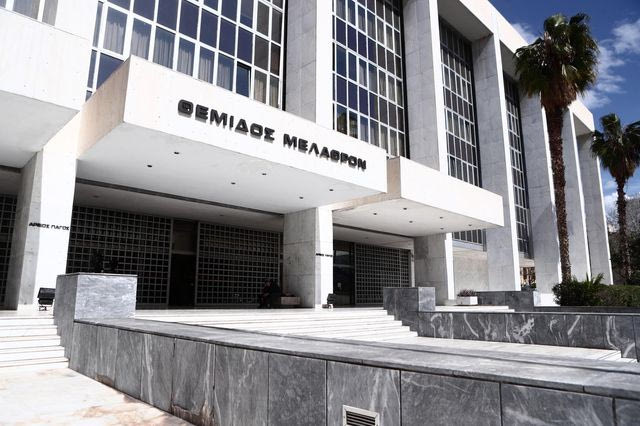
One business day after the Supreme Court was informed that six new lawsuits and confidential new evidence were coming in for the case, it issued an order to keep the wiretap case archived.
- 27 Απριλίου 2026 21:28
Step by step, the way the Supreme Court decided to leave the wiretap case buried in the archives was described by lawyers Zacharias Kesses, Christos Kaklamanis, and Manolis Velegrakis on Monday afternoon.
“On Friday, I Asked Where to Submit New Evidence and Lawsuits”
As stated at a press conference held at Harilaou Trikoupi, Zacharias Kesses said that the Supreme Court was officially informed on Friday (April 24) by him that he intended to submit new confidential evidence that was not in the case file, as well as lawsuits from six new critical figures who had not appeared before until then. He even fully informed them about who these figures were. One day later, the Court decided to leave the case in the archives, disregarding the decision of the Single-Member Misdemeanor Court, which had requested further investigation.
“I Felt the Supreme Court Was Delaying, So on Friday, I Submitted a Request”
Zacharias Kesses said, “On Friday, April 24, I submitted a request and asked, given the risk of expiration, to be informed about who was handling the case file.”
“I assumed Mr. Tzavellas would recuse himself because he had a clear conflict of interest. Apart from being the supervisor of the EYP during the period in question, he also signed the surveillance of Koukakis, and he had been questioned as a witness by the Institutions and Transparency Committee in Parliament, refusing to cooperate,” he added.
“I requested to be informed about where and how we could submit the new six lawsuits, which are from important figures who had not appeared until now. I also asked to be informed about how we could hand over the confidential sensitive documents we hold, which are not in the case file. Half an hour later, I was called by the secretariat, where I was received by the Deputy Prosecutor of the Supreme Court, Mr. Bakelas. I informed him about everything. I asked him to ensure care for who would receive the critical evidence. As you can understand, the sudden archiving of the case today, Monday, April 27, the first business day after their notification, shows that there was no intention for investigation. Mr. Tzavellas rushed to close the case, fearing the new lawsuits and evidence,” revealed Zacharias Kesses. He also pointed out that the Deputy Prosecutor of the Supreme Court was fully informed about the six critical figures who would submit lawsuits. “You can make the connections yourself,” he emphasized.
Institutional Deviation
He even spoke of institutional deviation: “We are experiencing institutional deviation. There is darkness. There is the judge’s decision and what he did not do. I want to report the following, promising to all those who are so dedicated to covering up. I dedicate to them Article 239 of the Penal Code, which concerns abuse of power. I am talking about Mr. Zisis, Mrs. Adilini, and Mr. Tzavellas. It will come to them as an inheritance, and beyond the condemnation of the judicial world, they will look back and see what they left in the judicial body. Not now, obviously. When the time comes.”
He concluded by saying, “I want to see how those who try to serve Mr. Dillian will react when the new evidence is presented.”
“The Supreme Court Does Not Want to See and Will Not See”
Christos Kaklamanis, lawyer for Nikos Androulakis, emphasized, “In the previous days, I wondered what Mr. Tzavellas was waiting for and why he didn’t assign the case to a Deputy Prosecutor to check whether the findings of the court were valid. I admit I never imagined he would never assign it to a Deputy Prosecutor, especially since he himself had a reason to recuse himself, as he signed the surveillance order on Koukakis and supervised the EYP. We thought he wouldn’t get involved.”
He continued, saying, “The order Mr. Zisis refers to, which the Supreme Court relies on today, contains no reasoning. And I know well the weight of what I’m saying.”
He emphasized that Mr. Tzavellas does not want to acknowledge the obvious: “For me, as a lawyer, today’s decision reflects the well-known saying ‘You won’t convince me, nor will you persuade me.’ He does not want to see, and he will not see. It’s a non-decision. It will have the same fate as Zisis’s order. The problem is that by the time it is overturned, many, or all, of the misdemeanor charges will have expired. It may archive the case, but it doesn’t create a precedent. That’s why judicial cooperation will be needed.”
He concluded by saying, “I heard a government official, a victim of Predator, celebrating today’s outcome. I’m baffled by government officials and ND members who were targets, as well as their families. Is this a day of joy for them? If it is, then something is definitely wrong with our democracy. The issue in the upcoming elections is also the independence of our country’s judiciary.”
“Provocative Order”
From his side, lawyer Manolis Velegrakis said: “Under the weight of today’s provocative order, there is an attempt to quell the criticism. A legal critique based on laws. Judicial decisions are not just orders without reasoning. Every critique contributes to the improvement of justice. Not an attack. As a result, the only one who said something during the trial and changed the previously imposed line, Mr. Tribalis, is the only one with a pending criminal case. All the others have no problem.”