Body found inside suitcase in Kypseli: New evidence under investigation by authorities
Διαβάζεται σε 3'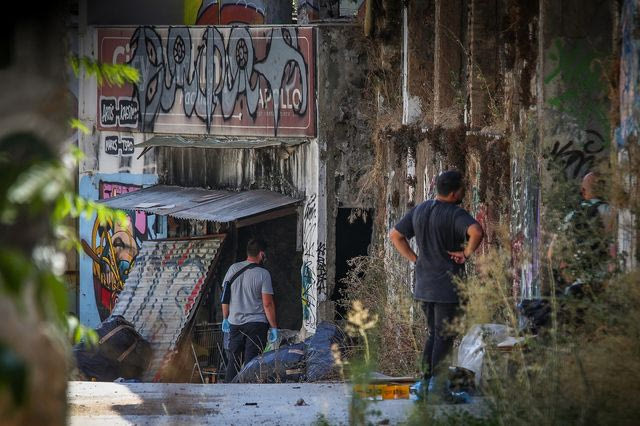
The investigation into the death of the 38-year-old woman whose body was found inside a suitcase in Kypseli is in full swing, with CCTV footage, fingerprints, and her mobile phone now at the center of the authorities’ efforts to determine what happened.
- 31 Ιουλίου 2026 07:56
The investigation by Greece’s Organized Crime Directorate into the shocking case of a woman’s body found inside a suitcase in an abandoned building in Kypseli is continuing, as detectives work to reconstruct the victim’s final movements and determine the circumstances surrounding her death.
According to ERT, homicide detectives have spoken with the 38-year-old woman’s father, who told investigators that his daughter had traveled to Greece from Edinburgh and, after arriving, stayed with a couple who were friends of hers in Keratsini. The couple told police that on 15 July, she left their home, saying she was going to Kypseli to meet friends from the United States and planned to stay there for several days.
Her whereabouts remained unknown until 18 July, when her body was discovered inside a suitcase by a homeless man who had entered an abandoned building on Evelpidon Street. The man told police that he frequently used the building as a shelter and that the suitcase had not been there on either 15 or 16 July. Based on this testimony, investigators believe the suitcase was most likely brought to the site on 17 July.
As a result, officers are reviewing footage from security cameras in the surrounding area and examining nearby hotels and Airbnb properties in an effort to identify anyone who may have been involved in transporting the suitcase.
Investigators are also focusing on the suitcase itself. According to witness statements, the 38-year-old arrived in Greece carrying only light luggage, strengthening the belief that the suitcase in which her body was found did not belong to her. Forensic experts are placing particular emphasis on DNA evidence and fingerprints recovered from the suitcase.
Another key element of the investigation is the victim’s mobile phone. According to reports, the device remained active after her disappearance, and between 15 and 29 July, messages were sent to her parents and relatives stating that she wanted to be left alone for a while. Detectives believe the messages were intended to mislead her family, delaying the reporting of her disappearance and buying valuable time for those responsible.
At the same time, location data from the phone reportedly indicate that it remained in the greater Athens city centre, particularly near Kypseli, throughout that period. Investigators consider this a significant clue that could help establish the timeline of events.
The investigation remains ongoing, with authorities examining all available evidence. Police hope that CCTV footage, forensic findings, and digital data analysis will ultimately lead to the identification of the person or persons responsible for the woman’s death.