Pizza Fan: The hidden “treat” software that made receipts disappear
Διαβάζεται σε 9'
A special algorithm allegedly allowed Pizza Fan outlets to complete orders without issuing receipts, concealing turnover from Greece’s Independent Authority for Public Revenue (AADE).
- 23 Οκτωβρίου 2026 17:56
One of the largest organised tax-evasion cases has been uncovered by the Directorate for Combating Organised Crime (DAOE), placing the network of the well-known Pizza Fan chain under investigation.
With the assistance of specially altered order-taking software, the network allegedly systematically concealed its actual revenues for at least eight years, causing enormous financial losses to the Greek state exceeding €35 million in unpaid taxes.
The tax-evasion algorithm and the virtual “treat”
The authorities’ multi-year investigation uncovered a highly sophisticated mechanism that interfered directly with the receipt-issuing system and the Electronic Invoicing Service Provider (YPAHES).
Although orders were normally recorded in the central database and transmitted to individual stores for preparation, an invisible algorithm automatically singled out certain transactions. In those cases, a special “treat” option appeared on the cash register screen.
When an employee pressed the relevant button, the food was delivered to the customer as normal, but no retail receipt was ever issued and the transaction effectively “disappeared” from the view of AADE.
Nevertheless, the software maintained a parallel record in the central system, allowing the leadership group to know at any given time the real turnover and undeclared profits of each store.
The undeclared revenues were collected in cash and handed over during monthly “meetings” involving members of the organisation, held in a designated room inside a shopping centre for the final financial reconciliation.
As part of a large-scale police operation in Attica and Thessaloniki, 23 people were arrested.
Among them were the 68-year-old head of the franchise network, the alleged deputy leader of the organisation, and the 51-year-old IT manager who designed the software in question.
All were brought before the Athens Court of First Instance Prosecutor’s Office and criminal charges were brought against them, depending on the case, for:
- forming, joining and directing a criminal organisation,
- tax evasion exceeding €150,000 through failure to remit VAT,
- filing inaccurate income declarations,
- direct complicity in the above offences, and
- aggravated money laundering involving proceeds from criminal activities.
The defendants were referred to a regular investigating judge, where they are expected to request and be granted additional time to prepare their defence statements.
A further 109 people are also implicated in the case file.
During the authorities’ searches, more than €1.28 million in cash was seized, along with 52 computer towers, numerous fiscal devices and digital evidence, which was sent to the Directorate of Forensic Investigations for further analysis.
The Hellenic Police statement
The Directorate for Combating Organised Crime dismantled a criminal organisation whose members are alleged to have developed an organised tax-evasion mechanism through the non-issuance of receipts for orders placed at food-service establishments.
In order to put an end to their activities, a coordinated police operation was carried out yesterday, Thursday, October 22, 2026, by officers of the Subdirectorate for the Prosecution of Financial Crimes at offices, stores and residences in areas of Attica and Thessaloniki. A total of 23 members of the organisation were arrested, including the alleged leader.
The case file formed against them for, depending on the individual case, criminal organisation, money laundering, violations of the Code of Tax Procedure and weapons offences also includes another 109 identified individuals.
The investigation began following a prosecutorial order after a complaint concerning possible violations of labour, social insurance and tax legislation at stores belonging to a food-service network.
The subsequent extensive and thorough investigation by the Subdirectorate for the Prosecution of Financial Crimes, in cooperation with the Independent Authority for Public Revenue, with the assistance of the Intelligence and Special Operations Subdirectorate of DAOE and the Directorate of Forensic Investigations, established how the organisation allegedly operated.
More specifically, according to the investigation, from at least 2016 the defendants had formed and joined an operationally structured organisation with continuous activity, whose aim was felony-level tax evasion involving income tax and Value Added Tax (VAT), through interference with the order-taking and retail receipt issuance system via the YPAHES provider, the Electronic Invoicing Service Provider.
In this way, franchise stores of the company were allegedly able, depending on the case, not to issue tax documents — retail receipts — for orders that had been received, fulfilled and delivered to customers.
More specifically, the organisation allegedly used specialised software that allowed stores within the network to complete orders without issuing the legally required receipts.
Customer orders were entered into the central order-taking system and forwarded to the relevant stores for fulfilment. When an order was completed, the system allowed the employee to issue a receipt for payment in cash or by card, or to cancel the order.
However, for specific orders selected through a special algorithm, an additional function labelled “treat” appeared, allowing the transaction to be completed without the corresponding tax document being issued.
At the same time, orders for which no receipt was issued continued to be recorded in the central system, allowing members of the organisation to monitor the stores’ actual revenues and calculate the amounts being concealed from the tax authorities.
In this manner, according to the investigation, part of the actual turnover of the stores involved was concealed, resulting in the non-payment of the corresponding taxes.
Moreover, under the supervision of the organisation’s leading members, the illegal proceeds were transported in cash, under appropriate security measures, and handed over during monthly meetings attended by members of the organisation in a specific room at a shopping centre. At the same time, the financial performance of the network was presented and monitored in conjunction with the organisation’s illegal activity.
It should be noted that the financial investigation established that the organisation’s alleged leader owned 0.01% of the Greek company, while the remaining 99.99% belonged to a company headquartered abroad, whose beneficial owners were the leader and deputy leader of the alleged criminal group.
According to the authorities, this structure enabled taxes owed to the Greek state not to be paid and allowed the financial system to be used for the placement and movement of large sums of money originating from the Greek company.
The investigation also established the alleged role of each member of the organisation:
- A 68-year-old man, owner and manager of the company that franchised the stores and alleged leader of the organisation, was responsible for managing and overseeing the company and allegedly shaped the structure of the organisation.
- A 51-year-old man, owner of a company based abroad that owns the company controlled by the 68-year-old, was allegedly the organisation’s deputy leader and its main operational manager, serving as financial director.
- A 57-year-old man, the company’s operations director, allegedly acted as the link between the leading members and the stores, with responsibility for coordination, supervision and use of the illegal mechanism. He also handled customer complaints, relayed instructions from the leading members to store managers, dealt with financial and operational matters and allegedly provided warnings about imminent inspections.
- A 51-year-old man, the IT director and administrator of the order-taking information system, was allegedly responsible for the technical operation of the mechanism.
- A 37-year-old employee in the company’s accounting department who also managed a store was allegedly responsible for recording, monitoring, allocating, collecting and moving the illegal proceeds.
- A 47-year-old man allegedly played a role in financial monitoring, management and implementation of the illegal mechanism.
- A 40-year-old man, manager of two company stores, allegedly participated in the illegal operation of the mechanism.
- A 43-year-old man, manager of stores in Thessaloniki and inspector of stores in several regions of Greece, allegedly had full knowledge of how the illegal mechanism operated.
- A 44-year-old man, serving as a store inspector, allegedly communicated with the leading members, relayed instructions and coordinated the operation of the mechanism.
Searches at offices, stores and residences resulted in the seizure of:
- €1,288,732.60,
- 52 computer towers,
- a fiscal device,
- 6 luxury passenger vehicles and 3 motorcycles,
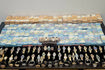
- 92 luxury watches and items of jewellery, and
- numerous notes, mobile phones, USB sticks, tablets, laptops and hard drives.
Based on the investigation so far, the financial loss suffered by the Greek state as a result of the organisation’s alleged activities between 2016 and 2026, due to the non-payment of corresponding income taxes and VAT, is estimated to exceed €35 million, while the concealed taxable income exceeds €150 million.
The seized money will be transferred to the Consignments and Loans Fund, while the confiscated digital evidence will be sent to the Directorate of Forensic Investigations for laboratory examination.
Finally, procedures were initiated to freeze the assets of the individuals and legal entities involved, following a relevant request by DAOE to the Hellenic Anti-Money Laundering Authority.
In addition, a total of 108 audit reports were prepared for the years 2023, 2024, 2025 and 2026 and forwarded to AADE in order to determine the unpaid taxes and calculate the scale of the alleged tax evasion.
Those arrested were brought before the competent prosecuting authority.