Halkidiki wildfire subsides but flare-ups remain a threat – Homes damaged
Διαβάζεται σε 4'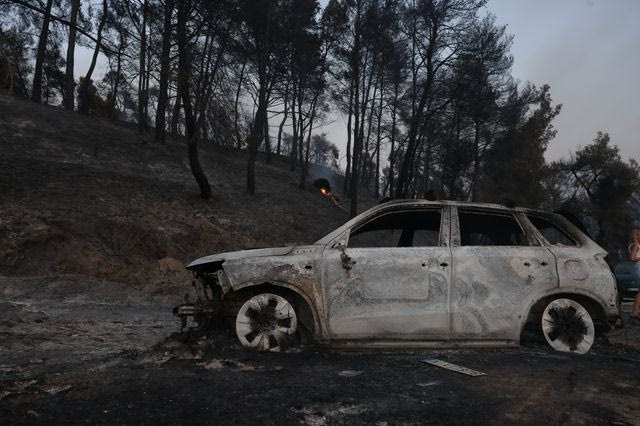
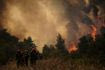
The wildfire that broke out in Siviri, Halkidiki, has shown signs of improvement, but more than 220 firefighters remain on the ground tackling scattered hotspots and guarding against flare-ups.
- 14 Αυγούστου 2026 09:29
The major wildfire that broke out in Siviri, Halkidiki, has subsided, with ground crews continuing efforts to extinguish scattered hotspots and prevent new flare-ups.
More than 220 firefighters, supported by dozens of vehicles and volunteers, remained on the fire front throughout the night, while regional authorities deployed heavy machinery to create firebreaks and help contain the blaze.
The wildfire broke out at around 3:00 p.m. on Thursday, August 13, prompting a major emergency response in an area experiencing particularly heavy tourist traffic during the peak summer season.
Authorities issued successive 112 emergency alerts, ordering residents and visitors in Siviri and Fourka to evacuate towards safer areas.
Evacuation efforts proved particularly challenging as there is essentially one main road leading out of the Kassandra peninsula, resulting in long queues and severe traffic congestion.
At the same time, authorities organised an evacuation operation by sea, with Hellenic Coast Guard and private vessels helping transport hundreds of people to safety towards Sani and Thessaloniki.
Homes damaged in Nautilos settlement
According to information available so far, homes in the Nautilos settlement sustained damage in the wildfire.
The full extent of the destruction is expected to become clearer once assessment teams are able to gain complete access to the affected areas.
Aerial firefighting resources also played a key role, carrying out continuous water drops until late in the afternoon and helping contain the blaze before nightfall.
Road from Kassandra to Fourka remains closed
Despite the improved situation, the road from Kassandra towards Fourka remains closed, while residents and visitors are waiting for authorities to give them the green light to return and assess the condition of their homes and properties.
Firefighting crews remain on heightened alert as scattered active hotspots are still burning, while winds in the area continue to increase the risk of flare-ups.
Firefighting forces reinforced overnight
The Fire Service reinforced its ground teams to ensure organised operations continued throughout the night and prevent major flare-ups.
“Firefighting forces continue to operate around the perimeter of the affected area, while additional reinforcements from Special Units for Forest Operations across the country are arriving and will operate throughout the night,” Fire Service Strategic Planning and Communications Director Vasileios Vathrakogiannis said during an emergency briefing.
A total of 227 firefighters, including 13 ground teams from EMODE forest firefighting units, and 57 vehicles were deployed to the area.
Among them were 12 firefighters and three vehicles from Moldova, who are in Greece as part of the European firefighters pre-positioning programme.
Water tankers and heavy machinery from the Municipality of Kassandra are also assisting operations, while two additional pieces of heavy equipment have been deployed to help create firebreaks in cooperation with forestry authorities.
Police forces remain deployed to manage traffic restrictions.
Meanwhile, Greece’s National Emergency Aid Centre (EKAB) has deployed six ambulances, one Mobile Medical Unit, two smaller emergency vehicles and three rapid-response motorcycles, staffed by rescuers and medical personnel.
Greece on high alert for wildfires
Extremely difficult wildfire conditions are expected across Greece on Friday, August 14, as very strong and at times gale-force winds could favour the outbreak and, particularly, the rapid spread of fires.
As a result, authorities have decided that areas classified under Wildfire Risk Category 4 will be treated with the same heightened operational readiness as Category 5 areas.
The entire Fire Service remains on alert, with increased patrols and pre-positioned firefighting forces deployed across high-risk areas.