Maro Kontou dies at 92
Διαβάζεται σε 5'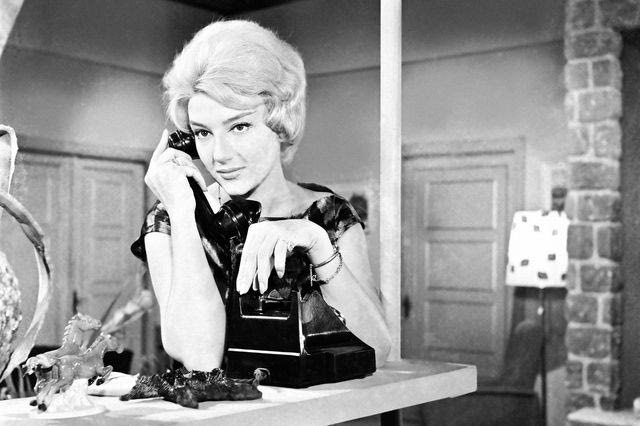
Maro Kontou was one of the last great ladies of the generation that shaped the golden age of Greek cinema. With her elegance, integrity, talent and enduring presence, she earned a special place in the hearts of the public and in the history of Greek art.
- 15 Ιουλίου 2026 10:10
Maro Kontou, one of the most important and beloved leading actresses of the golden age of Greek cinema, has died at the age of 92. Over a career spanning more than six decades, the acclaimed actress left an indelible mark on the country’s artistic life, starring in dozens of theatrical productions and films that were embraced by audiences and became part of cinematic history. In recent months, the beloved actress had been facing health problems and was being treated in hospital.
Marianthi “Maro” Kontou was born in Athens on 21 June 1934 and grew up in the Koukaki district. Her life was marked at an early age by the loss of her father, who died of tuberculosis when she was just two years old. She was raised by her mother, sister and grandmother in a household where financial hardship was a daily reality. Despite the objections of her family, who wanted her to pursue a more secure profession, she knew from a young age that her life was bound to the arts.
Dance and her “adviser”, Dimitris Horn
Her love of dance emerged during childhood. She studied at Koula Pratsika’s dance school and also secured a scholarship to the Hladek school in Germany. From 1953 to 1958, she performed in the chorus of Ancient Drama productions at the National Theatre, gaining valuable experience alongside leading figures of Greek theatre, including Katina Paxinou and Alexis Minotis.
In 1958, she was granted an acting licence as an exceptional talent and took her first steps in theatre with the production The Gentleman’s Lady, by Nikos Tsiforos and Polyvios Vasileiadis, alongside Dinos Iliopoulos. Her natural presence, expressiveness and ease on stage quickly established her as a leading actress.
In 1959, her career received a new boost when she appeared alongside Dimitris Horn, replacing Elli Lambeti after the definitive separation of the legendary couple. She performed with him in Jacques Deval’s play Romancero, while their collaboration continued in cinema with the film Woe to the Young (1961), directed by Alekos Sakellarios.
Her meeting with Horn proved decisive for both her professional and personal development, as the great actor remained her mentor and close adviser for many years. She often referred to Horn as her great “adviser”.
At his side, she learned not only acting but also an entire philosophy about the profession. One piece of advice he gave her became particularly memorable. When she expressed a desire to achieve the level of popular acclaim enjoyed by Aliki Vougiouklaki, he told her: “I give you both my blessing and my curse: do not become a popular idol. May you be able to continue acting in fine productions until you are 80.” Maro Kontou followed that advice throughout her career.
The golden age of cinema for Maro Kontou
She made her film debut in 1954 in Dinos Dimopoulos’s A Happy Beginning. Her major breakthrough came in the early 1960s with films such as The Yellow Gloves, Murder Backstage and, above all, Woe to the Young, which established her as one of the leading actresses of the era.
During her long career, she appeared in more than 60 films and around 90 theatrical productions. Her best-known film appearances include My Friend Lefterakis, The Lady Driver, An Italian Girl from Kypseli, Three Liars, Seven Years of Marriage and many more that remain popular with television audiences to this day.
For many, the high point of her career was her performance as Ismini in Giorgos Tzavellas’s unsurpassed 1965 comedy The Wife Should Fear Her Husband. Alongside Giorgos Konstantinou, she created one of the most distinctive and beloved screen couples in Greek cinema, in a film that remains a timeless point of reference.
Her collaboration with Lambros Konstantaras also held a special place in her artistic career. The two actors co-starred in 13 films, forming one of the most successful pairings of the golden age of Greek cinema. Their on-screen chemistry was so strong that many believed they were also in a relationship off set, something she repeatedly denied. Films such as The Bluffer, The Bachelor, The Shrew Who Became a Lamb, Captain Four-of-Clubs and The Games of Jealousy remain classics to this day.
Alongside acting, Maro Kontou also possessed exceptional vocal abilities. Her participation in Manos Hadjidakis’s historic musical-theatre production Dream Street, as well as her performances of songs associated with Greek cinema, revealed yet another dimension of her talent.
Maro Kontou’s two marriages and political career
In her personal life, she married twice: first to cinematographer Aristeidis Karydis-Fuchs and later to advertising executive Giorgos Doxas. She spoke openly about her decision not to have children, stressing that she never felt anything was missing from her life.
She also spoke candidly about the financial difficulties she faced during the years of the economic crisis, revealing that the reality experienced by many actors was far removed from the image of financial comfort that the public often assumed.
From the 1990s onwards, she became actively involved in politics as a member of New Democracy. She served as an Athens city councillor during the mayoralty of Dimitris Avramopoulos and as a Member of Parliament for the First Athens constituency, serving the public with the same consistency that characterised her artistic career.