Mitsotakis: Constitutional revision as a response to toxicity
Διαβάζεται σε 7'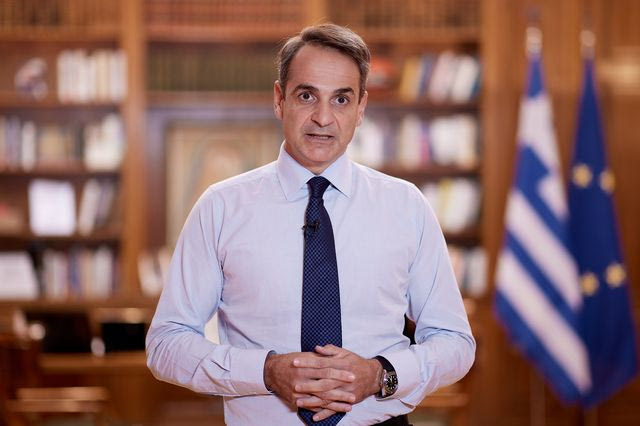
The Prime Minister initiated the dialogue on constitutional reform. He proposes revisions to Articles 16, 86, and 103. Letter to New Democracy MPs regarding the final formulation of the party’s proposal.
- 02 Φεβρουαρίου 2026 12:29
Prime Minister Kyriakos Mitsotakis has announced the launch of a national dialogue on constitutional revision, in a message addressed to citizens.
Mr Mitsotakis proposes revising Article 16 to allow the establishment of private universities, Article 86 concerning ministerial liability, and Article 103 on tenure in the public sector, which he wants to link to the evaluation of civil servants.
He also proposes changes to the way the leadership of the judiciary is selected, the introduction of a single six-year term for the President of the Republic, as well as constitutional safeguards for fiscal stability and an obligation for political parties to present fully costed government programmes.
Mitsotakis Pressures PASOK
The prime minister is calling on opposition parties — and effectively targeting PASOK in particular — to agree to the revision of these specific articles so that they can be designated as revisable by the current Parliament with 180 votes and amended by the next Parliament with 151.
“The Constitution itself obliges us to seek consensus if we truly want to achieve the major changes our constitutional charter requires,” Mr Mitsotakis notes, adding: “I hope the process of constitutional revision will provide an answer to the toxicity and sterile partisan entrenchment that characterise our political system.”
At the Maximos Mansion, there appears to be a belief that opening a dialogue on constitutional revision will place PASOK in a difficult position, especially over Article 16 on private universities and Article 103 on tenure in the public sector.
A key role in the government’s planning and this attempt at constitutional revision is being played by Foreign Minister George Gerapetritis, who comes from a PASOK background. Coordination is reportedly being handled by the Prime Minister’s Secretary-General, Stelios Koutnatzis.
According to information, the constitutional revision committee may include Evripidis Stylianidis and Theodoros Roussopoulos, who both participated in the previous constitutional revision committee (the former as chair and the latter as a member) and are well acquainted with the subject. It is also noted that Mr Roussopoulos, who was recently announced as chair of the New Democracy party congress organising committee, will speak this evening at the presentation of Mr Stylianidis’ book on artificial intelligence in Komotini. Another speaker at the event will be former PASOK leader Evangelos Venizelos.
Final ND Proposal in March – Parliamentary Process to Begin in April
It is recalled that if the proposing Parliament agrees to the revision of a constitutional article with 180 votes, the next Parliament — the revising Parliament formed after the next elections — will be able to amend it with 151 votes. In other words, if an article is designated as revisable by 180 MPs in the current Parliament, the next government will be able to revise it as it sees fit. Conversely, if the proposing Parliament designates an article as revisable with 151 votes, then the revising Parliament will require an enhanced majority of 180 votes to amend it.
At the same time, the prime minister has sent a letter to New Democracy MPs to initiate internal consultations ahead of the final formulation of the proposal, which will then be put forward for discussion with other parties.
In his letter to party MPs, Mr Mitsotakis stresses that the goal is to present New Democracy’s proposal for constitutional revision in March, so that the parliamentary process can begin in April. He therefore asks for their proposals by the end of February.
Government officials said: “The constitutional revision proposed by Mr Mitsotakis concerns a change in the model of governance — a bold and ambitious revision for a modern system of governance.”
“Public Sector Tenure Must Be Placed on a New Footing”
In his statement, Mr Mitsotakis said in particular:
“Today we are opening the dialogue on constitutional revision, delivering on yet another of our institutional commitments. As President of New Democracy, I wanted first to hear the views of our Parliamentary Group. That is why I am addressing its members by letter, so that their positions can be incorporated into our final proposal in March. After all, this is an issue that concerns public life as a whole and, ultimately, every single citizen.
It is true that for 50 years the 1975 Constitution has ensured stability and political normality. It is a ‘living’ text. However, it undeniably belongs to the 20th century. Therefore, the time has come to dare major reforms that will strengthen the prestige of institutions and citizens’ trust, introducing provisions for the better functioning of the political system in the face of the great challenges of our time, in step with new realities such as artificial intelligence and the climate crisis.
It is well known that I firmly believe in a more decisive involvement of regular judges in cases of potential criminal liability of ministers while in office. I have been defending the change of Article 86 for 20 years. Equally clear is my commitment to tackling the ‘deep state’. Because a friendly and effective public administration must now have continuous evaluation as its driving force and must place the concept of tenure on an entirely new footing.
I have also supported lifting the outdated monopoly in higher education through the establishment of non-state universities. As well as protecting the institution of the President of the Republic by introducing a single six-year term. I have also proposed greater and more substantive participation by judges themselves in the selection of the leadership of the highest courts, providing an additional safeguard for judicial independence.
I reiterate that our intention is a generous, bold constitutional revision that responds to the needs of ongoing developments. That is why it must also provide safeguards guaranteeing permanent fiscal balance, consistent governance, and the credibility of party promises, so that the country never again slides into the dangerous paths of populism — paths whose devastating consequences we have, unfortunately, paid for dearly.
I therefore share these initial thoughts with you, inviting parties and citizens alike to engage in constructive reflection. With positive proposals and a sense of shared responsibility towards the country and the future. This is a demand of society itself, which is seeking broader consensus — with substantive arguments beyond partisan expediency and with the goal of a modern European democracy. A dynamic step forward that we must, and can, take together.
After all, the Constitution itself obliges us to seek consensus if we truly want to achieve the major changes our constitutional charter requires.
I hope that the process of constitutional revision will provide an answer to the toxicity and sterile partisan entrenchment that characterise our political system.”