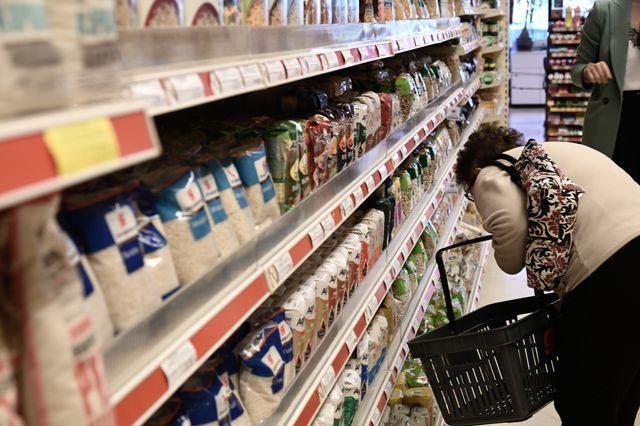
Time is running out before the implementation of a new initiative that will bring price cuts on hundreds of products on supermarket shelves.
The list of product codes taking part is expected to exceed 1,000 items, while consumers will be able to identify the discounted products more easily through special signage.
Development Minister Takis Theodorikakos is also expected to present the latest developments regarding the agreement with businesses and the planned price reductions to the Cabinet. The measures are set to take effect on Monday, August 31.
By last Friday, around 65 food manufacturers and multinational companies had already submitted lists of products on which they intend to cut prices. Initial estimates had put the number at around 750 products, but the final figure is expected to be significantly higher.
This is because, in addition to branded products, it was decided that private-label products would also be included in the initiative. As a result, the list is expected to exceed 1,000 product codes.
The average price reduction is currently estimated at between 7% and 8%. For some products, however, discounts could exceed 10% or even 15%, although such cases are expected to be limited.
Which product categories are included
The initiative covers a wide range of products that are part of households’ shopping baskets on an almost daily basis.
These include meat, such as beef, pork and poultry, as well as milk, yogurt, cheese and eggs. Price cuts are also expected on bread and flour, pasta, rice, pulses, olive oil, vegetable oils, butter and margarine.
Other categories under consideration include infant formula, baby food and diapers, as well as coffee, cereals and breakfast products.
The list is also expected to include chocolate, biscuits, soft drinks, detergents and cleaning products, while reductions are anticipated on personal care items such as shampoo, shower gel, razors and toothpaste. School supplies are also expected to be included.
Additional discounts could follow
Importantly, the price reductions offered by suppliers may not be the final step. Supermarkets will be able, if they choose, to offer additional discounts on the participating products.
In some cases, this could mean an even greater overall saving for consumers.
Under the initiative, price reductions must start at a minimum of 5%. For certain categories, such as fresh pork, beef and poultry, the target is for reductions to reach up to 15%, while in other essential categories they could be as high as 20%.
Agreement runs until the end of the year
The agreement is expected to run for four months, until December 31, 2026. Each product included in the initiative will have to remain part of the scheme for at least two months.
Companies will be able to add new product codes or replace existing ones during the agreement, provided they comply with the participation requirements and properly inform the relevant authorities.
Consumers will be able to find information about participating products through a dedicated section on the PosoKanei platform. A common label will also be used in supermarkets and on shelves, making it easier for shoppers to identify products subject to the price reductions.