Piraeus: How the garage became a death trap for the couple – What experts say
Διαβάζεται σε 5'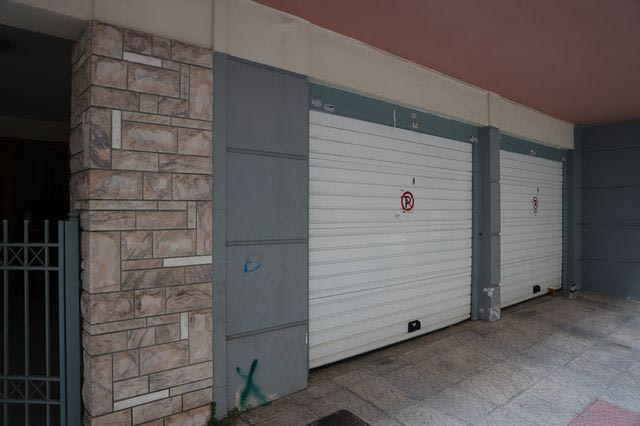
Experts explain how conditions inside the vehicle and the garage may have led to the deaths of the young couple in Piraeus. The forensic examination results are awaited.
- 15 Ιουλίου 2026 10:18
The local community in Piraeus, and beyond, has been left in shock by the tragedy that occurred yesterday, Tuesday (14/07), when a young couple was found dead inside a car in the garage of an apartment building.
The deaths of the two young people, aged 28 and 24, are believed to have been accidental, while the authorities have ruled out both foul play and suicide.
The couple were found inside the vehicle by the 28-year-old man’s father, who went down to the garage and discovered his son and his 24-year-old partner unconscious.
Initial evidence indicates that the car’s engine was running and the air conditioning was switched on while the vehicle was in an enclosed space. This has led the authorities to conclude that the couple may have died from carbon monoxide poisoning or exposure to other exhaust fumes. It appears that dangerous emissions from the engine may have entered the passenger compartment through the air-conditioning system, causing the two young people to lose consciousness and subsequently die.
The results of the forensic, laboratory and toxicological examinations are expected to shed light on the precise cause of the couple’s deaths. They will determine which gases the two young people inhaled and exactly how they lost consciousness.
What experts say about how the young couple died
Forensic pathologist Grigoris Leon spoke to MEGA about the incident, stressing the seriousness of the situation and the dangers posed by fumes in enclosed spaces.
“Based on the evidence available so far, such a scenario is consistent with this possibility. In other words, we are talking about an enclosed space, a garage — and a small one at that — in which a car was parked with its engine running and the air conditioning switched on. This could indeed create conditions in which carbon monoxide is produced inside the passenger compartment. Carbon monoxide enters the bloodstream, reaches the red blood cells and ‘steals’ the oxygen from them, thereby depriving the people inside the space of oxygen.”
“Due to the lack of oxygen, drowsiness and loss of consciousness occur, leading ultimately to death,” he pointed out, adding the following about carbon monoxide:
“Unfortunately, such a substance is not easily detected. We are talking about a gas that is relatively odourless and therefore difficult to notice. Moreover, even when we begin to feel drowsy, this would not be the first thing that comes to mind. Even a moderate concentration can lead to loss of consciousness within a matter of minutes — one or two, or at most three minutes. Therefore, there is no time to react.”
Energy inspector Michalis Christodoulidis offered a similar explanation while speaking to ERT.
“If the engine is left running for a prolonged period and the exhaust fumes cannot escape into the outside environment because the garage door is closed, the fumes will enter the passenger compartment through the air-conditioning system, and this can even result in death,” he stressed.
Forensic pathologist Dimitris Galenteris also spoke today on the programme Koinonia Ora Mega and explained:
“Carbon monoxide, which is essentially the poisonous substance, is an odourless gas. However, exhaust fumes have a very strong smell. This is a contradictory element. In other words, they would obviously have realised that exhaust fumes were entering the vehicle. It is impossible for that not to have been noticed. It is very possible that the danger was not properly assessed and that this was an accidental incident, although it could also have been something else. I believe the investigation must be completed before we can have a full picture of exactly what we are dealing with. In any event, carbon monoxide is a gas that gradually places a person into a lethargic state, beginning with drowsiness and progressing to lethargy, after which death occurs very smoothly.”
“There are, of course, stages. These include headache and discomfort, possibly nausea, a tendency to vomit or abdominal pain. Then the condition progresses towards lethargy. The stages are not skipped. They do occur. The time it takes to lose consciousness depends on the concentration of carbon monoxide in the air. I believe the most compatible explanation is an accident, provided that no other evidence emerges. However, it is best to wait until the police investigation has been completed so that we have a full picture of the circumstances,” he added.
“In this case, you first have the presence of exhaust fumes, followed by sleep, lethargy and death. The poisoning must be confirmed. Samples must be taken so that specialised testing can establish whether this was indeed the cause of death. A broader toxicological examination must also be carried out to determine whether any other substance may be present. In any case, according to the information available so far, there are no injuries, so a violent death — at least one caused by physical trauma — has been ruled out,” Mr Galenteris continued.