Ilan Pappé: “I Am Not a Traitor of Israel. I Am Trying to Save My People.”
Διαβάζεται σε 11'
The Israeli historian spoke to NEWS 24/7 about his journey from Zionism to questioning its foundations, the discoveries that reshaped his understanding of the Nakba, and what he believes the war in Gaza has revealed about the West’s response.
- 22 Αυγούστου 2026 12:49
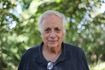
lan Pappé is perhaps the most controversial figure in contemporary Israeli historiography.
A member of the generation of the so-called “New Historians,” he drew on declassified Israeli state archives in the 1980s to challenge foundational narratives surrounding the establishment of the State of Israel.
His work brought him into conflict with much of Israel’s academic and political establishment, eventually leading him to leave the University of Haifa and continue his academic career at the University of Exeter.
We met Ilan Pappé on the sidelines of the summer school Genocides, Mass Atrocities and Human Rights, held in Rodochori, northern Greece.
Speaking with him offers insight into how a man who once fought for Israel and firmly believed in Zionism gradually abandoned that worldview through historical research, eventually becoming one of the leading advocates of an academic boycott of Israeli institutions.
You served in the Israeli army during the 1973 Yom Kippur War. To what extent did that experience shape the way you later came to understand the State of Israel?
Ι wish I could say the war changed everything, but that wouldn’t be true. I was eighteen years old, fighting on the Golan Heights against the Syrians. I don’t think that was the defining moment of my life.
It would make a wonderful story—that you witness the horrors of war and become a man of peace—but I cannot honestly say that.
After the war, I remained deeply committed to Zionism. The change came much later in my life, not during my military service. Soldiers, after all, are not trained to think very much.
You said you were committed to Zionism. What did that mean to you?
I believed completely in the dominant narrative: that this was the homeland of an exiled people returning home, that everyone wanted to destroy them, but they were courageous, morally justified, and on the side of justice.
Zionism functioned as a complete justification for everything around me.
It is what Michel Foucault describes when he urges us to examine what we take for granted.
We may not understand everything Foucault wrote, but this lesson is very clear: the first thing we should question is precisely what appears natural and self-evident.
As one of Israel’s “New Historians,” you helped bring hidden state documents into public debate. Looking back, what archival discovery shocked you the most?
“Two things.
The first was discovering that there had been systematic planning behind the expulsion of the Palestinians. I had grown up believing they had left because Arab leaders had instructed them to do so. The documents showed something entirely different.
Incidentally, only two percent of the documents relating to 1948 were ever opened. Just two percent.
The truly incriminating documents were never released. They remained classified. In fact, I believe many of them have since been destroyed.
The second shock was reading about massacres.
I had been raised believing that after the Holocaust, Jews could never commit such atrocities. I remember confronting my professors and saying: ‘You lied to me.’
They didn’t tell me I was wrong.
They simply said: ‘Don’t expose this. It’s our dirty laundry.
Γιατί στο βιβλίο “A History of Modern Palestine” επιλέξατε να αφηγηθείτε την ιστορία ολόκληρης της Παλαιστίνης και όχι μόνο του κράτους του Ισραήλ;
Why did you choose to write A History of Modern Palestine rather than simply a history of Israel?
“I wanted to distinguish between a country and a state.
Palestine is the country. Israel is the state. To understand the history of Israel, you must understand the history of everyone who lived in that country.
That history naturally includes Israel, but it also includes the Jews who lived there before Zionist immigration and those who arrived afterward.
I wanted to produce what I call a ‘bridging narrative.’ This is not a pro-Palestinian or anti-Israeli book. It is a history written from the perspective of people who became victims, regardless of who they were.
It attempts to place everyone within the same historical narrative instead of reducing history to a simple black-and-white story. It is true that in many chapters of that history the victims were Palestinians.
But that is not my responsibility.
I am not responsible for who became the victims.
Many struggle to understand why you support an academic boycott of Israeli universities. What role do universities play in supporting the Israeli state?
Academics can participate in oppression both directly and indirectly. Universities educate engineers, doctors and scientists who later become part of the state’s apparatus.
At Tel Aviv University, for example, components were developed that were used in Israeli drones operating over Gaza as early as 2014. But there is also the indirect dimension. Universities are part of the state, particularly public universities. And for me, silence is a form of complicity.
I taught for twenty-three years at the University of Haifa. Only two kilometres away there is a prison where Palestinian political prisoners have reportedly been tortured and abused. Universities cannot pretend they have nothing to do with that reality.
Or take Tel Aviv University.
The campus was built on the ruins of a Palestinian village destroyed in 1948. The Faculty Club occupies what was once the home of the village’s mukhtar.
You cannot organise conferences on human rights inside that building without acknowledging whose home it originally was.
I see the academic boycott as a conversation—a very difficult conversation. It tells Israeli academia that there is a price to pay.
White South Africans understood this. Many people suffered the consequences of the boycott despite having had no personal involvement in the apartheid system. Yet they accepted that, as members of that society, they too had to bear the cost of what amounted to a form of collective punishment.
Do you believe, even in a paradoxical sense, that you are committing an act of treason?
No. Quite the opposite. I believe I am trying to save my people. If Israel does not change course, I fear it is heading toward destruction.
I see myself as a saviour, not a traitor. Of course, they do not see it that way.
In your recent book Lobbying for Zionism, you argue that pro-Israel lobbying networks have played a decisive role in shaping Western policy toward Israel. How do these networks operate in practice, and what are their main mechanisms?
There is an important distinction between formal and informal lobbying.
Informal lobbying is based precisely on the fact that everyone knows the formal lobby exists. Even when the formal lobby is not actively intervening, everyone knows it is there.
So, for example, you may be a Greek politician and choose not to criticize Israel.
Not because the lobby called you that morning and told you that if you did, you would lose your position. But because you know that if you do, the phone will ring the next day. So they do not even need to call you.
The problem for the lobby itself is that this no longer works as effectively with younger generations of politicians. I believe it is gradually losing some of its influence. That said, the formal lobby continues to work very intensively.
In the book, I describe a scene that I witnessed myself and that was also captured in a documentary. You are walking through the corridors of the Capitol when, in a side room, you see two AIPAC lobbyists meeting with three members of the House of Representatives.
The lawmakers look terrified. The lobbyists are twenty years younger than they are, yet they are sharply reprimanding them.
And in some cases, particularly in Britain, it is not even a matter of fearing that something bad will happen to you. It is simply a headache you would rather avoid.
Have you reconsidered any of your views following October 7 and the war in Gaza?
No. I do not believe we learned anything fundamentally new about either Israeli policy or the Palestinian resistance.
What truly surprised me was Europe’s silence. I had expected a much more active response.
That was when I realized just how accurately the book I had written about the lobby reflected reality.
At the end of that book—which, of course, was written before October 7—I argued that the lobby was weakening and no longer wielded the influence it once had.
I was wrong. It still possesses a great deal of power.
However, I do not believe that this is the only reason why European governments failed to respond. There are other factors as well.
For many European countries, it is extremely difficult to accept that a state they regard as part of the West could be accused of crimes of a similar gravity to those attributed to other countries.
So you are optimistic?
Yes, I am optimistic in the long term.
Not because I believe governments will change on their own, but because societies do.
And, ultimately, governments follow societies.
That is how history has always worked.