Strong Turnout at Nationwide Education Protests: “Study or Survive?”
Διαβάζεται σε 7'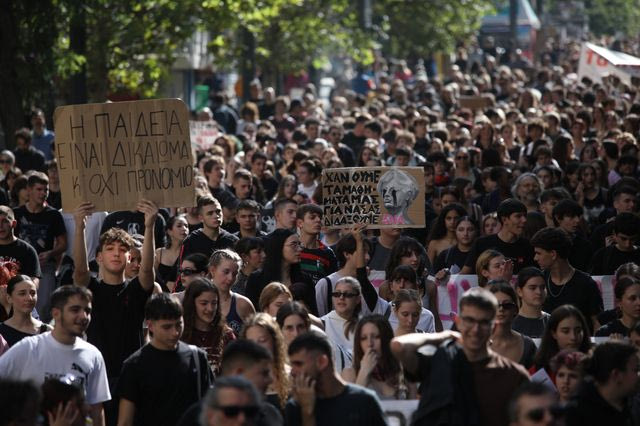
Nationwide education protests took place in Athens and other major Greek cities, with demonstrators demanding increased funding, the filling of staff vacancies, improved student welfare and safer educational facilities.
- 21 Οκτωβρίου 2026 18:46
The nationwide education rally in central Athens concluded shortly before 2:00 p.m. on Wednesday (October 21), as demonstrators returned to Propylaea and gradually dispersed.
School pupils, university students, teachers and public- and private-sector workers took to the streets as part of nationwide demonstrations held in several cities across Greece.
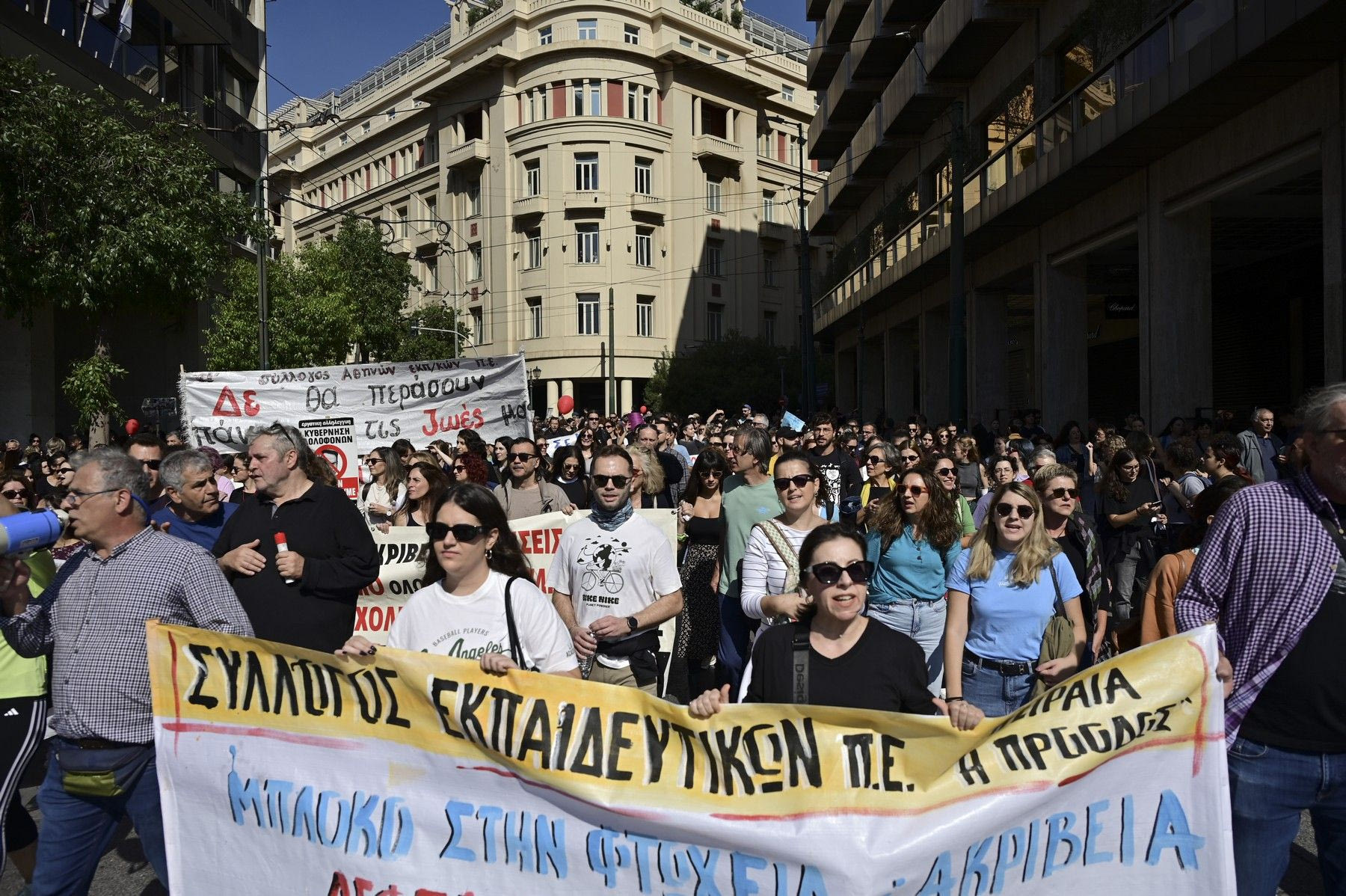
Protesters began gathering at Propylaea shortly before noon. Speakers addressing the crowd included the president of the Greek Primary Teachers’ Federation (DOE), the president of the Federation of Secondary School Teachers (OLME), a pupil from the Grava school complex, the president of the Philosophy Faculty Students’ Association, a union representative, a representative of the Panhellenic Federation of Associations of Special Education Personnel (POSEEPEA), and a representative of school nurses.
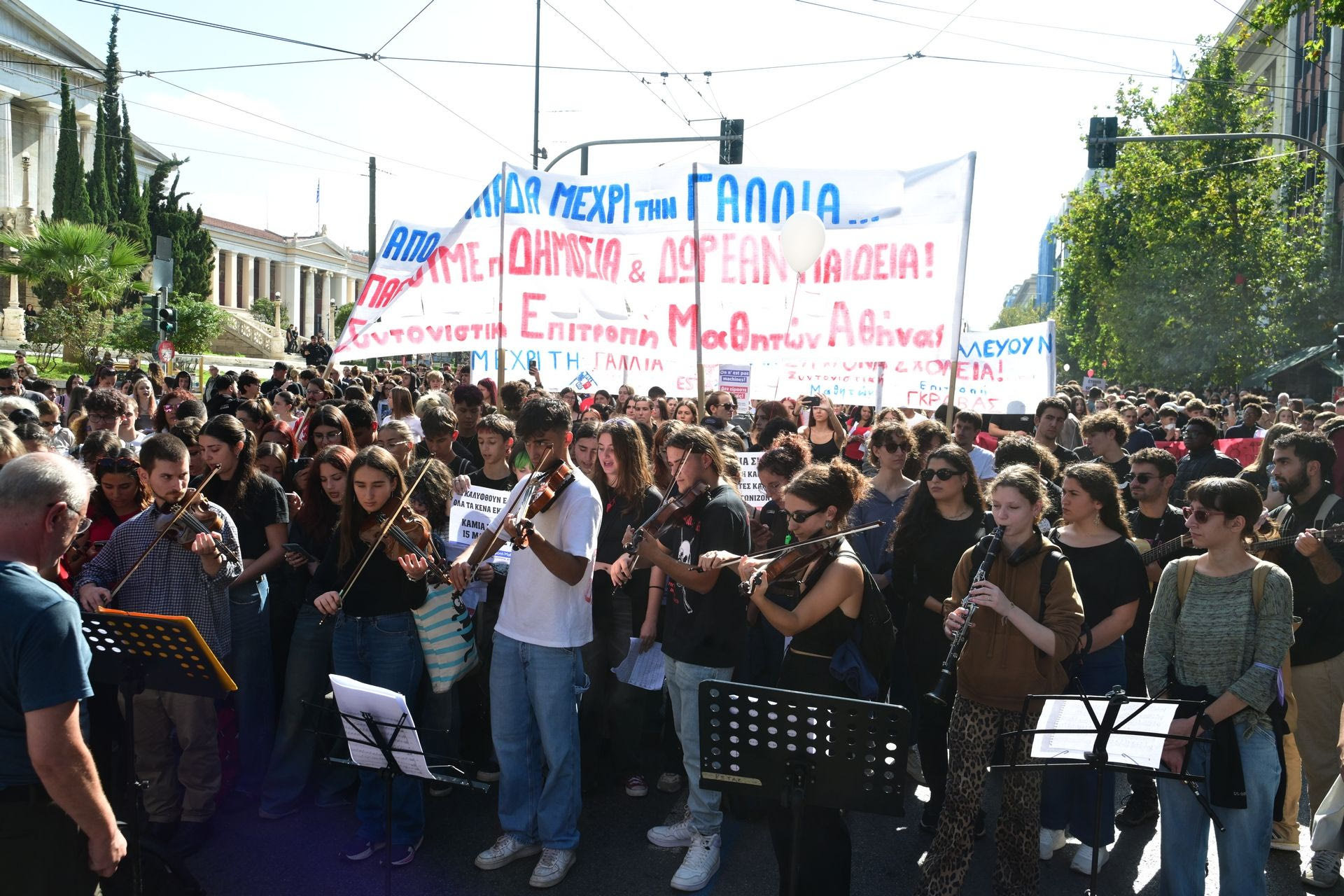
The march began at Propylaea and initially headed towards Syntagma Square. The main body of demonstrators then turned back towards the University of Athens, where the protest ended peacefully.
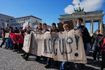
Among the banners and placards were signs bearing the French slogan “Étudier ou survivre?” (“Study or survive?”), a clear reference to the mass participation and momentum of recent protests in France.
The demonstration was supported by the Greek Primary Teachers’ Federation (DOE), which called a 24-hour strike, while OLME and the Civil Servants’ Confederation (ADEDY) organised work stoppages. Other participating organisations included POSEEPEA, the Federation of Hospital Doctors’ Associations of Greece (OENGE), the Panhellenic Union of Temporary Staff at the Ministry of Culture, and pensioners’ organisations.
At the heart of the protesters’ demands were an immediate increase in state funding for public education, substantial improvements in student welfare and housing support to address the increasingly unaffordable cost of living, the filling of thousands of permanent teaching vacancies, permanent contracts for substitute teachers, and the provision of modern, safe school facilities.
Traffic on major roads in central Athens, including Panepistimiou Street, Stadiou Street, Amalias Avenue and Vasilissis Sofias Avenue, is gradually returning to normal. Services have also resumed at the Panepistimio and Syntagma metro stations, which had been closed earlier.
Tensions in Omonia
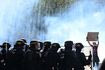
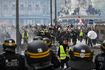
Shortly after the march ended, tensions erupted in Omonia Square when a group of individuals who had remained behind after the other demonstrators dispersed threw stones at riot police, who responded with stun grenades.
Authorities detained four people for questioning in connection with the incident. A total of 21 people were detained for questioning during the demonstration.
Thessaloniki: “From Greece to France, We Fight for Free Public Education”
School pupils and university students also staged a rally and protest march in Thessaloniki on Wednesday as part of the nationwide mobilisation.
They were joined by members of teachers’ unions and associations representing public- and private-sector workers.
Demonstrators gathered at Dikastirion Square, near the Venizelos statue, before marching along Egnatia, Agias Sofias, Tsimiski and Venizelou streets, eventually reaching the Ministry of Macedonia and Thrace.
Representatives of school and university student associations subsequently met at the Thessaloniki Labour Centre to coordinate further action. They decided to participate in a march scheduled for October 30, as part of an International Day of Action involving 60 ports around the world.
“From Greece to France, we fight for free public education” was the slogan chanted by demonstrators throughout the protest.
The march concluded peacefully, while police forces remained deployed at various locations across the city centre to prevent potential disturbances.
Two Protest Rallies in Patras
Two separate rallies were also held in Patras on Wednesday.
The first took place outside the Patras Labour Centre in National Resistance Square, with the participation of hospital doctors, workers, trade unions, political parties and grassroots organisations.
In a statement, the Labour Centre outlined its demands:
“We demand wage increases and decent working conditions, large-scale recruitment of permanent staff and permanent contracts for fixed-term employees, exclusively public and free healthcare and education with adequate funding, the abolition of all commercial activity in healthcare and education, with social needs as the guiding principle, and meaningful measures to protect people’s incomes against rising prices.”
The second gathering, attended by school pupils, university students and teachers, took place in Georgiou Square.
University students had been camping in tents in the square since Tuesday afternoon, protesting over housing costs, the high cost of living and educational conditions.
The demonstrators subsequently marched towards National Resistance Square, where they joined participants in the first rally before staging a large procession through the central streets of Patras.
Crete: Students Take to the Streets in Chania and Heraklion
Protest rallies were held in both Chania and Heraklion as part of the work stoppage called by ADEDY and the teachers’ strike.
Healthcare workers, public-sector employees, teachers, school pupils and university students participated in the demonstrations.
In Chania, the rally took place in the city centre, near the Municipal Market, where representatives of trade unions and professional associations voiced their opposition to government policies which, they argued, were affecting their daily lives and living standards.
From 10:00 a.m., school pupils and university students gathered in Eleftherias Square. Speeches followed, before demonstrators marched through the city centre carrying banners.
In Heraklion, university students had set up tents in the courtyard of the Crete Regional Administration building the previous evening.
They cited the rising cost of living and housing, as well as expenses for textbooks and transportation, calling for immediate and effective intervention by the Ministry of Education and the government.
Trade unionists and representatives of various organisations said their demands focused on increasing staffing levels in schools and hospitals, raising wages and tackling inflation, which they argued had pushed households and individuals to the brink of poverty.
According to the representatives, the consequences of current government policies are evident every day in Crete’s schools, hospitals and public services, resulting in the erosion of their public-service character.
Teachers, Parents and Students Rally in Rhodes
A demonstration involving teachers, parents, school pupils and university students was also held in central Rhodes, with participants demanding stronger support for education, the filling of staff shortages and solutions to the problems facing the educational community.
The protesters initially gathered outside the University of the Aegean in Rhodes before marching through the city’s main streets, calling for better conditions in schools and higher education.
Teachers, parents and young people demanded meaningful measures to address the needs of the education system, placing particular emphasis on filling staff vacancies and ensuring the conditions necessary for educational institutions to operate effectively.