Heating Allowance 2026–2027: Everything you need to know
Διαβάζεται σε 6'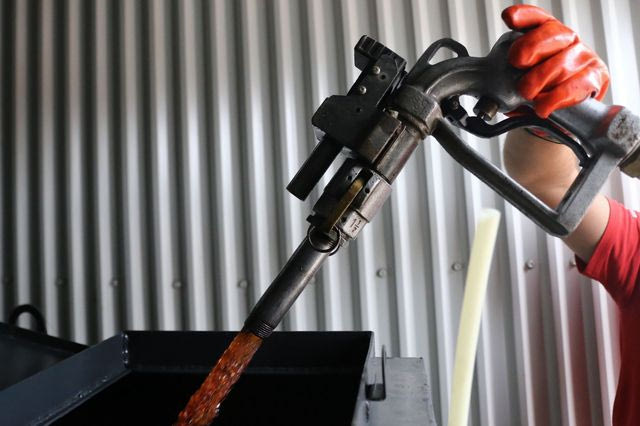
Submitting your application on time and providing accurate information are essential to ensure the smooth payment of the allowance.
- 14 Οκτωβρίου 2026 10:38
The heating allowance for the 2026–2027 winter season will increase by 30%, benefiting more than 1.2 million households, according to an announcement by Minister of National Economy and Finance Kyriakos Pierrakakis.
The increase is intended to ease the financial burden on families, as energy costs continue to put significant pressure on household budgets ahead of the winter season. Beyond heating oil, the allowance is also particularly important for households that use natural gas, whose prices have been under pressure for months.
Under the new adjustment, the minimum allowance will rise to €130, up from €100 in the previous period, while the maximum amount will increase from €800 to €1,040. In areas with particularly low temperatures and greater heating needs, the allowance could reach €1,560, compared with the previous maximum of €1,200. These areas include Florina, Nymfaio, Karpenisi, Velouchi and mountainous Arcadia, where climatic conditions significantly influence the amount of financial assistance available.
Meanwhile, the Independent Authority for Public Revenue (AADE) is expected to open its online myThermansi platform in November, allowing eligible applicants to submit their applications. The first payments are expected in mid-December.
Those who submit their applications on time, by early December, are expected to receive an advance payment equivalent to approximately 80% of the allowance they received during the 2025–2026 winter season. For new beneficiaries, the advance payment rate will increase from 50% to 65% of the amount they are entitled to receive.
The remaining payments are expected to be made gradually until July 2027, depending on the type of heating fuel and eligible consumption.
The allowance is available to individuals who use heating oil, natural gas, LPG, firewood, wood pellets, district heating or electricity to heat their primary residence.
Potential beneficiaries include single and married individuals, single-parent families and people in civil partnerships, provided they meet the relevant income and property criteria.
The allowance is granted for only one primary residence. Data from the previous heating season illustrate the scale of demand: 603,685 households used heating oil, 182,724 used natural gas, 311,487 used electricity and 23,795 used firewood.
The Main Eligibility Criterion
A key requirement for receiving the heating allowance is that annual household income, whether actual or imputed, must not exceed €16,000 for single individuals and €24,000 for married couples, with an additional €5,000 allowed for each child.
For single-parent families, the income threshold is €29,000, increasing by €5,000 for each child after the first.
For individuals engaged in business activities, total gross revenue must not exceed €80,000.
At the same time, the assessed value of real estate assets must not exceed €200,000 for single or widowed individuals and €260,000 for married couples or single-parent families. This threshold increases by €40,000 for each dependent child.
The final amount each beneficiary receives depends on the type of heating used, the area of residence and the number of dependent children.
The calculation is based on a reference amount multiplied by the climatic coefficient assigned to each locality, with an additional 20% increase for every dependent child.
For heating oil, the reference amount will rise to €390, compared with €300 in the previous heating season.
Meanwhile, climatic coefficients, ranging from 0.12 to 1.62, reflect the heating requirements associated with the weather conditions in each area.
In locations such as Elati, Papigo and Kozani, where the coefficient is equal to or greater than 1, an additional 25% is applied to the basic amount.
Similarly, in areas with even colder climates, such as Metsovo, Velouchi, Nymfaio, Nevrokopi and Pertouli, where the coefficient reaches or exceeds 1.2, a further 25% increase is provided.
The impact of these changes on households is illustrated by several examples of allowance calculations.
A household without children in Velouchi using heating oil is expected to receive €936 for the 2026–2027 season, compared with €730 the previous year.
A family with two children in Kastoria will receive €764.40, up from €611.52, while a family with one child in Athens will see its allowance increase from €155 to €201.50.
In Xanthi, a family with two children that received €344 during the previous season is expected to receive €447.20.
In Metsovo, the allowance for a family with one child is calculated at €892.13, based on a climatic coefficient of 1.22.
In Kozani, the allowance for a family with two children will increase from €298 to €387, while in Thessaloniki, a family with one child is expected to receive €333, compared with €256 the previous year.
To complete the application process, interested individuals must log in to the myThermansi platform and provide their personal and tax details, the number of dependent children, their electricity supply number, the address and floor area of their primary residence, and the type of fuel or energy for which they are requesting the allowance.
If the property is rented or has been provided free of charge, applicants must also enter the Greek tax identification number (AFM) of the landlord or the person providing the property.
Applicants must also register a valid bank account number (IBAN), for which they must be listed as either the primary account holder or a joint account holder, to receive the payment.
Submitting the application on time and entering all information accurately are essential requirements for ensuring that the allowance is paid without complications.
With the increased payment amounts and additional support for areas experiencing harsher winters, the heating allowance is expected to provide significant financial relief to thousands of households during the winter season.
The amount of assistance will vary depending on income, family circumstances, heating method and the climatic conditions of each area.