What the site of the Petralona apartment building collapse looks like 45 days later
Διαβάζεται σε 5'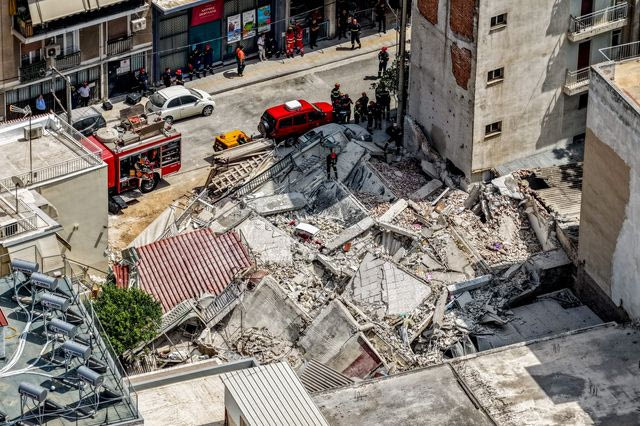
Nearly two months after a four-storey building collapsed in Petralona, the rubble is still there, waiting for someone to remove it.
- 21 Αυγούστου 2026 12:53
On Tuesday, June 30, a four-storey apartment building collapsed in Petralona. Today, Friday, August 21, the site inspection has still not begun, meaning the cause has yet to be established and responsibility assigned.
Why?
Because the debris has not been removed.
A camera crew from Open TV’s “Ora Ellados” programme visited 22 Alkminis Street and showed that everything remains just as we remember it.
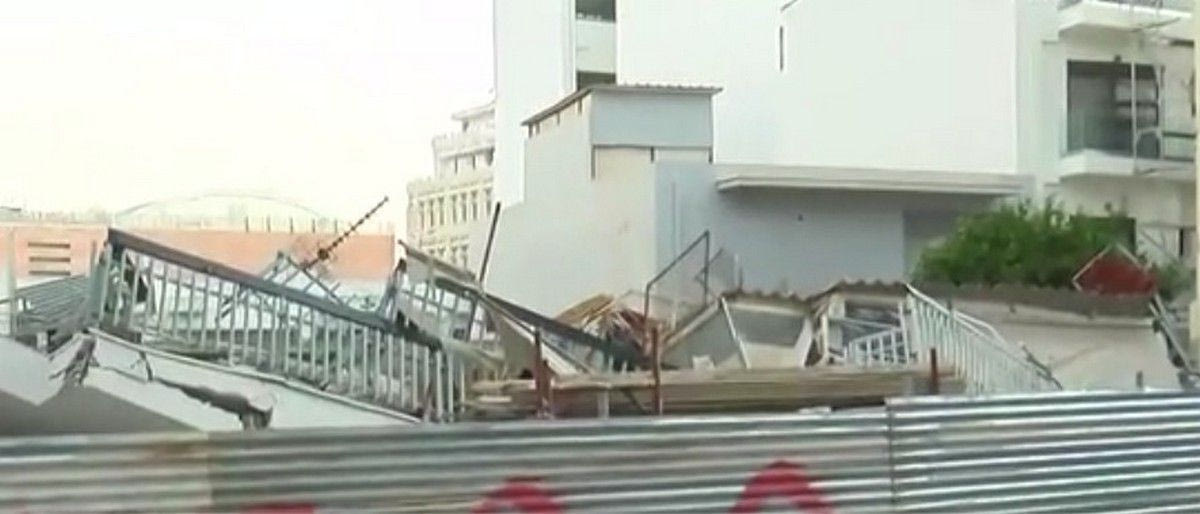
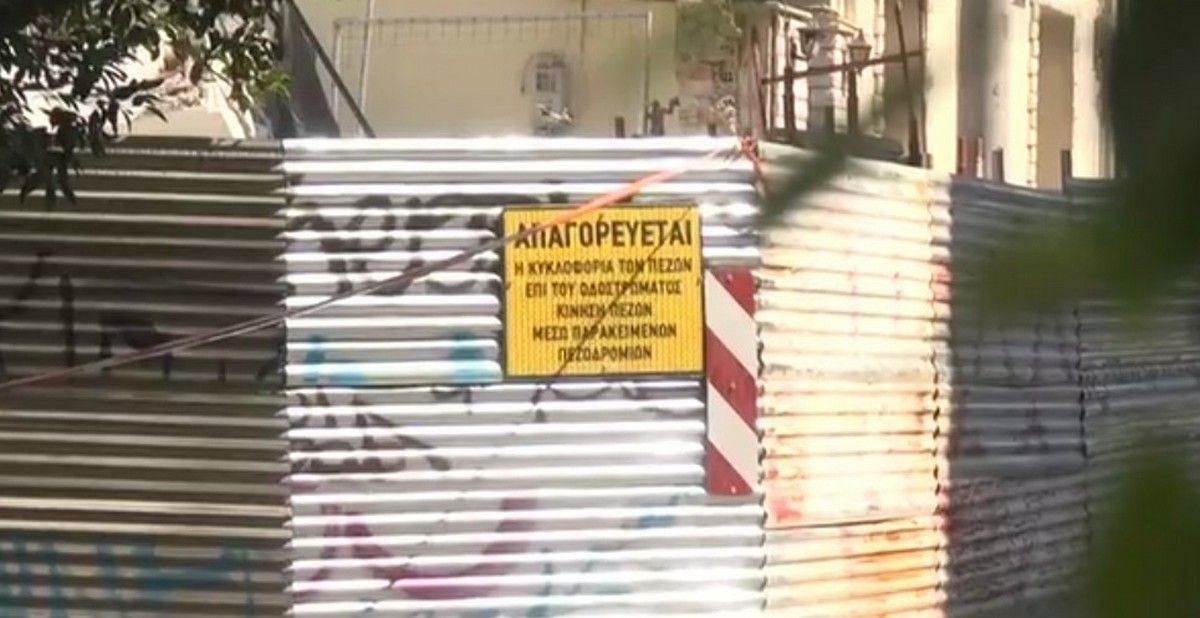
The only change is that a protective metal barrier has been installed in front of the site, along with a sign stating: “Pedestrian traffic on the roadway is prohibited – Pedestrians must use the adjacent pavements.”
Police officers are also guarding the damaged materials around the clock, working in shifts.
Paris Charlavtis, deputy mayor responsible for technical services, municipal property and digital governance at the Municipality of Athens, explained on the programme that the metal barrier, which was installed immediately after the collapse, “was requested by the residents [of the collapsed apartment building] so that they could protect their valuables and personal belongings from any looting.”
The fact that the site has not been cleared means that no inspection can take place and the investigation into the cause of the shocking incident cannot move forward.
It took the authorities 15 days to determine who was responsible for removing the rubble, followed by another month for the required procedures.
Municipality of Athens received €835,000 for the clean-up
On July 15, a meeting was convened at the Athens Court of First Instance Prosecutor’s Office to determine which authority was responsible for removing the damaged materials. Following intervention by the prosecutor, the task was assigned to the Municipality of Athens.
Two weeks later, the Municipality was also granted €835,000 by the Ministry of the Interior to carry out the work, which has still not begun. It is scheduled to start on September 1.
Why?
Because Greek bureaucracy is alive and well.
What has happened since June 30
When the programme’s presenter asked Charlavtis what had gone wrong and why nothing had been done, he replied that, “in public administration terms, nothing has gone wrong. In fact, things have moved quickly.”
“The Municipality was not responsible from the outset, which is why the procedure it has to follow is very specific, so that it is not held accountable later.”
During the first 15 days, therefore, “we were waiting for the judicial expert assessment, since this is essentially a dispute between private parties. Someone had to decide who would carry out the work because, under normal circumstances and if the situation had not been so serious, the two private parties would have had to resolve it between themselves.
“To avoid any problems, we had to be told when we could begin our own procedure and exactly what they wanted us to do, because there are personal belongings among the rubble and various other items. And because there is a legal dispute, the experts have to tell us what to do so that we do not disturb the investigation site.”
According to Charlavtis, the following steps have been taken since June 30:
- “We have held two meetings at the Prosecutor’s Office.
- We have received the prosecutor’s order,” which was necessary “so that we could proceed without being held accountable in the future.
- We have submitted the tender specifications to ESIDIS,” the National Electronic Public Procurement System, through which public bodies conduct tenders and companies or individuals submit bids for state projects, goods and services.
- “We have received approval from ESIDIS to launch the tender.
- We have secured approval from the municipal council for the Municipality’s intention to remove the rubble.
- We have gone through the municipal committee so that the tender terms could be approved.
- We submitted a request to the Ministry of the Interior, which approved the funding and transferred the money to us.
- We submitted the tender procedure to EADISY [the Hellenic Single Public Procurement Authority] for approval, because the tender itself could otherwise have been deemed invalid.
- EADISY approved the tender, and all of this was completed within a month and a half.”
So, was what happened over almost two months a sprint by the standards of Greek bureaucracy and the labyrinthine public administration, or not?
Of course, one might wonder why all these procedures are necessary and why there cannot be a more streamlined process, particularly when such a serious incident has occurred.
But the answer is probably already known — and is unlikely ever to change.