Syros – Crown Iris: Investigation even targets a journalist for simply doing her job
Διαβάζεται σε 5'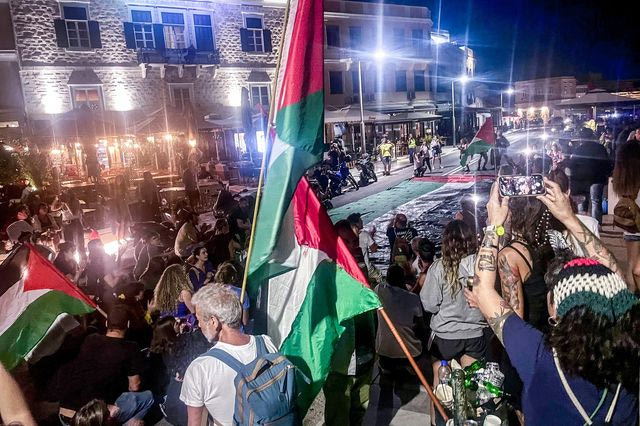
A total of 14 citizens are being investigated over the Crown Iris case in Syros. Among them is a journalist, precisely because she was doing her job.
- 05 Σεπτεμβρίου 2026 13:59
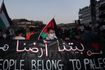
The anti-war protest that took place in Syros on July 22, 2025, on the occasion of the arrival of the cruise ship Crown Iris on the island, has officially been under scrutiny by the authorities — specifically, the port authorities — for at least a month.
As is well known, the vessel was carrying a large number of Israeli tourists, prompting groups in Syros to stage a protest to express, among other things, their opposition to what they describe as Israel’s genocidal war in Gaza.
It is also well known that, despite fears and the heavy mobilisation of state authorities, the demonstration was entirely peaceful. This, however, did not prevent government figures from targeting the protesters and calling for them to be prosecuted.
Ultimately, proceedings were initiated and a total of 14 people — 14 Syros residents — were summoned by the Syros Port Authority, following a prosecutor’s order, to provide explanations as suspects without being sworn in. The reason? To determine whether the offences of obstructing transport and publicly inciting violence or hatred had possibly been committed.
The Syros Anti-War Initiative wrote in a detailed statement on August 3:
“The only thing substantiated by the photographic material and the sworn testimonies included in the case file is their presence at the protest, while their selection from among all the residents who participated in the gathering appears to have been entirely random. This means that anyone who was present at the protest could have been summoned as a suspect in the commission of an offence.
Moreover, the police, port and prosecutorial authorities present throughout the gathering did not establish that any criminal offence had been committed, since otherwise they would have proceeded with detentions and/or arrests under the in flagrante procedure.”
Why, then, this apparent urgency on the part of the state authorities? And how can it be explained that, while 12 people were initially summoned to provide explanations, two more were subsequently called in?
“This investigation is intended to create a climate of fear, so that every future mobilisation takes place under the threat of criminal consequences. It is an attempt to silence those who resist. As has already been demonstrated, however, every attempt at intimidation generates even greater determination, participation and solidarity. Just as we were not afraid when marches were banned, when the island was turned into an area under police surveillance, when detentions took place, we will not be afraid now either,” the Syros Anti-War Initiative noted. It is, at the very least, a plausible explanation.
Even a professional journalist faces possible prosecution
Indeed, the authorities’ zeal reached the point where even a professional journalist was summoned to provide explanations as a suspect without being sworn in, precisely because of her professional status and her work.
Statements by coastguard officers included in the case file claim that the journalist in question misinformed the public while speaking to a television station and encouraged the continuation of unlawful acts.
Their conclusion is that serious legal offences took place in the case, including incitement to hatred or discrimination. In their view, this is substantiated by the fact that the alleged criminal acts were committed by people with a public role, such as journalists.
In other words, her professional status is effectively being treated as incriminating evidence — an unprecedented development reminiscent of another era.
In the explanations she provided following the prosecutor’s order, the journalist stressed that she had indeed attended the July 22 protest both as a citizen and as a journalist, showing her press credentials to the authorities whenever asked to do so.
It is clear that she has not been named in any witness testimony, nor has any other evidence emerged against her in relation to the allegations she faces.
The journalist attached to her statement the reports and material she gathered while covering the protest, which were also published in newspapers and on websites.
No specific statements have been recorded that could be regarded as public incitement to violence. In light of all the above, the journalist is asking for the obvious: that no charges be brought against her over the incidents in question.
For the time being, there have been no further developments, but concerns remain. Why is the justice system investigating the case when it appears clear that nothing improper took place? Could this entire process be the result of political pressure from within Greece and abroad?
We are expected to find out in the immediate future, as developments are likely to unfold one way or another. The case will either be shelved or move to the prosecution stage.