Metro: Why airport trains run every 36 minutes
Διαβάζεται σε 4'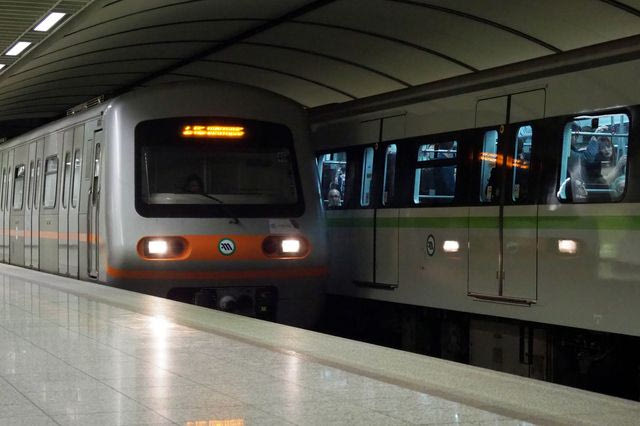
The dual-voltage Metro trains operating daily on services to and from Athens International Airport are far too few to meet the city’s transport needs.
- 31 Οκτωβρίου 2026 09:58
Anyone who has used the Metro to or from Athens International Airport recently will have noticed that the relevant services — from Dimotiko Theatro to the airport and back — run every 36 minutes.
During the summer, when Athens was flooded with tourists and visitors, it was obvious that the services were far too infrequent. Even now, as we move into winter, that impression remains.
But why do trains to and from the airport pass through stations only every 36 minutes? There are two main reasons.
In response to a question from NEWS 24/7, STASY explained:
“The frequency of airport services was set at 36 minutes in October 2022, following the extension of Line 3 to Piraeus and the addition of three new stations — Maniatika, Piraeus and Dimotiko Theatro. The extension of the line resulted in a change to the frequency of services to and from the airport.”
STASY’s explanation is accurate. However, that is not the only reason. The number of special trains capable of operating airport services is simply far too small.
STASY also told NEWS 24/7:
“The total Metro fleet serving routes to and from the airport consists of seven trains. Of these, four operate daily, one is kept in reserve, while two are undergoing scheduled maintenance.”
In practice, therefore, only four trains are deployed each day — a number that is clearly inadequate for the needs of Athens, not only during the summer but throughout the year. Even if that number were increased by one or two trains, journey intervals could improve somewhat, but not dramatically.
The Metro trains serving the airport are special dual-voltage trains. In other words, they are rail vehicles capable of operating using two different electrical power systems. Put simply, these trains can draw electricity both “from below” and “from above”.
From Dimotiko Theatro to Doukissis Plakentias, they operate in the same way as the rest of the Metro fleet. Beyond that point, they draw power from overhead lines, using high-voltage electricity that can reach 20,000 volts.
As one would expect, these trains are more expensive than conventional Metro trains, both to purchase and to maintain. That, however, does not explain why the Athens Metro has been left with only four fully operational trains available for airport services.
The purchase of new airport trains has been planned, but it will not happen immediately. The procurement of seven new dual-voltage trains has been approved. The project has a budget of €187.24 million, excluding VAT, and has been included in the NSRF funding programme.
The process is currently at the stage of finalising the tender documents, while a Joint Ministerial Decision is still pending on the revision of the National Interoperability Rules governing the national railway network.
Given the pace at which the Greek public sector tends to operate, there is probably little reason for optimism about a swift solution.
Meanwhile, the existing trains are being placed under considerable strain. According to information obtained by NEWS 24/7, each dual-voltage train serving the airport line has exceeded 3 million vehicle-kilometres, with all that entails in terms of wear and tear over the years.