Mount Olympus added to UNESCO’s World Heritage List
Διαβάζεται σε 7'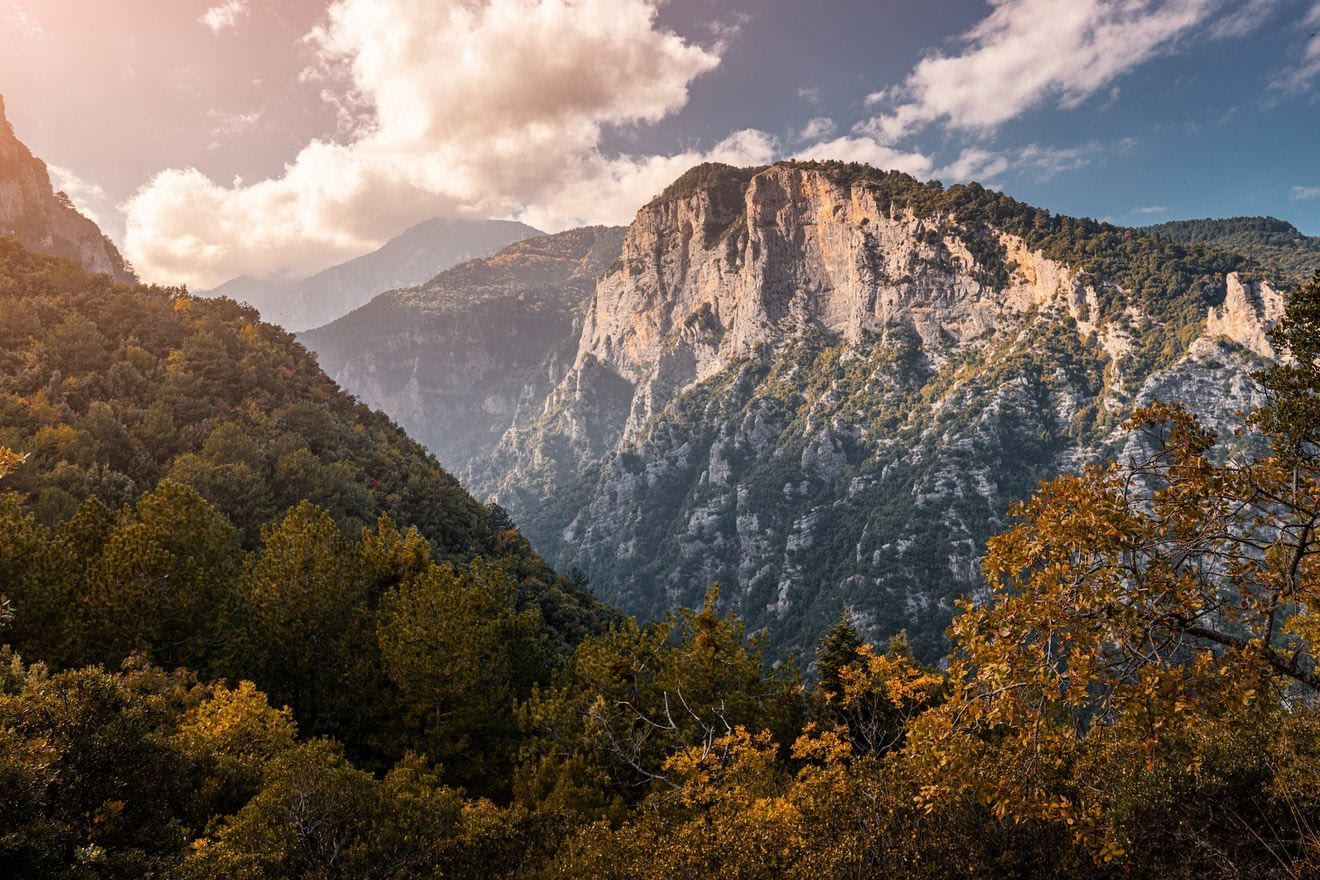
Mount Olympus was unanimously inscribed on UNESCO’s World Cultural and Natural Heritage List.
- 26 Ιουλίου 2026 14:42
Mount Olympus was unanimously approved for inscription on UNESCO’s World Cultural and Natural Heritage List during the 48th Session of the World Heritage Committee.
Mount Olympus was recognised as a natural and cultural property of outstanding universal value to humanity and is now officially a UNESCO World Heritage Site.
The decision was adopted unanimously by the members of the Committee, confirming the international recognition of the unique natural, cultural and symbolic value of Greece’s iconic mountain.
The Ministry of Culture and the Ministry of Environment and Energy expressed their joy, pride and great satisfaction over the Committee’s decision.
What the decision means
The inclusion of the mythical mountain on the list represents one of the most important international distinctions in the field of cultural and natural heritage protection.
It recognises the Outstanding Universal Value of Mount Olympus and places it among the world’s most emblematic heritage sites, which require special protection and care for the benefit of humanity.
World Heritage Sites receive technical support and financial assistance from UNESCO, which also provides specialised advice on their preservation.
The inscription is especially significant because Mount Olympus has been added to the list as a mixed property, one of the most demanding categories, requiring simultaneous documentation of both its cultural and natural values.
Mixed inscriptions account for only a small proportion of all properties on the World Heritage List. Mount Olympus was the only mixed nomination submitted for examination at the current session of the Committee.
Together with the earlier inscriptions of Meteora and Mount Athos, Greece now has three mixed properties on the list and a total of 21 World Heritage inscriptions.
This achievement is therefore particularly important for the country, strengthening Greece’s international presence within the framework of the World Heritage Convention.
The inscription also recognises the unique natural value of Mount Olympus as an area of exceptional importance for biodiversity.
Standing at 2,918 metres and located close to the Aegean coast, the mountain has a dramatic elevation range, rugged terrain, topographical isolation and a historic role as a glacial refuge.
It is home to 1,983 taxa, representing more than 25% of Greece’s flora. This botanical wealth, combined with the exceptionally high concentration of narrow endemic species found nowhere else in the world, gives Mount Olympus global significance and makes it an “ark” of biodiversity.
The mountain also supports rich wildlife, including numerous bird and mammal species, among them the brown bear and Greece’s largest population of Balkan chamois, as well as reptiles, amphibians and invertebrates.
Mount Olympus, the highest mountain in Greece, is an enduring symbol of Greek civilisation and world cultural heritage.
As the mythical home of the Twelve Olympian Gods, it occupied a central place in the worldview of the ancient Greeks.
Its influence, through the Homeric epics, Hesiod’s Theogony and later literature, extended far beyond the boundaries of the ancient world.
It continues to inspire literature, the arts, philosophy, science and contemporary cultural creation around the world.
The archaeological site of Dion, at the foot of the mountain, constitutes the most important material expression of the worship of the Olympian Gods and forms an integral part of the exceptional cultural and natural landscape.
Statements by Lina Mendoni and Stavros Papastavrou
Culture Minister Lina Mendoni said:
“The inscription of Mount Olympus on UNESCO’s World Heritage List confirms Greece’s long-standing commitment to the protection, promotion and sustainable management of its cultural and natural heritage, in accordance with the principles of the World Heritage Convention.
“At the same time, it strengthens the international profile of a place that has long served as a symbol of Greek civilisation, nature and universal heritage, while highlighting the shared responsibility of the international community to safeguard it for the benefit of present and future generations.
“This inscription uniquely encapsulates the inseparable unity of our cultural and natural heritage.
“Mount Olympus is the mountain that, through the Homeric epics and ancient Greek literature, carried Greek mythology and Greek civilisation across the world.
“It remains the eternal symbol of the home of the Olympian Gods and of a multidimensional and dramatic landscape, inspiring awe and respect and continuing to nourish thought, art, science and global cultural creation.
“Homer’s descriptions of Mount Olympus — ‘many-folded’, because of its numerous peaks; ‘long’, as it dominates the horizon; ‘snowy’; and ‘many-ridged’, because of its numerous ravines — marked the beginning of this enduring source of inspiration.
“The image of Mount Olympus, as captured by Homer’s poetic genius almost three millennia ago, remains unchanged today, evoking the same sense of wonder and respect in the modern visitor.
“I extend my warmest thanks to Greece’s Permanent Representative to UNESCO, Giorgos Koumoutsakos, for his consistent and substantial support throughout the process, as well as to the staff of the Ministry of Environment and Energy and the Natural Environment and Climate Change Agency, and to the Directorate of Prehistoric and Classical Antiquities and the Ephorate of Antiquities of Pieria at the Ministry of Culture.
“Their scientific expertise, dedication and excellent cooperation led to the achievement of our shared objective: this highly significant inscription, which makes us all proud.”
Environment and Energy Minister Stavros Papastavrou said:
“Greece’s natural environment is a living and inseparable part of our identity, history and culture.
“Its protection and promotion lie at the heart of government policy.
“Mount Olympus was declared Greece’s first national park in 1938. It provides a refuge for rare birds of prey and is home to 28% of the country’s plant groups — more than 1,900 species, including 27 that grow only on Mount Olympus and nowhere else in the world — as well as significant wildlife populations.
“From Mount Olympus, a global symbol that connects the ancient myth of Greece’s highest mountain as the home of the gods with our country’s environmental future, to the Untrodden Mountains initiative and the new National Marine Parks announced by Prime Minister Kyriakos Mitsotakis, we are demonstrating in practice that the protection of nature and biodiversity is a constant national priority.
“Through the establishment and strengthening of the Natural Environment and Climate Change Agency, we laid the foundations for the modern and comprehensive management of Greece’s protected areas.
“The complete nomination dossier for the inscription of Mount Olympus on UNESCO’s World Cultural and Natural Heritage List was prepared through systematic cooperation between the Ministry of Environment and Energy, the Ministry of Culture and the Natural Environment and Climate Change Agency, successfully completing an effort that began in 2014.
“We are now moving from international recognition to concrete projects.
“In the immediate future, we will implement projects worth more than €10 million on Mount Olympus, aimed at protecting the natural environment, improving accessibility and promoting the sustainable development of the wider region.
“I offer my warmest thanks and congratulations to Dr Dionysia Chatzilakou, a director at the Natural Environment and Climate Change Agency who led the overall effort, as well as to everyone who contributed to this major national success.
“I would also like to express particular thanks to Culture Minister Lina Mendoni, with whom we once again worked constructively for the benefit of our country, and special recognition to Greece’s Permanent Representative to UNESCO, Giorgos Koumoutsakos, for his support.
“We will continue with planning and consistency in order to protect and promote Greece’s unique natural and cultural heritage for present and future generations.”