Cable Car in Monemvasia: New Delay Due to Archaeological Find
Διαβάζεται σε 4'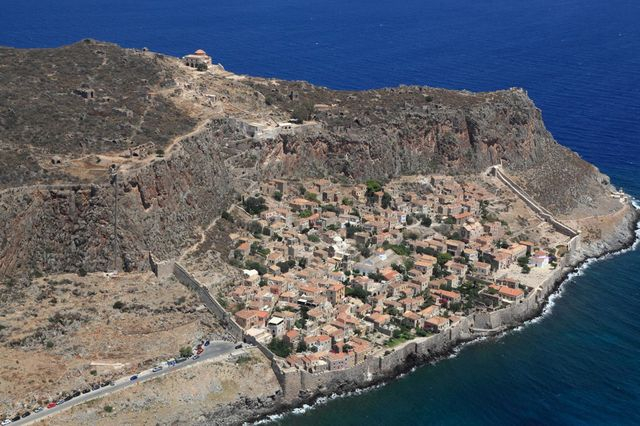
Construction of the cable car project in the Castle Town of Monemvasia has been suspended once again. Here are the latest developments surrounding the controversial project.
- 09 Ιουνίου 2026 14:54
Another delay in the construction of the controversial cable car project in the Castle Town of Monemvasia has now become a reality.
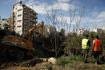
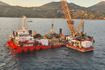
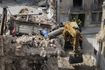
Since last week, work on the project has been unable to proceed after drilling operations uncovered yet another archaeological find. According to preliminary assessments by archaeologists, the discovery appears to be a cistern, although other interpretations have not been ruled out.
The procedure in such cases is well established. The matter is referred to the Central Archaeological Council (KAS), which must assess the archaeological significance of the find before making a decision.
A similar incident occurred at the project site about a month ago, resulting in what many described as an unprecedented move in the history of KAS. The council convened within just a few days and swiftly ruled that the project could continue without interruption. Individuals familiar with the council’s procedures expressed surprise at the speed of the decision.
Appeal to the Ombudsman
On another front directly linked to the highly controversial project, citizens are expected to file a complaint with the Greek Ombudsman in the coming days regarding the project’s building permit. A full record of the case will reportedly be submitted as part of the complaint.
Culture Minister Lina Mendoni has publicly argued in Parliament that, under a specific provision of Greece’s archaeological law, the project can begin and be completed without a building permit. However, critics maintain that the legal conditions required for such an exemption do not apply in this case, as the Ministry of Culture is not the project’s contracting authority.
In any event, following the latest delay, the likelihood that the project will lose its funding from the Recovery and Resilience Facility (RRF) has increased significantly, as construction must be completed by August at the latest. When questioned on the matter in Parliament, the Culture Minister did not dismiss this possibility, though she emphasized that alternative funding sources would be secured if necessary. She did not, however, specify what those sources might be.
Meanwhile, the opposition appears to be waiting in vain for a response to a parliamentary question submitted to Finance Minister Kyriakos Pierrakakis concerning the project’s financial aspects. No answer has been provided so far, and observers believe one is increasingly unlikely.
International Attention
The cable car controversy has now reached France, following an extensive report by the respected newspaper Le Monde.
Among other points, the article notes that in 2025 the citizen movement for the protection of Europe’s cultural and natural heritage, Europa Nostra, included Monemvasia among the seven most endangered heritage sites in Europe. The organization warned that the construction of a cable car “poses significant risks of landscape degradation, archaeological disturbance, and irreversible damage to the monument’s fragile natural and cultural environment.”
The Friends of Monemvasia Association has filed several legal challenges in an effort to halt the project, though without success so far.
“The cable car is a new, large-scale construction project,” insists Maria Charami, a lawyer and member of the association. According to her, it cannot fall under Article 40 of the law on the protection of antiquities, as claimed by the municipality and the Ministry of Culture. That provision was designed for urgent conservation interventions, she argues, and therefore a building permit is required—one that has never been issued to date.